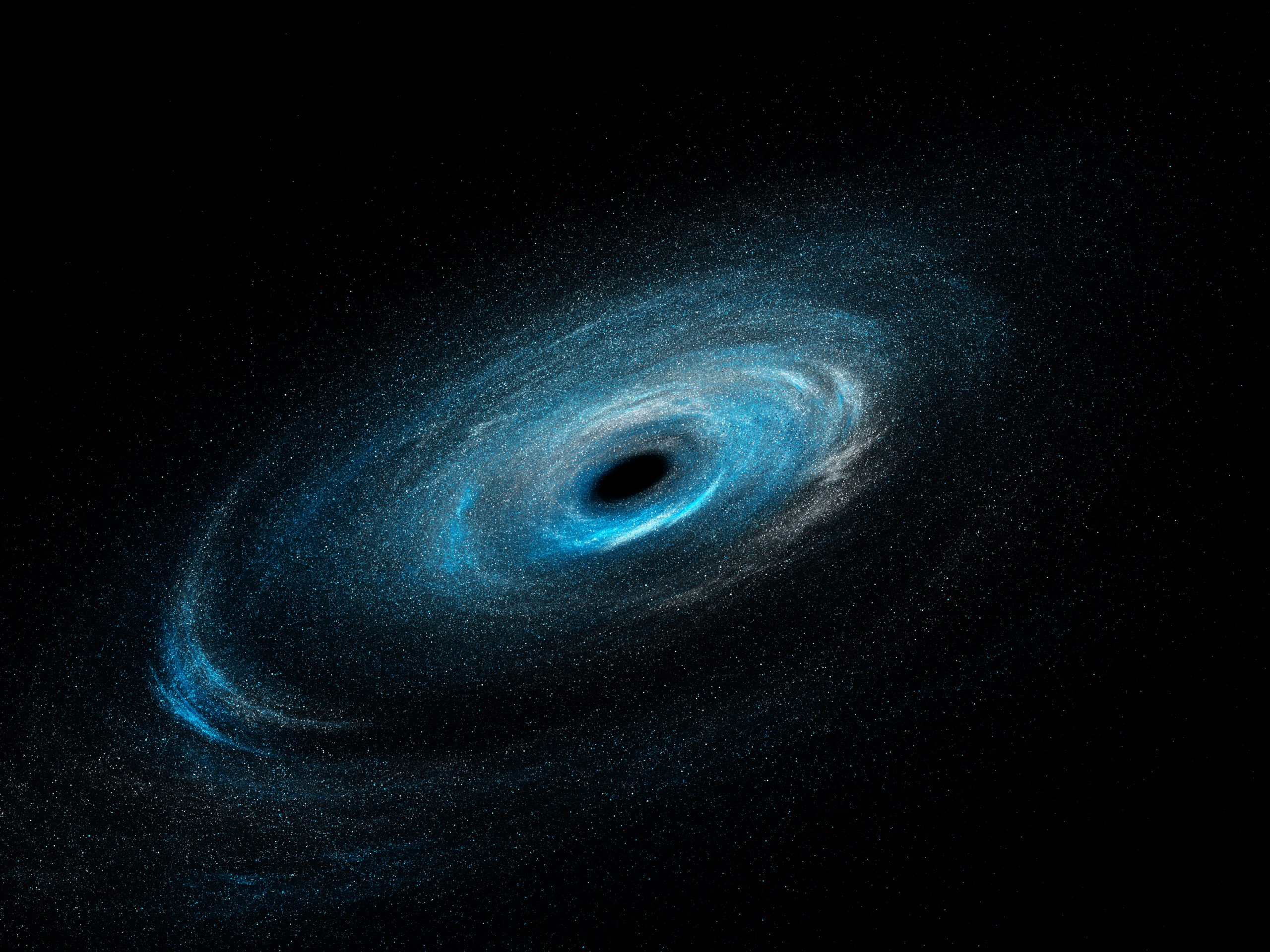
A supermassive black hole in the galaxy NGC 1275 produced a powerful X-ray flare, and its radio emission brightened 296 days later. The long delay gives astronomers a rare way to follow how activity close to a black hole becomes a jet that reaches far into space.
The result comes from nearly two decades of observations with NASA’s Swift X-ray Telescope combined with long-term radio monitoring. NGC 1275 sits at the centre of the Perseus Cluster and is the cluster’s brightest galaxy, making its restless core one of the best places to study the link between a black hole’s feeding disk and its jets.
An unusually strong flare
The X-ray outburst began around February 2023. It was the strongest flare recorded from NGC 1275, and the galaxy’s X-ray brightness rose by about a factor of two.
Keep exploring
Continue with Curiosmos
The event lasted less than 60 days and appears to have contained at least two separate bursts, each lasting roughly five days. Swift was especially useful because it can return to the galaxy often, while more powerful observatories cannot always watch a changing source frequently enough.
That repeated coverage allowed the researchers to place the flare in a much longer record of the black hole’s activity rather than treating it as an isolated bright spot.
The radio signal came later
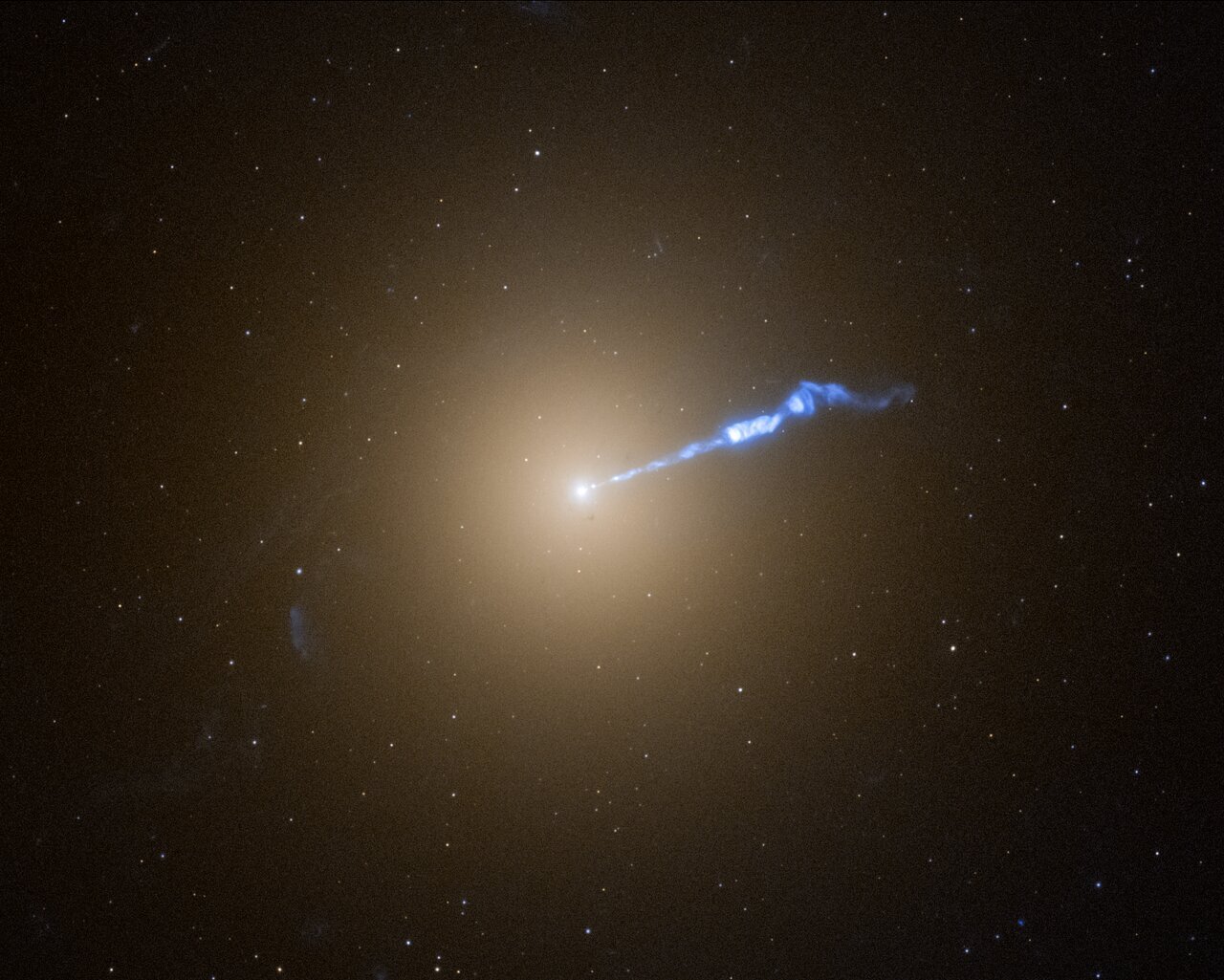
When the team compared the X-ray record with radio observations, it found a matching radio brightening 296 days after the X-ray flare. Radio waves in this case come from material moving outward in the black hole’s jet, so the delay connects two regions that cannot be resolved directly at the galaxy’s distance.
The simplest interpretation is that the change began near the hot X-ray-emitting region and appeared later farther along the jet. The researchers also allow for a delay between two locations within the outflow, so the timing alone does not identify one exact structure.
As our explanation of how astronomers detect black holes they cannot see shows, the evidence comes from several kinds of light. Here, the order in which those signals arrived is as important as the flare itself.
A difficult galaxy to observe
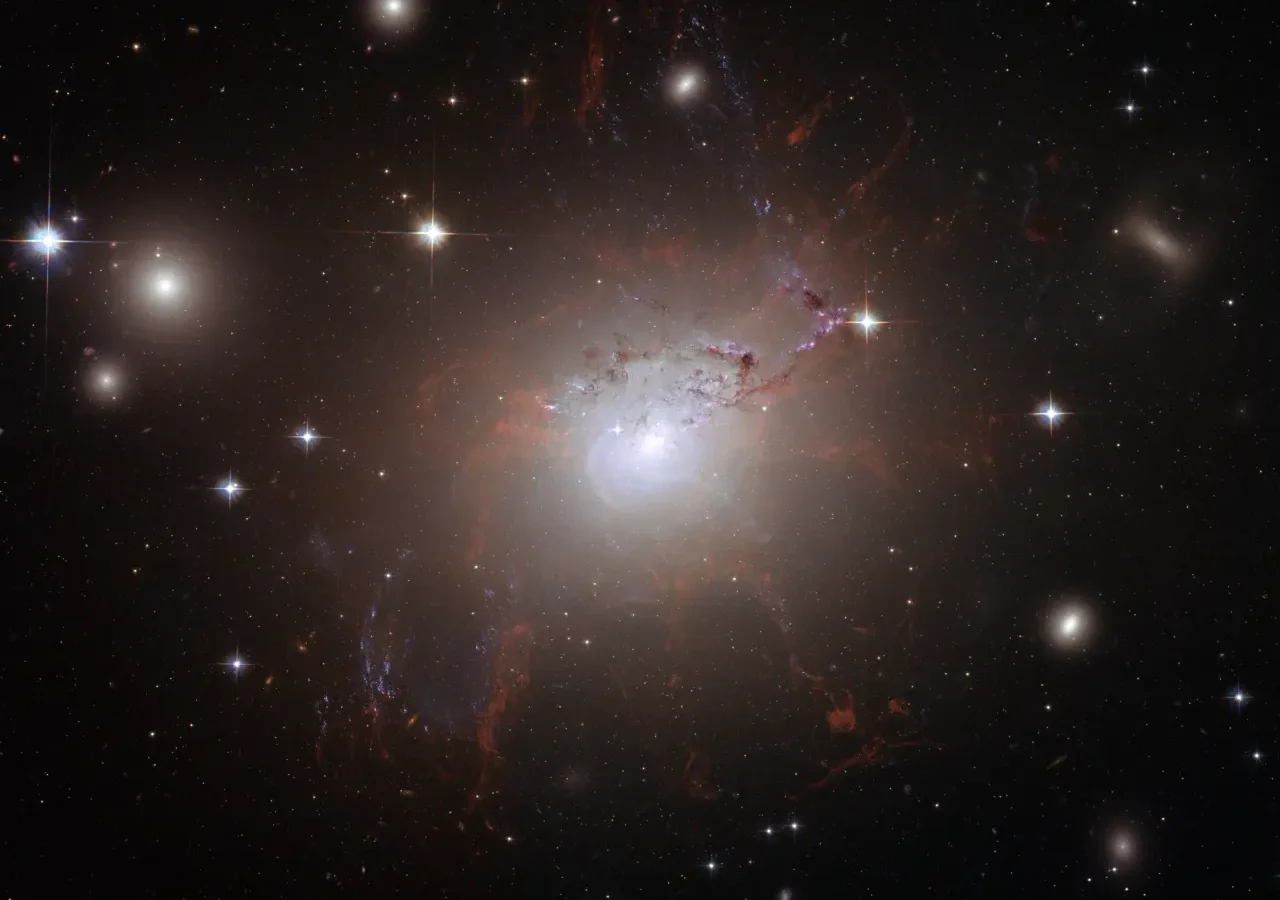
NGC 1275 is a complicated system. It shows signs of a merger, and its central black hole has blown bubbles into the surrounding gas, leaving long filaments visible in images from the Hubble Space Telescope.
The black hole’s mass is still debated, with estimates differing by nearly two orders of magnitude. That uncertainty makes a long, consistently sampled light curve valuable: it can reveal how quickly the central engine changes without requiring a perfect mass estimate first.
What the lag can teach us
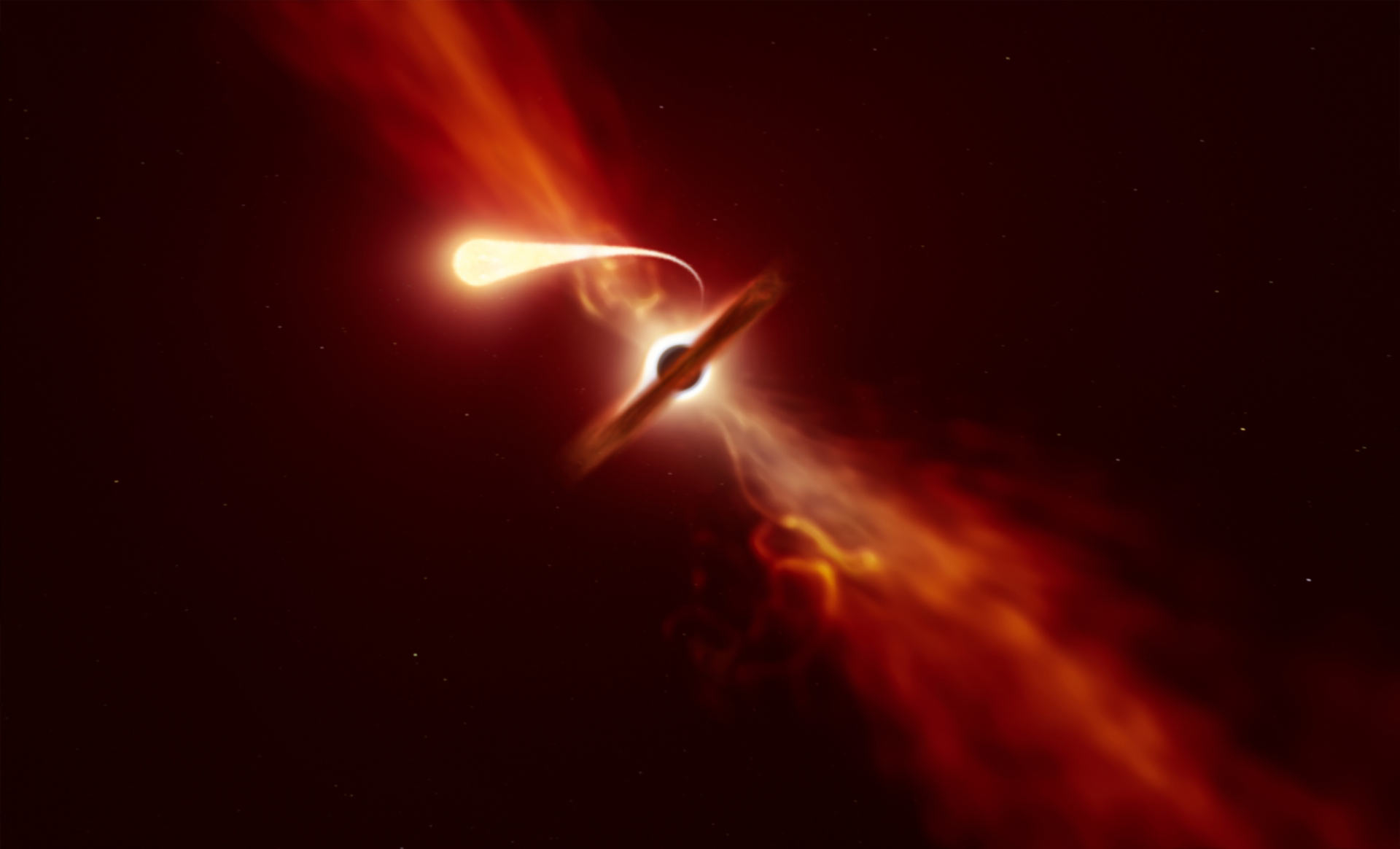
Black-hole jets carry energy away from the accretion disk and into the surrounding galaxy. That process can heat or displace gas that might otherwise cool and form stars, so the disk–jet connection affects the growth of the galaxy as a whole.
The 296-day interval gives future observing campaigns a practical target. Coordinated X-ray and radio monitoring can test whether later flares repeat the same pattern and help locate where the jet’s radio emission is produced.
The observations do not settle every detail of the outburst. They provide something more useful: a measured delay that lets astronomers test models of how a supermassive black hole turns a brief change in its inner disk into a radio-bright jet.