A stone can be millions of years older than the monument built from it. Measuring when its minerals formed therefore cannot, on its own, reveal when people dragged it into place. To date a stone circle, archaeologists usually reconstruct the building event from the deposits and objects associated with it.
That task involves several different clocks. The rock has a geological history. A deer antler or piece of wood has a biological age. A socket records excavation and filling. Later visitors may leave material beside a monument centuries after its construction. The challenge is to connect a dated sample to the particular event being investigated.
Why the position of a sample matters
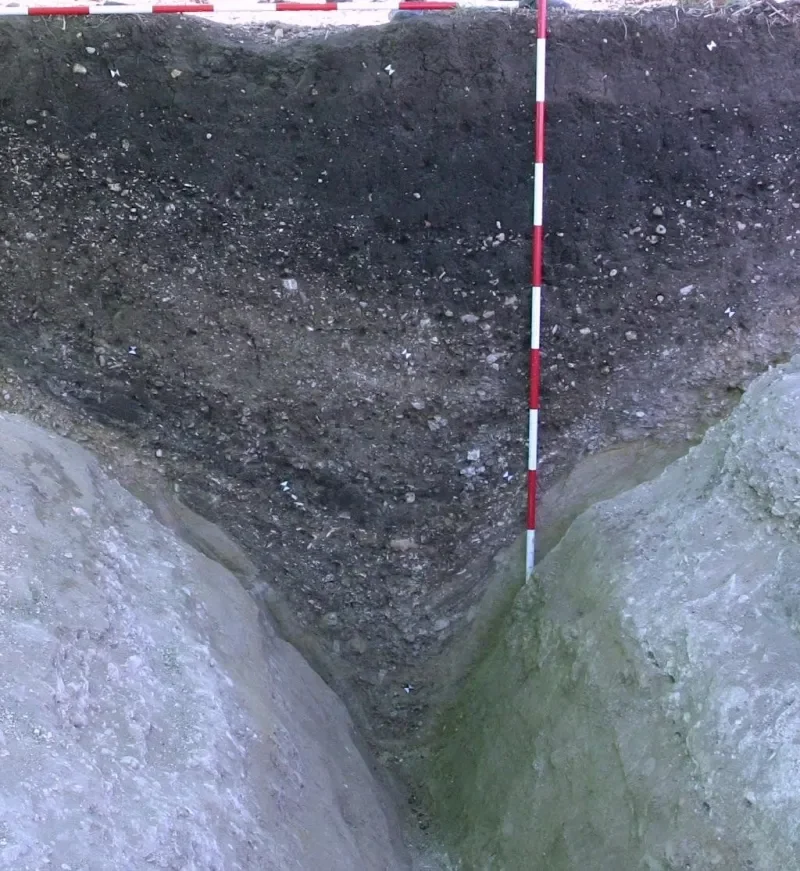
Radiocarbon dating measures carbon in once-living material, not the moment a stone was raised. An antler pick discarded at the bottom of a freshly dug hole can be useful because it may have been employed in the work. A loose piece of charcoal near the surface offers a much weaker connection.
Keep exploring
Continue with Curiosmos
Consider a hypothetical socket containing two fragments of charcoal. One is sealed in the packing around the stone; another lies in a later disturbance cutting through that packing. Even if both produce precise laboratory dates, they need not date the same activity. A reliable interpretation starts with the excavation record, before the samples reach a laboratory.
Older material can also be redeposited in younger construction fill. Archaeologists call it residual. A date can be accurate for the sampled object and still be misleading if assigned to the building event.
What antler tools reveal at Woodhenge
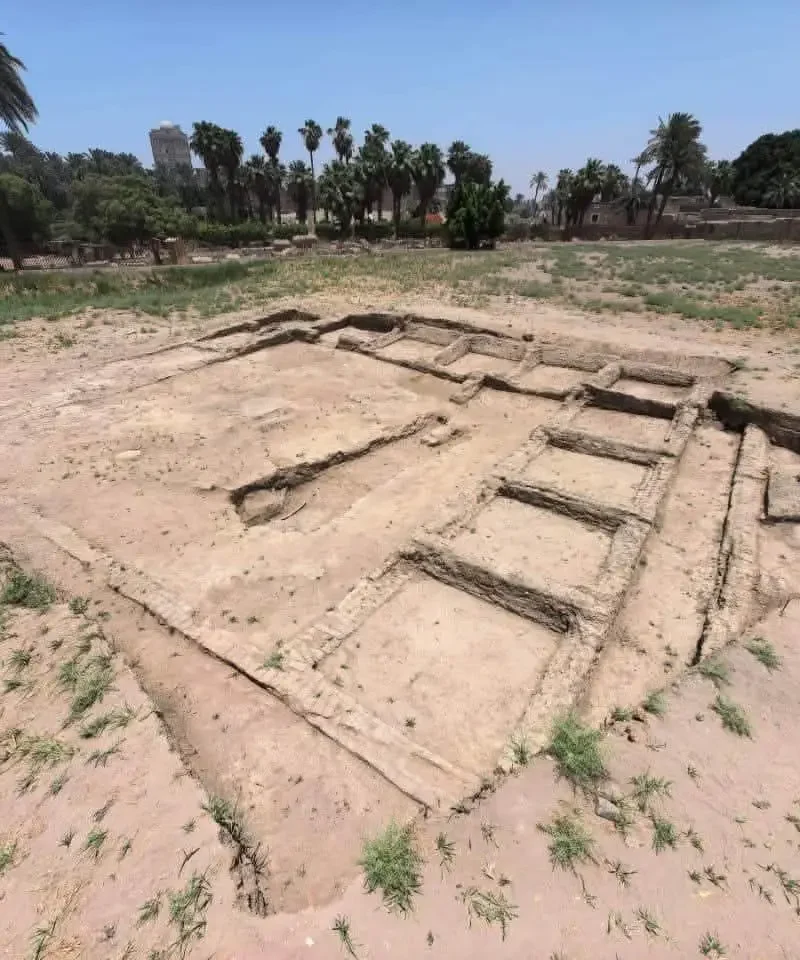
A Historic England study of Woodhenge offers a concrete example. Woodhenge was a timber monument near Stonehenge, rather than a stone circle, but its excavated holes and ditch pose the same problem of connecting organic remains to construction.
The study assembled 22 radiocarbon measurements from antler, animal bone, cremated human bone and charcoal. Researchers targeted antler tools found at or near the bases of excavated features, especially where wear supported a connection with digging. The physical condition of a tool strengthened the argument that it belonged to the work.
The report also shows why more measurements do not automatically settle a date. Two results from the same antler object disagreed beyond the expected statistical variation. Without independent grounds for choosing one, the researchers excluded both from their final model.
Stonehenge was built in stages
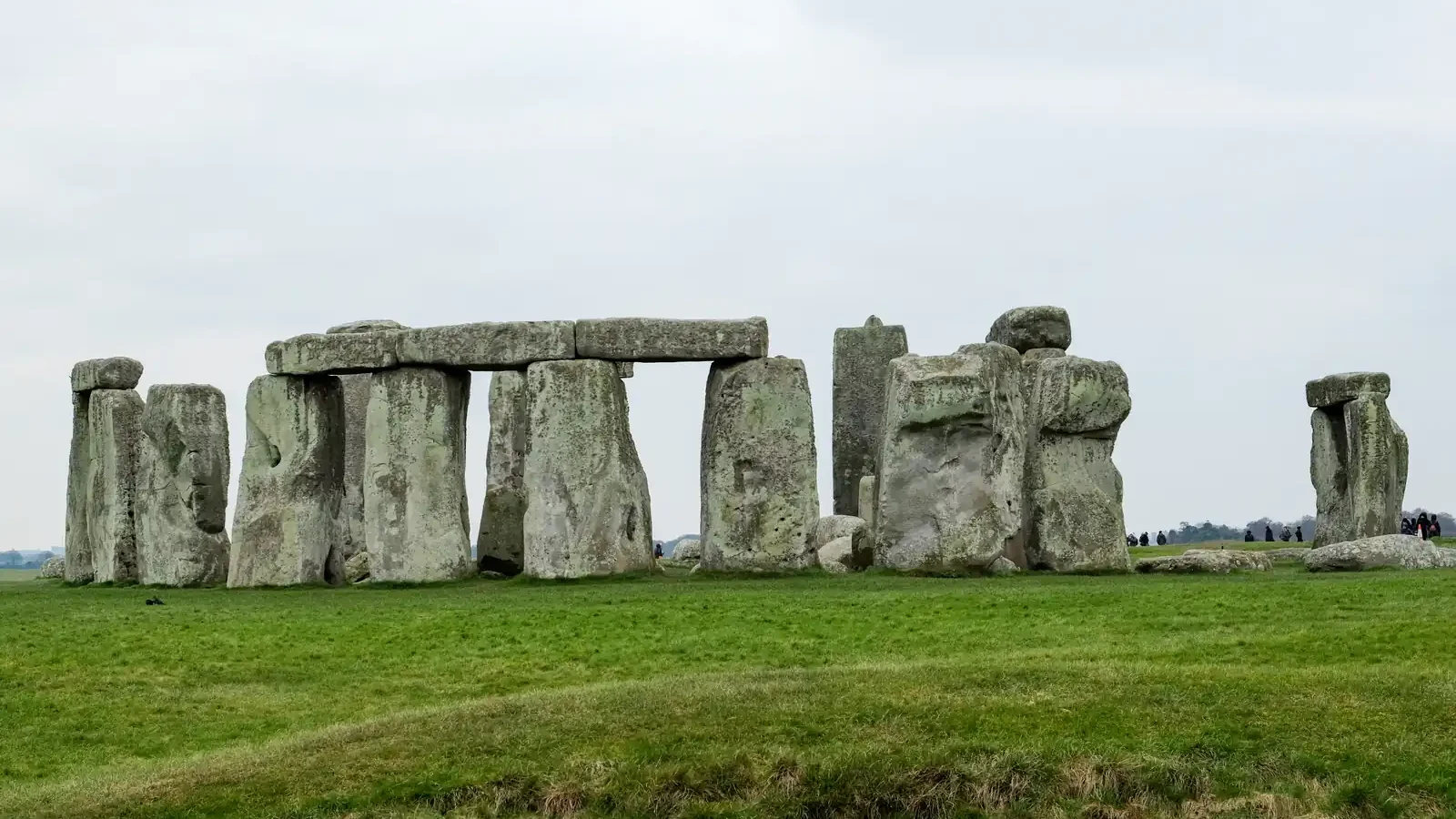
A chronological study of Stonehenge tested alternative interpretations of its construction sequence. Whether an antler sample was treated as residual affected how the sarsen circle and trilithons were placed in time. Relationships between excavated features and the practical order of building also informed the analysis.
This is why a monument’s age is often expressed as a range, and why different elements can receive different dates. Bayesian chronological modelling combines calibrated laboratory results with archaeological information about which events preceded others. The model makes those assumptions explicit; it cannot repair an incorrect association merely by producing a narrow interval.
The useful questions to ask of a proposed date are therefore concrete: what was sampled, where was it found, why is it connected to construction, and how does it fit the other evidence? A stone circle’s chronology becomes stronger when several independent relationships agree. The age of the rock itself answers a different question.