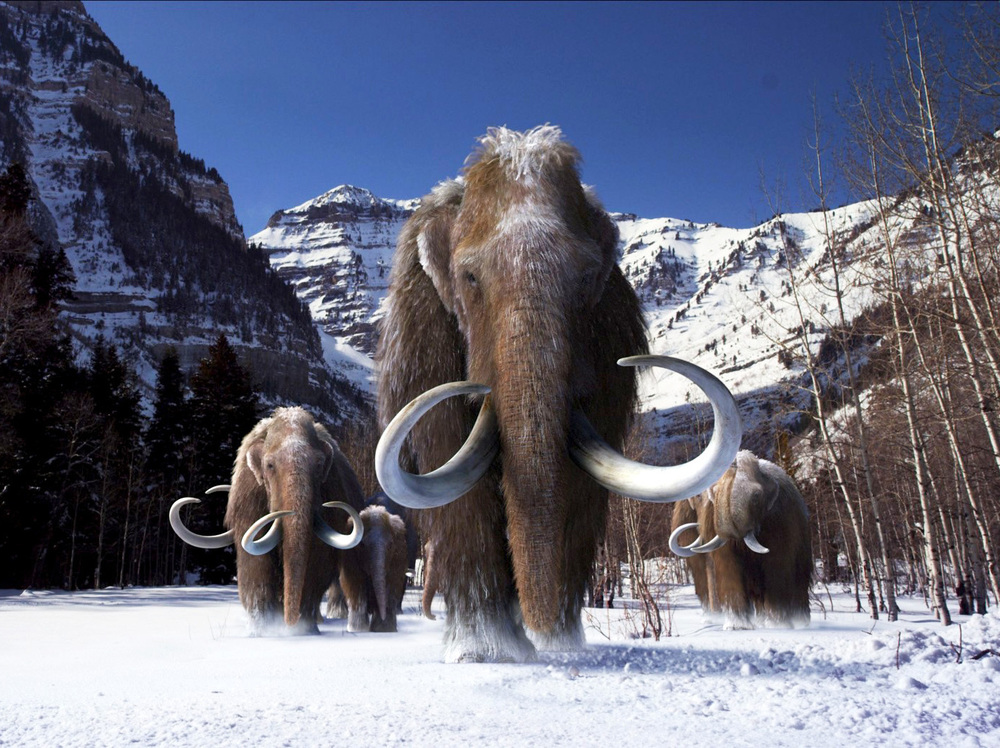
Wrangel Island mammoths did not disappear when the great herds vanished from Siberia and North America. A small population held on in a place that had once been connected to the mainland: Wrangel Island, far off the northeastern Siberian coast.
Some survived there until roughly 4,000 years ago—long after the continental mammoths were gone and while people were building the first pyramids in Egypt. That timeline makes Wrangel more than a footnote in the mammoth story. It is a natural experiment in what happens when a large animal is squeezed into an isolated refuge.
The obvious question is what finally ended the island population. For years, the answer seemed to be written in its DNA: a tiny founding population, intense inbreeding and a genome accumulating harmful mutations. Newer work complicates that picture. The mammoths were genetically vulnerable, but their population appears to have recovered and remained stable for thousands of years before its sudden disappearance.
Keep exploring
Continue with Curiosmos
How did mammoths reach an island?
During the Ice Age, lower sea levels exposed a broad shelf between Siberia and the land that is now Wrangel Island. Mammoths could move across that landscape as part of the wider Beringian ecosystem. As the climate warmed and the sea rose, the connection disappeared.
The separation was not a clean reset. The island still carried enough food and fresh water to support mammoths, but it was much smaller than their old range and cut off from new animals arriving from the mainland. Research on radiocarbon dates places the island’s last mammoths in the mid-Holocene, around 4,000 years ago.
That makes the story different from the mass extinction on the mainland. Wrangel was a long afterlife: a remnant herd living through changing vegetation, shrinking habitat and the genetic consequences of isolation.
What does ancient DNA show?
The first genetic studies found a sharp reduction in variation after the island became isolated. A 2010 study of mitochondrial DNA reported a loss of diversity consistent with a demographic bottleneck or founder event. In plain language, the island herd seems to have begun with very few animals, perhaps descendants of one small group.
A 2015 whole-genome comparison then put the scale of that bottleneck into sharper focus. Researchers compared a mainland mammoth that lived about 45,000 years ago with a Wrangel mammoth from about 4,300 years ago. The island animal came from a population with a much smaller effective size and reduced genetic diversity.
The comparison also suggested that the Wrangel genome contained more deletions, premature stop codons and other changes that can become common when natural selection has less variation to work with. A 2017 analysis described the pattern as consistent with “genomic meltdown,” a useful warning about small populations—but it came from a comparison involving one late mammoth genome.
That distinction matters. A single genome can reveal a great deal, but it cannot show how the population changed across all the centuries between isolation and extinction.
Did inbreeding kill the last mammoths?
A 2024 study in Cell widened the view by analysing 21 high-coverage woolly mammoth genomes spanning roughly 50,000 years. The researchers found the expected severe bottleneck when Wrangel became an island. They also found that the population recovered within a few generations and then remained broadly stable for more than 200 generations.
The genomes still carried signs of inbreeding and genetic erosion. Harmful variants did not simply vanish, and the population was never restored to mainland diversity. But the data did not show a long, steady genetic collapse immediately before extinction. The population appears to have lived with its genetic burden for a very long time.
That result changes the shape of the mystery. Inbreeding may have reduced the herd’s resilience, but it does not, by itself, identify the event that killed the last animals. The genetic record points to vulnerability rather than a final cause.
What could have happened at the end?
The final mammoths may have faced a short-lived disturbance that the fossil record has not yet identified. A change in freshwater, an unusual weather sequence, disease, a food shortage or a human arrival are all possibilities researchers have considered. The surviving evidence does not allow one of them to be promoted to a settled answer.
There is no direct evidence that people hunted the final Wrangel mammoths, and the island’s last dates do not automatically prove a human-caused extinction. At the same time, an apparently stable population can still be vulnerable to a single bad season when it has nowhere else to go. A mainland herd might move. An island herd cannot.
This is why the 2024 study is useful beyond mammoths. It separates two risks that are often blended together: a population can recover numerically after a bottleneck while retaining genetic damage that makes a sudden shock harder to survive.
A different way to think about the “last mammoths”
Wrangel Island was not a frozen museum where mammoths simply waited for the end. It was a living landscape. The animals adapted to island conditions, persisted through thousands of years and maintained a population large enough to survive long after their continental relatives had vanished.
Their bones and genomes also show why extinction stories rarely have one neat answer. Climate removed the land bridge. Isolation narrowed the gene pool. The island population recovered, but it remained confined to one place. Something happened near the end, and the current evidence suggests it happened quickly.
The most honest conclusion is therefore also the most interesting one: genetic isolation left the Wrangel mammoths exposed, but the DNA does not give us a single “kill switch.” It gives us a population that endured, adapted and then disappeared before researchers can yet reconstruct the final season.
That uncertainty is not a gap to fill with a dramatic claim. It is the part of the evidence that remains open.
Sources and further reading
- Dehasque et al., “Temporal dynamics of woolly mammoth genome erosion prior to extinction,” Cell (2024)
- Rogers and Slatkin, “Excess of genomic defects in a woolly mammoth on Wrangel Island,” PLOS Genetics (2017)
- Palkopoulou et al., “Complete Genomes Reveal Signatures of Demographic and Genetic Declines in the Woolly Mammoth,” Current Biology (2015)
- Nyström et al., “Temporal genetic change in the last remaining population of woolly mammoth,” Proceedings of the Royal Society B (2010)
- Vartanyan et al., radiocarbon dates for Wrangel Island mammoths, Quaternary Science Reviews
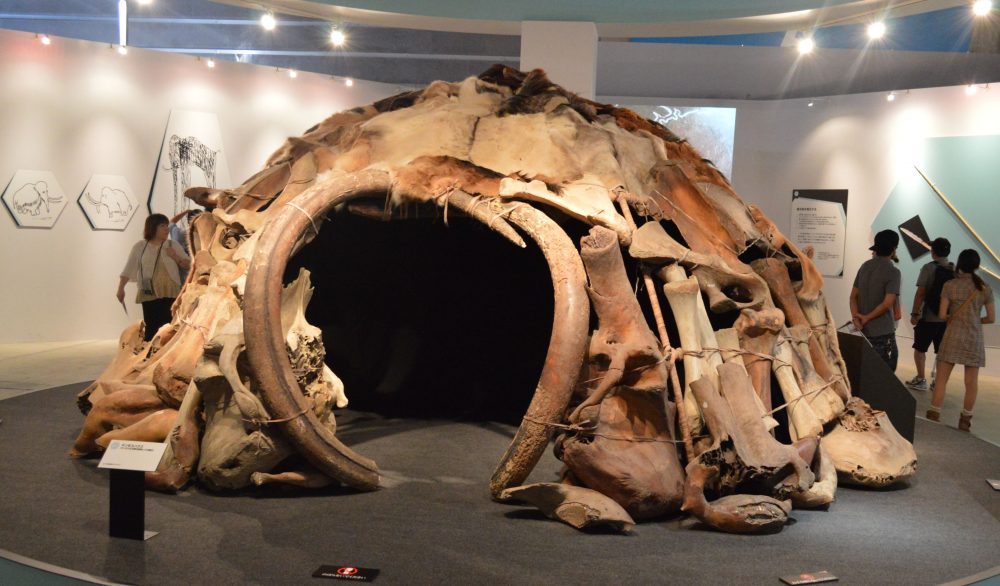
- For a separate archaeological example of mammoth remains, see this 25,000-year-old structure made from mammoth bones.
Curiosmos illustration of ancient DNA research. The conceptual image is not a photograph from Wrangel Island.