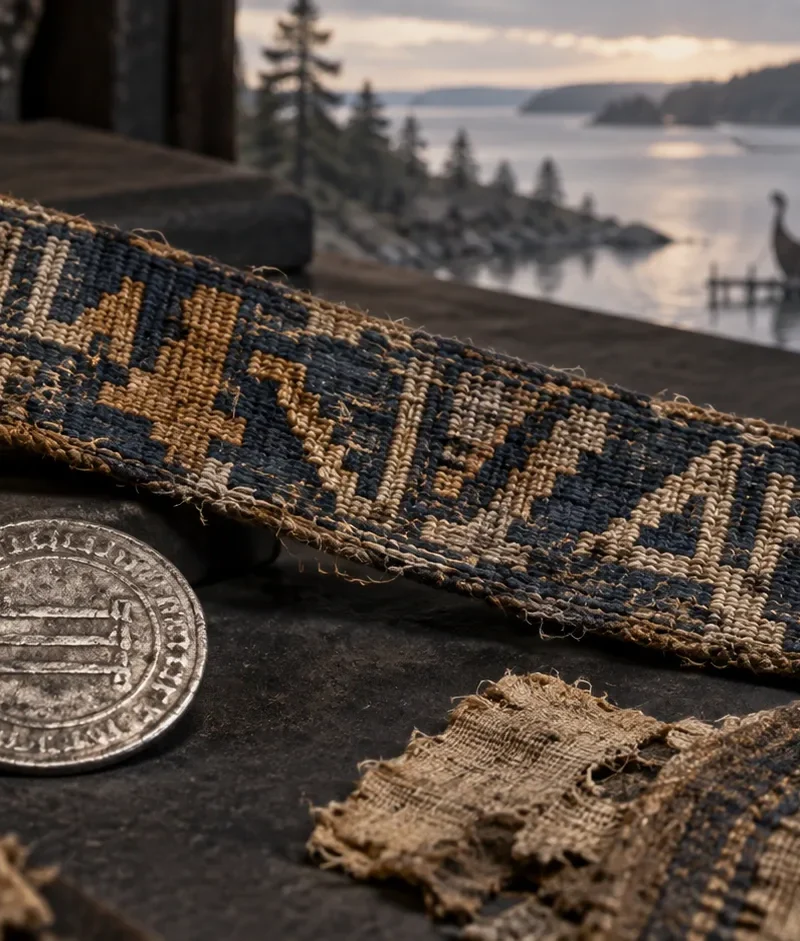
A mark scratched into a shell can look like the beginning of a story. A row of impressed wedges on a clay tablet can look more conclusive. Both may be ancient. Neither is automatically writing.
That distinction matters because claims about the “first writing” often mix three different things: a symbol that carries meaning, a record that helps someone remember information, and a system that can represent language. Archaeologists are not simply looking for the oldest mark. They are asking what the marks did, how consistently they were used and whether the evidence survives in a context that can be checked.
The answer is less tidy than a single date. It begins in several places with signs, counters and administrative habits before some communities developed scripts capable of recording names, quantities and eventually complete thoughts.
Keep exploring
Continue with Curiosmos
What does writing have to do that a symbol does not?
A symbol can stand for an idea without recording a sentence. A drawing of an animal might identify a clan, a warning sign might point to danger and a carved emblem might mark a person or a place. Those marks communicate, but they do not necessarily encode the sounds or grammar of a language.
Writing is more demanding. It needs a repeatable system that readers can use to recover language or a structured message beyond the immediate situation. The system does not have to represent every sound from the beginning, and the earliest scripts often leave much to context. But the signs have to work together in a way that can carry information from one person to another and from one time to another.
That is why a single unusual mark rarely settles the question. Archaeologists compare repeated signs, their order, their material setting and the kinds of objects that appear beside them. A sign on a ritual object may have a different role from the same shape on a ration account.
Why Uruk is central to the story
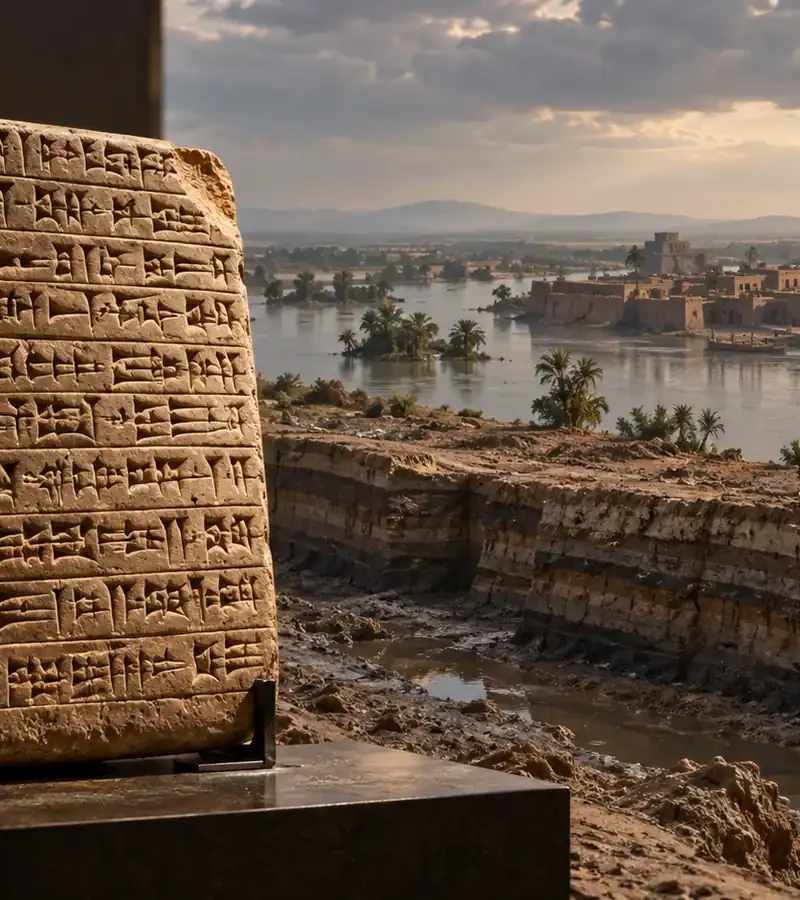
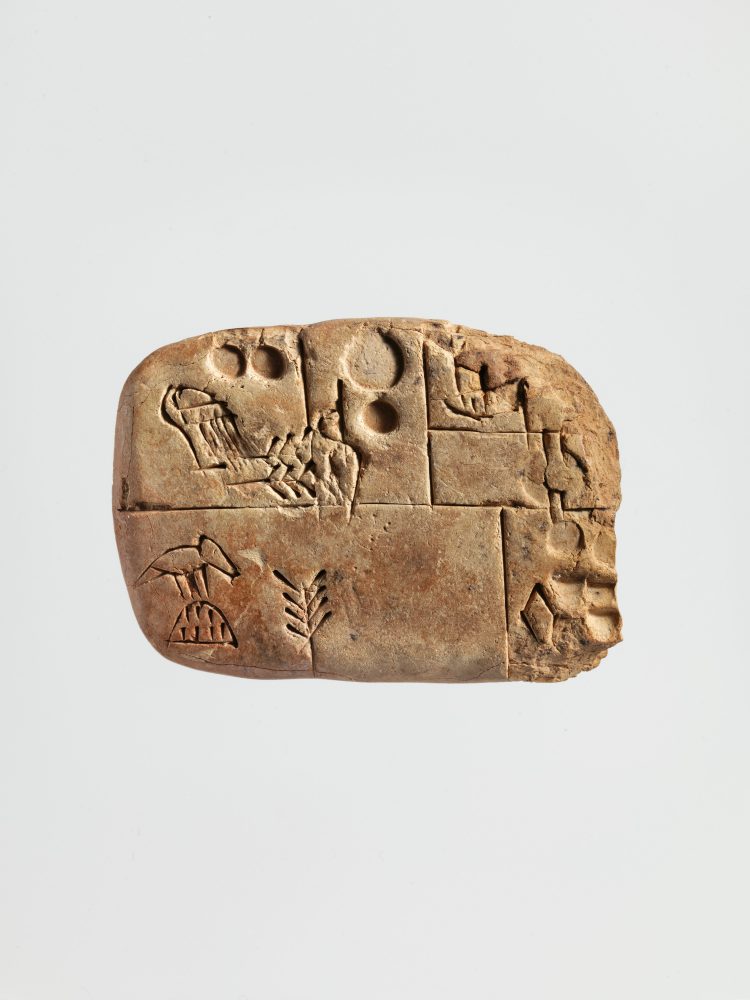
The strongest early candidate for a writing system comes from the city of Uruk in southern Mesopotamia, in what is now Iraq. Late-fourth-millennium BCE tablets contain impressed or drawn signs alongside numerical notations. Many record quantities of goods, labor or livestock. The signs began as recognisable images and gradually became more abstract.
The Metropolitan Museum of Art describes the Uruk material as the earliest known evidence for writing in Mesopotamia and places it around 3300 BCE. Its account also makes clear what those first documents were for: they were part of the administrative technology of growing cities, alongside counting tokens, seals and systems for measuring goods.
That origin story is revealing. Writing did not first appear as a poem carved for posterity. It grew out of pressure to keep track of things that could no longer be managed by memory alone. Once the system existed, it could be adapted for names, legal formulae, rituals and literature.
The Cuneiform Digital Library Initiative records an Uruk IV administrative tag dated to about 3350–3200 BCE. The object was excavated at Uruk and appears to have been formed around twine so it could be attached to a basket or shelf. It is a small piece of evidence, but its shape, position and repeated sign use show how writing was embedded in the work of an institution.
Does a record of grain count as writing?
Some early tablets contain only a few signs and numbers. That can make them look like accounting shorthand rather than writing in the familiar sense. Yet a notation does not have to describe a myth to qualify as written communication.
A tablet that records a quantity of barley for a named office is already doing something memory cannot do as reliably. It fixes an obligation, identifies a category and allows another administrator to check the record later. The signs are not merely pictures of grain. They participate in a convention shared by people who know how to read the account.
The limitation is that the earliest tablets are difficult to interpret in detail. Many signs are still debated, and the tablets rarely provide a continuous sentence. The evidence supports a developing writing system, but it does not give us a clean transcript of the first conversation written down.
What about older marks in China?
Jiahu, a Neolithic site in Henan, China, produced tortoise shells and other objects incised with marks dating to the seventh millennium BCE. Some signs resemble later Chinese characters, which has encouraged claims that they are the oldest writing in the world.
The evidence is genuinely important, but the stronger claim goes beyond what the material can presently show. In their study in Antiquity, scholars argued that the Jiahu marks were signs connected with ritual practice and may have anticipated later writing. They did not present the finds as a fully developed script that can be read as a language.
That distinction is not a technicality. The marks are early evidence for symbolic communication. Their repetition and placement deserve study. But without a larger, consistent system that records language, it is safer to describe them as sign use or a possible precursor than as writing in the same sense as the Uruk tablets.
Where does Egypt fit?
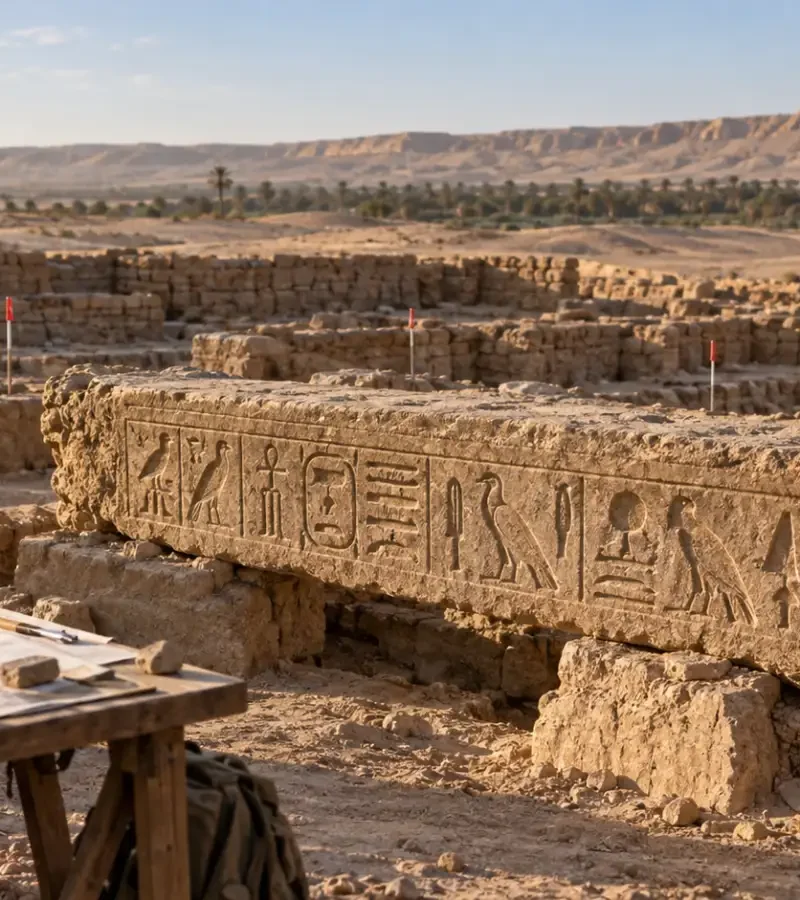
Egyptian evidence appears in the same broad period as the first Mesopotamian tablets. Research discussed by Oxford Academic places the earliest evidence for phonetic writing in Egypt around 3250 BCE, while noting that the system took time to develop into the continuous encoding of speech.
That warning is useful. Early Egyptian signs could combine pictures, sound values and ideas. A sign might identify an object, stand for a sound or help clarify a name. Over time, that flexibility allowed scribes to write more than labels and inventories, but the surviving record does not show a single moment when “Egyptian writing” suddenly arrived complete.
The gap between early signs and later complete inscriptions also reflects preservation. Organic writing surfaces disappear, excavations are uneven and many early settlements have not been explored in the same way. A community may have used perishable materials for years before a durable tablet or stone inscription happened to survive.
Why “the first writing” remains a moving target
There are at least four reasons the ranking stays unsettled.
First, the definition changes the result. If any repeated sign that conveys meaning counts, Jiahu and other early traditions move closer to the front. If writing must encode language in a demonstrable system, the Uruk and early Egyptian evidence becomes more important.
Second, dates are not always dates for the marks themselves. An object may come from a layer that was disturbed, or a sample may date the material around it rather than the moment a sign was incised. Archaeologists therefore combine stratigraphy, associated objects, laboratory work and the history of the excavation.
Third, decipherment is not the same as antiquity. An undeciphered script may still be writing, while a perfectly understandable symbol may not be a script. The question is what the signs were designed to do, not whether modern researchers can read every one.
Finally, writing may have emerged more than once. Mesopotamian cuneiform, Egyptian hieroglyphic writing, Chinese writing and Mesoamerican scripts each have their own histories. Similar needs—counting goods, marking names, preserving ritual knowledge—could encourage similar solutions without a single line of descent.
So which culture invented writing?
The evidence does not support a simple answer. Uruk provides some of the earliest secure material for a writing system. Egypt developed its own early script around the same broad period. Older sign traditions, including Jiahu, show that symbolic communication had deep roots before either system became fully legible as writing.
The most accurate answer is therefore a question about thresholds. When did a mark stop being a reminder and become a message? When did a picture become part of a convention that could carry language? Those changes were gradual, and the surviving objects capture only fragments of the process.
That is why the first tablet is not necessarily the first act of writing. It is the earliest surviving piece of a much longer experiment in making memory portable. The clay, shells and carved surfaces left behind give us clues about that experiment, but they do not erase the missing pages.
For a closer look at what written records can reveal once a script is established, read our reports on reading sealed cuneiform letters without opening them and how Egyptian writing developed.