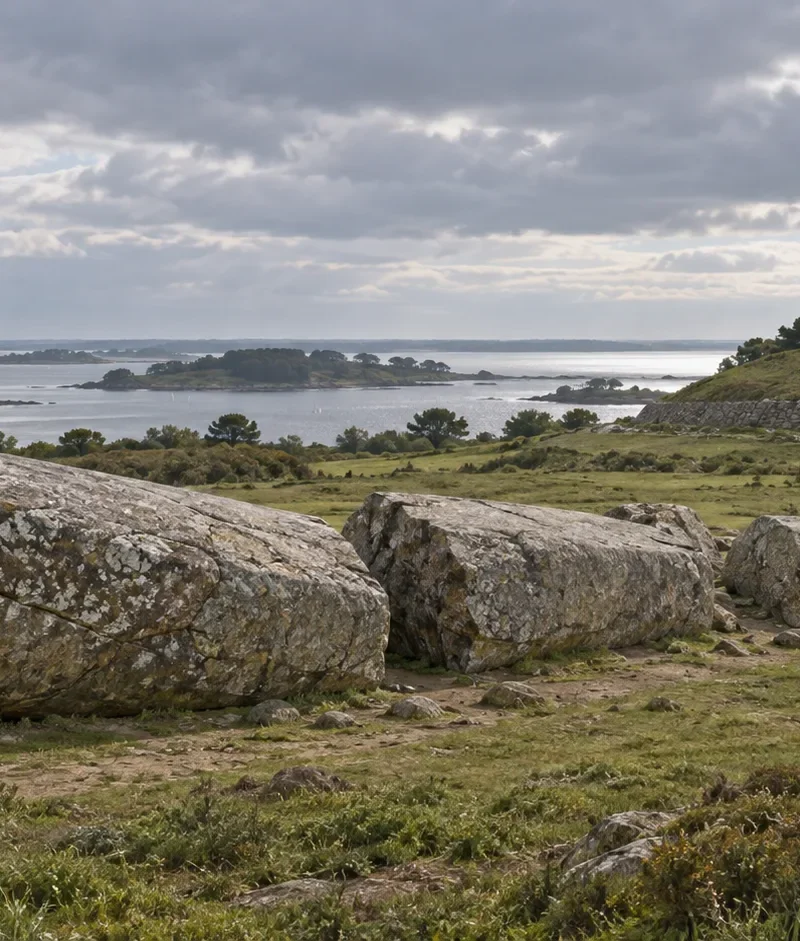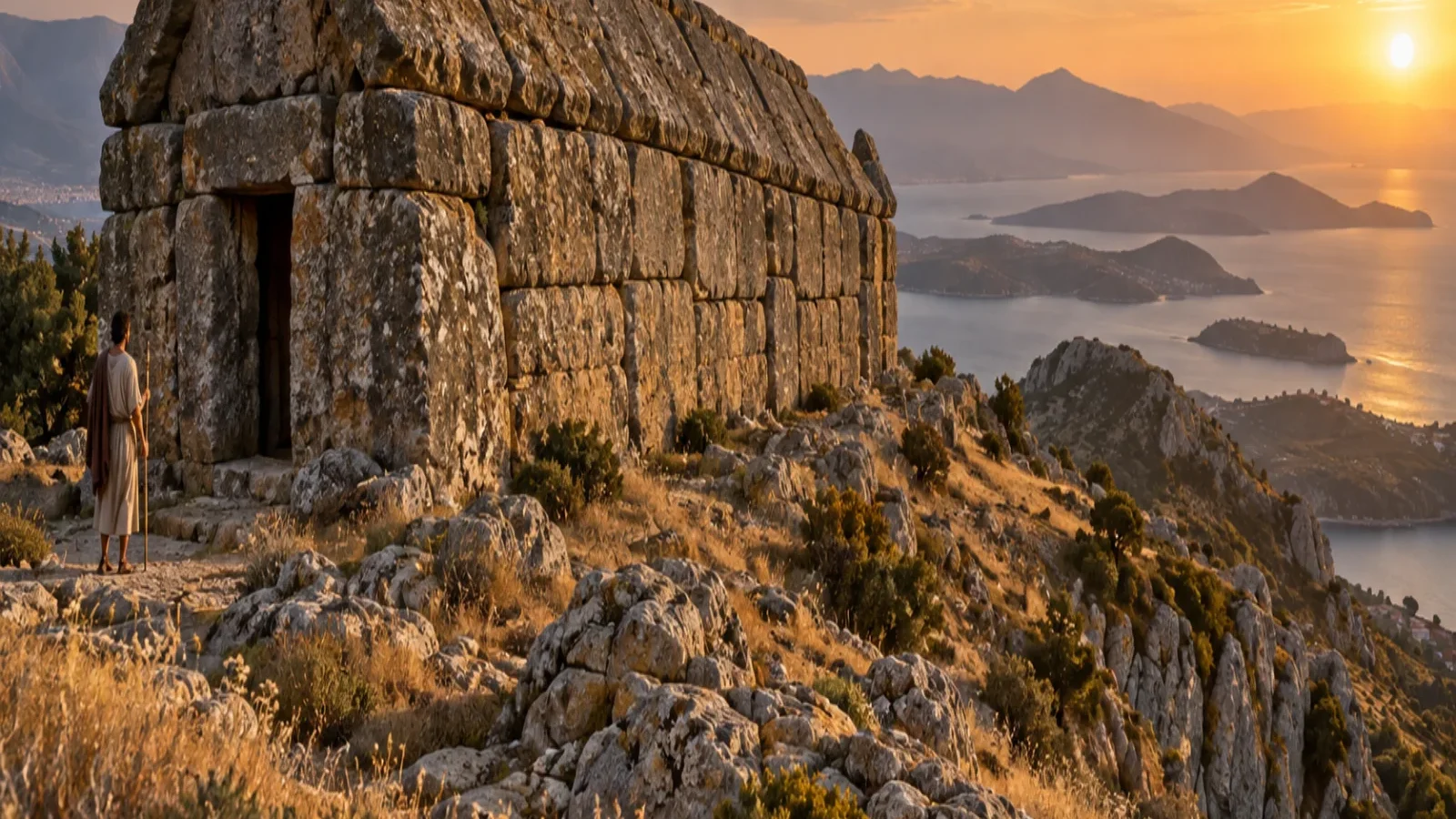
On the hills of southern Euboea, stone buildings with huge blocks and roofs that step inward are known as drakospita, or Dragon Houses. Local stories credited dragons—or giants—with the strength to build them. The name has endured, but excavations are giving archaeologists something more concrete to compare: pottery, walls, quarries and the ways people reused the buildings.
Researchers working with the Swiss School of Archaeology in Greece and Greece’s Ephorate of Antiquities of Euboea have recorded eight buildings around Styra. The best known sits near the summit of Mount Ochi. Three others form the Palli Lakka group, with more documented at nearby sites.
One name, several different buildings
The Dragon Houses are not all alike. The Mount Ochi building is unusually well preserved; the three at Palli Lakka use somewhat different masonry. Comparing them helps show how construction and use varied across the region.
Keep exploring
Continue with Curiosmos
The walls are built from large blocks laid without mortar. Flat slabs project inward course by course until they meet above the room, creating a corbelled roof. The result is heavy and carefully balanced, and still makes the buildings feel imposing on the hillside.
Pottery gives the first firm dates
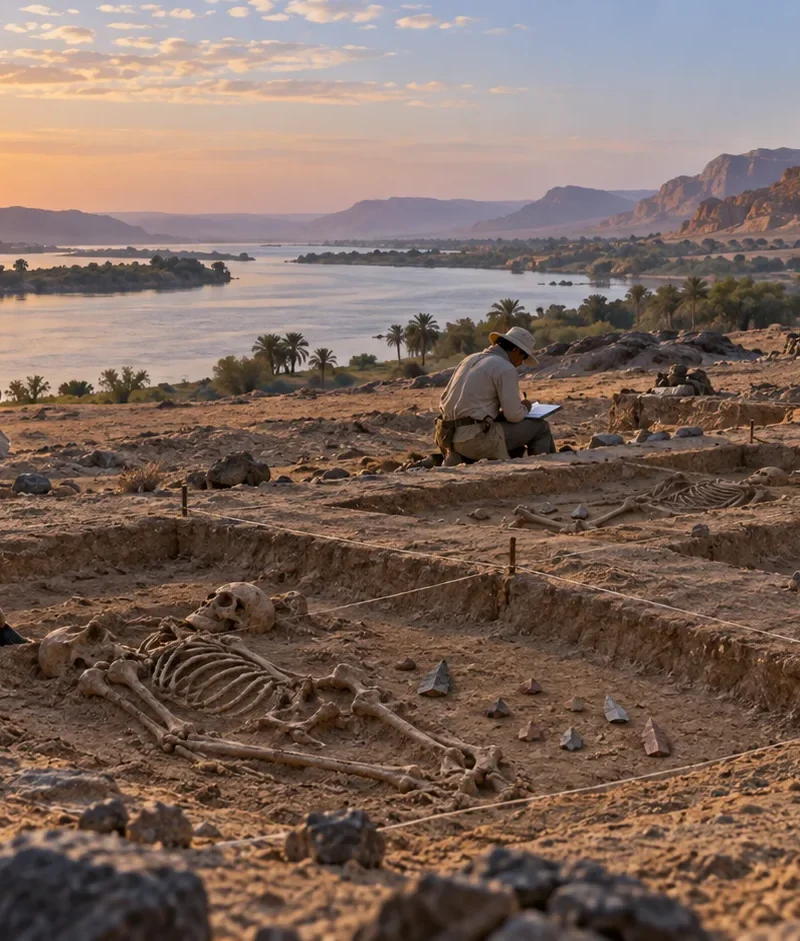
Archaeologists opened trenches at Ilkizes in 2021 and at Palli Lakka in 2022. Ceramic finds place activity at both monuments in Antiquity. The Archaeology in Greece Online report for Palli Lakka describes several layers of occupation, with the latest material reaching the third century BC. The pottery suggests construction in the later Hellenistic period.
That evidence dates activity at the site; it does not necessarily identify the day or century when the first stones were set. A building may have been repaired or altered before the pottery reached the layer excavated by archaeologists. The sequence is still being worked out.
Sanctuary, quarry shelter or fortified farm?
The Greek Ministry of Culture lists several possibilities for the buildings, including a small sanctuary, shelter for quarry workers and fortified post. The Swiss School’s project also considers quarrymen’s houses and fortified farms.
At Palli Lakka, quarry fronts nearby raise the possibility that stone extraction was connected with the settlement. That relationship does not appear at every Dragon House, so it may explain this group better than the buildings as a whole.
People later used the structures as sheepfolds. That practical afterlife can leave traces of repairs and changed entrances, making it harder to recognise what the first occupants did inside. A strong wall could shelter people or animals; its shape alone cannot settle the matter.
The view from Mount Ochi
A 2009 paper in the Journal of Astronomical History and Heritage measured the Mount Ochi building and argued that its orientation could fit the rising of Sirius around 1100 BC. The authors proposed a religious and astronomical role.
It remains one interpretation of one building. The proposal depends partly on a date that is debated, and a building’s direction can have more than one explanation. The recent excavations at Ilkizes and Palli Lakka offer evidence for activity in the Hellenistic period; they do not turn every Dragon House into an observatory.
How the roofs were put together
Three-dimensional surveys now give the research team detailed models of the structures and surrounding terrain. Archaeologists can compare wall thickness, entrances and roof geometry, then set those measurements beside nearby routes and quarry faces.
The roof itself is a feat of dry-stone construction. Each course projects a little farther into the room until the slabs meet at the top. No dragon is needed to explain the strength of the building; the stones show the care and skill of the people who placed them.
The Dragon Houses keep their old name, and the legend still gives the ruins atmosphere. The stones also carry quieter clues: a layer of pottery, an abandoned quarry face, a doorway altered for a later use. As researchers connect those traces, the people who built and lived in these hillside structures come into clearer view.
Sources and further reading
- Swiss School of Archaeology in Greece: The “dragon houses” of Euboea.
- Archaeology in Greece Online: Styra–Palli Lakka Drakospita 2022.
- Greek Ministry of Culture: archaeological research at the “dragon houses”.
- Theodossiou et al., “Study and Orientation of the Mt. Oche ‘Dragon House’ in Euboea, Greece,” Journal of Astronomical History and Heritage (2009).