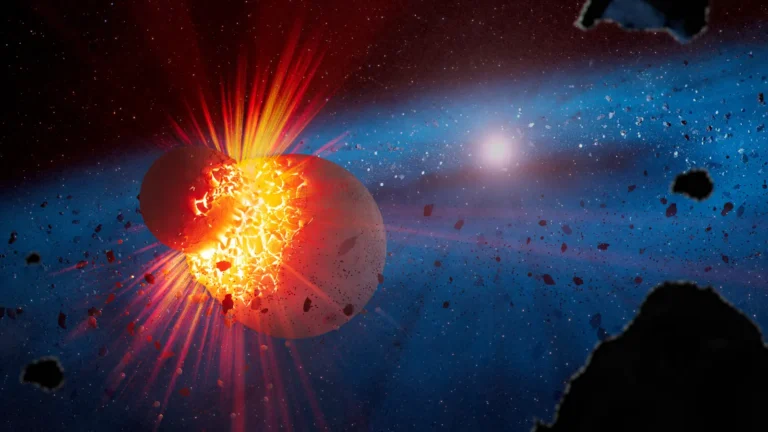
An alien civilisation might leave behind something much smaller than a spacecraft. A collision, a broken instrument or a swarm of artificial objects could produce dust. If a few fragments crossed interstellar space and reached the Moon, could they still carry a recognisable sign of their origin?
That possibility appears in a 2026 paper by astrophysicist Brian C. Lacki about passive technosignatures. These are proposed signs of technology that do not depend on a civilisation continuously transmitting a powerful radio signal.
The paper is a proposal for how to think about a search, rather than a report that alien material has been found. The search would work on a very different scale from a radio telescope. Instead of waiting for a message from the stars, a researcher might examine a grain already lying within reach.
A signal that does not need its own transmitter
Lacki considers passive beacons that could use available starlight, as well as fragments from artificial structures or swarms. Collisions could generate debris, and radiation pressure could help expel sufficiently small particles from a planetary system.
The paper discusses the Moon as a possible place to seek surviving material. Capture, preservation and eventual recognition would all be necessary parts of the process. Each introduces uncertainty, and none establishes that such grains are present.
Producing the dust, transporting it between stars and capturing it on the Moon would each require suitable conditions. A civilisation making dust would not guarantee that a recognisable fragment reached our Solar System, much less a sample that researchers happened to examine.
The Moon has been altering its dust for a long time
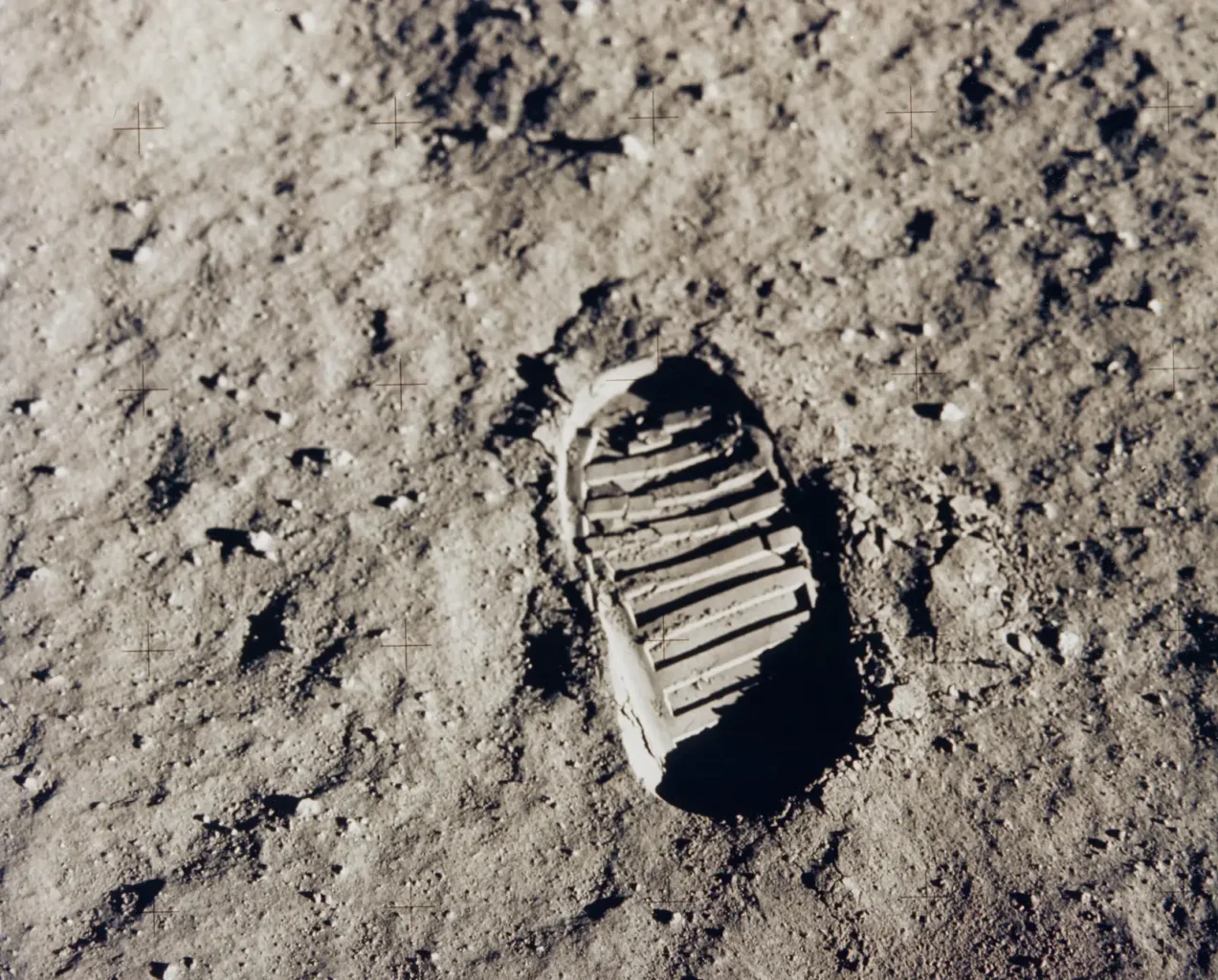
Lunar soil, or regolith, is not an untouched container. NASA’s explanation of lunar regolith describes the loose material covering the surface. Its history includes repeated impacts and exposure to the space environment.
A NASA technical record on space weathering explains how micrometeorite impacts and the solar wind alter grain surfaces. Melting, vapour deposition and implanted particles can change the material that an instrument first encounters.
That presents a problem for any ancient technological fragment. The surface might no longer resemble its original material. A coating could conceal what lies beneath, while repeated damage could erase a manufactured feature.
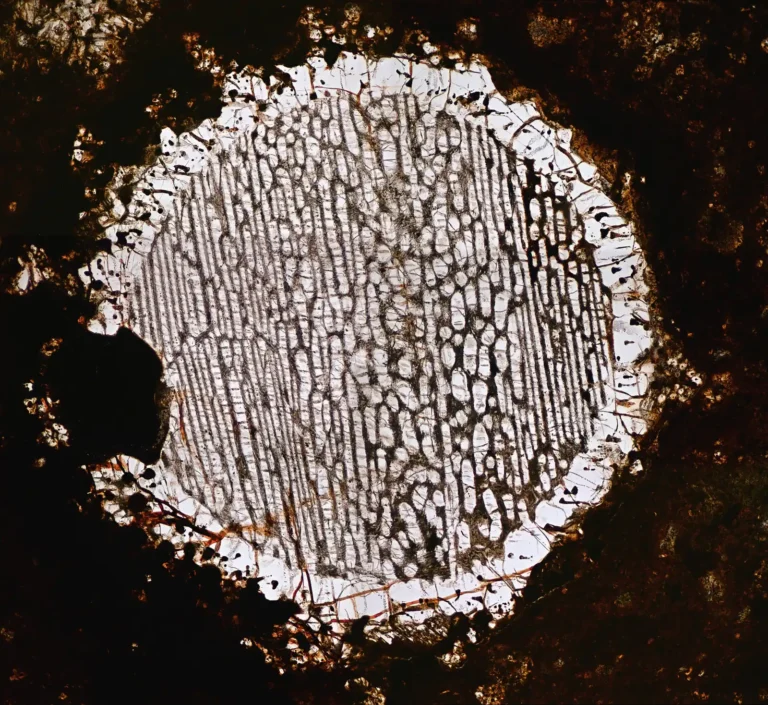
It also presents an opportunity for careful examination. A grain has an interior as well as a surface. Comparing them could help distinguish an original structure from changes acquired on the Moon, provided the sampling and measurements were designed for that purpose.
An unusual shape would only begin the investigation
Nature already produces tiny metal particles in lunar material. A 1977 research record held by NASA discusses small metallic iron spheres in lunar agglutinates, the fused particles formed through impact processing.
A neat-looking sphere would therefore need further examination before being interpreted as manufactured. The same applies to a surprising composition: unusual chemistry can prompt a useful question without supplying an origin.
A convincing candidate would need several observations that agreed. Repeating structures, composition, internal texture and the grain’s documented context could be examined together. Researchers would also have to account for terrestrial contamination and material introduced by human spacecraft.
This is where the search could become especially demanding. An object made by people and an object made elsewhere might share features associated with manufacture. Establishing technology would still leave the question of whose technology.
A different way to look for other civilisations
The proposal gives us a concrete question to put to samples: could an artificial material survive its journey and remain distinguishable after exposure on the Moon? Answering that would require work on transport, survival and recognition, not merely a closer look through a microscope.
Our coverage of planetary collisions and dust explores how fragments can reveal events that cannot be watched directly. A search for technological grains would ask an additional question about the fragments: whether any trace of manufacture could be separated from the natural material around them.
Lacki reports no discovery of an alien grain. He proposes a search for something that existing samples might conceivably contain. If technology can outlast its builders as dispersed debris, the record of another civilisation might arrive without a signal, a landing or even an intact machine. The challenge would be learning to recognise it.