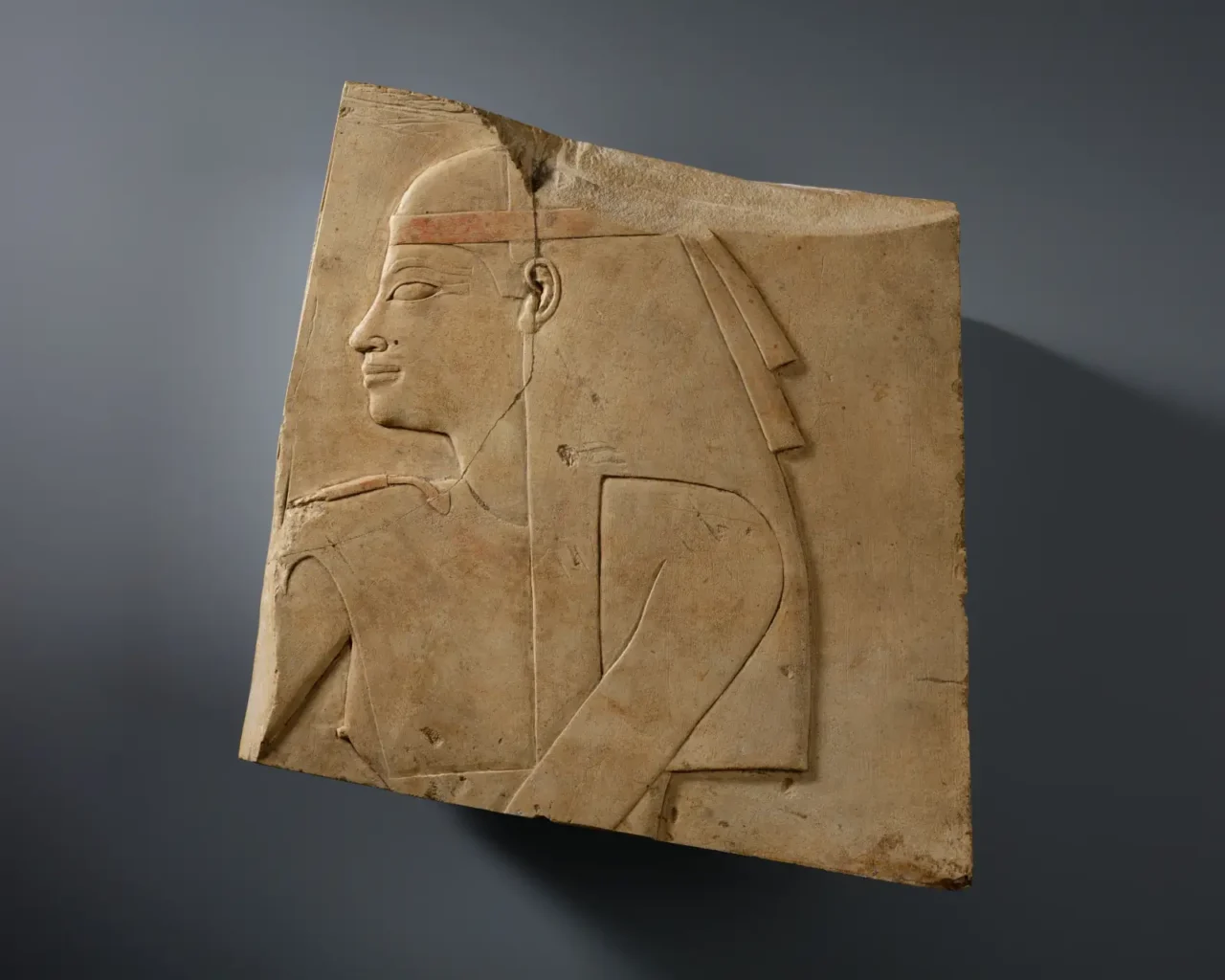
On a piece of pale limestone, an Egyptian goddess is shown writing. Above her are rows of Egyptian hieroglyphs. Her face has been damaged, and a round hole has been cut through the stone nearby.
The slab was once part of a larger carved scene. By the time it came to rest on the Mediterranean seabed, it had another job: holding a ship in place.
The stone anchor, found off the coast near Atlit, south of Haifa, carries an image identified as Seshat, the ancient Egyptian goddess of writing and record-keeping. It links Egyptian monumental art with the seafaring world that joined ports along the eastern Mediterranean coast.
A goddess on the seabed
Before the anchor appeared in a museum exhibition in 2020, veterinarian Rafi Bahalul spotted hieroglyphs while swimming near the coast. He alerted the authorities, and the unusual find was examined by maritime archaeologists and Egyptologists.
Shirly Ben-Dor Evian, then curator of Egyptian archaeology at the Israel Museum, told ABC News that the stone had likely been cut from a larger, decorated wall relief. The piece was later shaped into an anchor and pierced so a rope could be fastened through it.
A 2025 report by the Israel Antiquities Authority gives a closer look at the object. It measures 63 centimetres long, up to 40 centimetres wide and 14 centimetres thick. The hole is about nine centimetres across.
One face was carefully smoothed and covered with carved signs. The back is rougher, with diagonal chisel marks. The contrast between the finished surface and the cut edges helps show how a fragment of an architectural relief could be separated and given a second life at sea.
Who was Seshat?
Near the lower end of the stone, the surviving figure holds a tablet and a writing implement. The antiquities authority identifies her as Seshat, a goddess associated with writing, knowledge and records.
In Egyptian temple scenes, Seshat could record a king’s names and the goods brought home from a campaign. She also appeared beside the king in a foundation ceremony known as “stretching the cord,” connected with laying out important buildings. The Metropolitan Museum of Art describes these roles in its account of a different relief that probably depicts the goddess.
The writing on the anchor is fragmentary. Ben-Dor Evian identified a surviving title for Seshat in the 2020 report, while the 2025 archaeological report says the inscription had not yet been deciphered. The surviving signs are only part of a larger scene, making the original message harder to reconstruct.
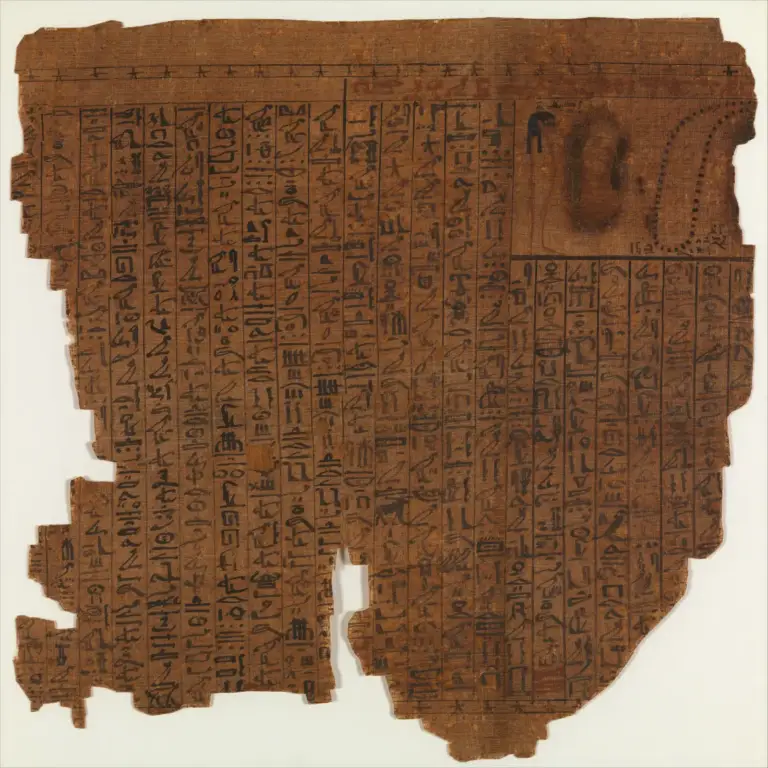
Egyptian writing also served people after death: the texts painted on Ankh’s coffin describe routes through the afterlife.
The missing face
Seshat’s face was damaged, while much of the surrounding carving survived. When and why that happened remains one of the stone’s unanswered questions.
One possibility, raised by the museum curator in 2020, is that the image was deliberately altered before the sacred stone was reused. The antiquities authority’s later report offers another possibility: the damage could be connected with the iconoclasm of the Amarna period, in the fourteenth century BCE.
There are Egyptian examples of divine figures being removed from temple reliefs during that period. A relief of Mentuhotep II and Hathor in the Met, for example, preserves a record of a goddess being chiselled away and later repaired. The Seshat anchor itself does not tell us who damaged its figure or whether that happened before the stone was made into an anchor.
A harbor with many histories
The antiquities authority’s report describes the anchor among finds from Newe Yam, a stretch of coast with small natural anchorages. Reefs and low islands offered shelter, while the nearby site of Tel Nami was connected to Bronze Age trade.
Several stone anchors were documented in the same survey area. Their shapes and materials offer clues, though the researchers note that a stone anchor’s form alone does not always reveal where it was made or who used it. An anchor could be lost without the entire vessel sinking, too.
The museum account described the anchor before its 2020 exhibition. The antiquities authority’s later report describes a 2021 survey of the same anchorage; it does not explain how that survey relates to the earlier recovery and display.
The relief has a more identifiable Egyptian connection than an undecorated stone, but its original building and the route it took to the coast remain open questions. The rope hole cuts through the writing, leaving the sculptor’s work and the sailors’ practical needs on the same piece of limestone.