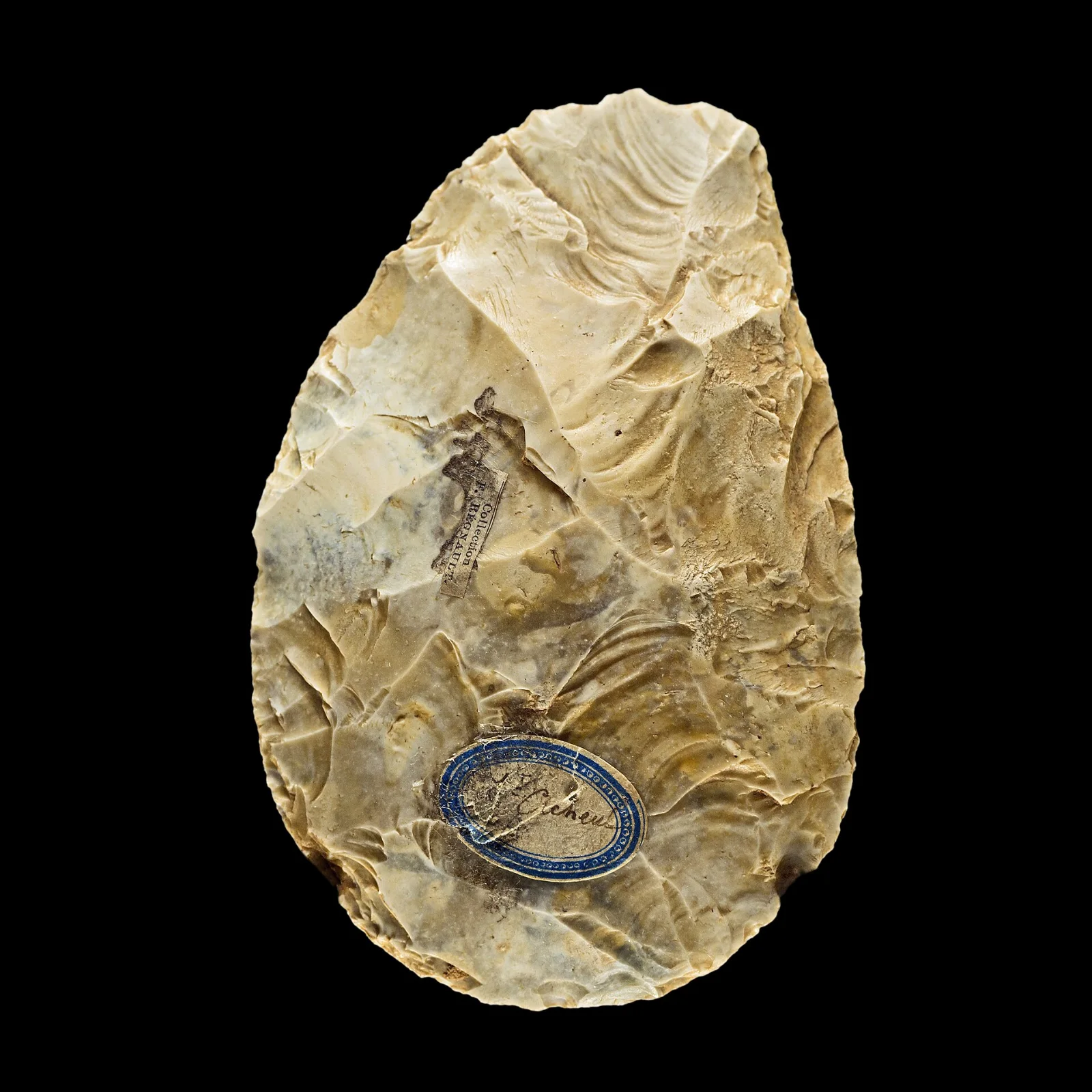
In one of the least explored corners of southern Africa, Polish archaeologists have found nearly 100 stone handaxes along the shore of a lake that dried up long ago. The tools, from the Okwa Valley in Botswana’s Kalahari Desert, belong to the Acheulean tradition, the long-lasting toolmaking culture of early humans such as Homo erectus.
Some reports this week described the handaxes as 1.7 million years old. That is not what the team has said. The team has not published a date for these finds, and the real story is in where they were found and how.
At a glance
- Where: the Okwa Valley, Kalahari Desert, Botswana, toward the border with Namibia.
- What: nearly 100 Acheulean handaxes in total, including about 40 at a single site this year, with the flakes left from making them.
- Age: no date published yet. The Acheulean tradition lasted from about 1.7 million to about 200,000 years ago.
- Who: a team led by Mirosław Masojć of the University of Wrocław, with the University of Botswana and partners in Korea and Poland.
Tools on an ancient shoreline
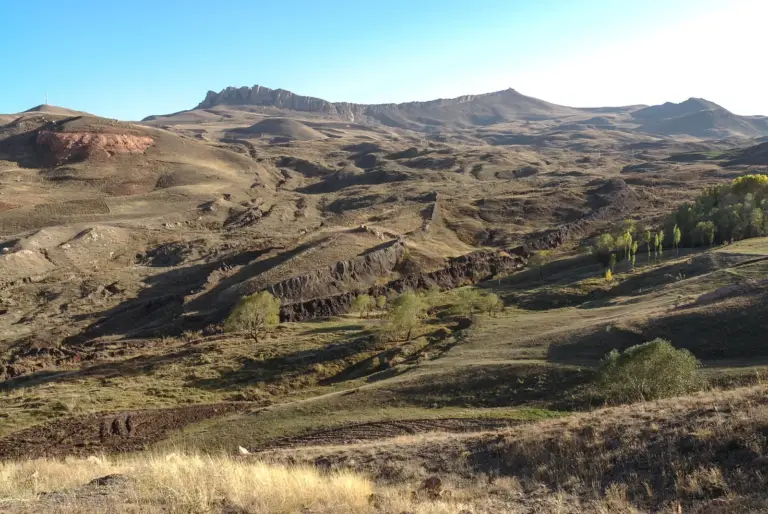
Today the valley is dry and covered in dense bush. During the Pleistocene it held rivers and a lake, and the handaxes were found along that lake’s former shoreline, according to Science in Poland. This year the team found around 40 handaxes at a single site, together with the stone fragments left over from making them, a sign that people shaped tools on the spot.
“The Okwa Valley is an exceptionally challenging area for research,” Masojć said. “The dense bush limits access to many locations and hinders systematic archaeological surveying. This is the main reason why this part of the Kalahari remains so poorly explored to this day.”
A shortcut through the sand
The team found an unusual way in. The valley contains calcrete, sediment cemented by calcium carbonate, which Botswana quarries for road building. The quarries cut through the Kalahari’s layers, exposing traces of ancient rivers and the Pleistocene lake. “They are extracted from numerous quarries, which proved invaluable to us,” Masojć said.
How old are they?
This is where reports have gone wrong. Archaeology magazine gave the tools an age of about 1.7 million years. But in the team’s own account, that figure is when the Acheulean tradition began. “The consensus is that the Acheulean tradition emerged approximately 1.7 million years ago and persisted until about 200,000 years ago,” Masojć said. The Kalahari tools could fall anywhere in that span of 1.5 million years. The team is now combining tool analysis with work on the sediments and their chronology. The handaxes are being studied at the AGH University of Science and Technology in Kraków.
Our take
A big undated number makes a better headline, but the find matters without it. The Kalahari is a large gap on the map of early human movement between East Africa and South Africa, both of which are rich in Acheulean sites. A lakeshore where people made tools, preserved in sediments that can be read layer by layer, is exactly the kind of site that can fill it. The team plans to compare these handaxes with those found north of the Kalahari and in South Africa, which could show whether the desert was a barrier or a corridor.
For the hominins who made tools like these, read about a 100,000-year-old tooth from China that may belong to an unknown lineage, and our overview of the tools and inventions that shaped human civilization.