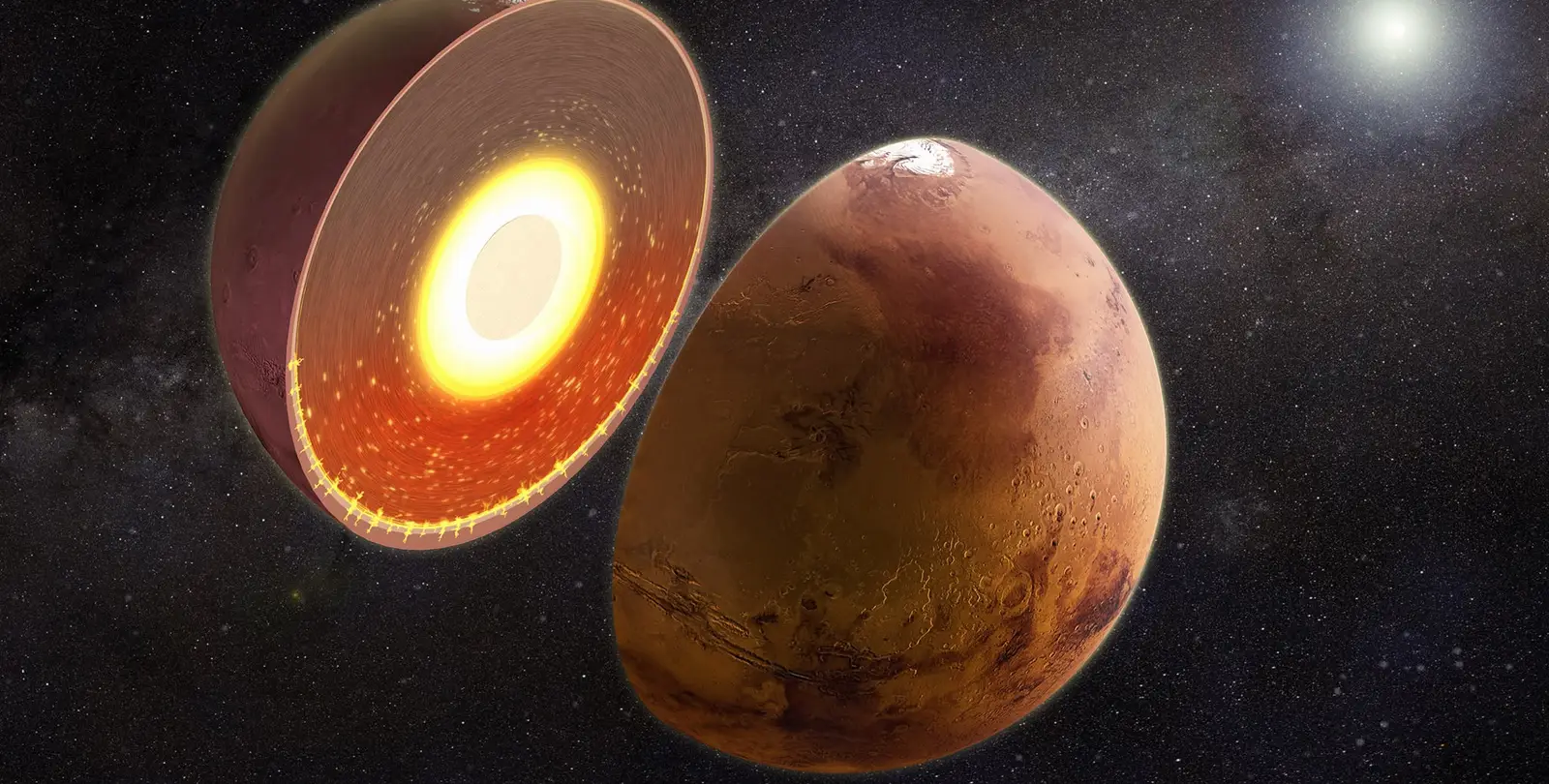
Mars looks cold from orbit, but a new study suggests that the rock beneath its south polar region may still be carrying a surprising amount of heat. By analysing tiny variations in the planet’s gravity field, researchers found a signal consistent with a southern interior roughly 200 to 400 degrees Celsius warmer than the northern half.
The result does not mean that anyone has measured a hot spot directly. Mars has no global network of seismometers or deep boreholes. Instead, the temperature estimate comes from a model that links the planet’s gravity, crustal density and long-term geological history. The model points to a real difference between the two hemispheres, but the reason for it remains open.
Mars is divided into two broad geological provinces. The northern lowlands are smoother and lower in elevation, while the southern highlands are older, rougher and heavily cratered. Planetary scientists have debated the origin of that split for decades. It could have been created by a giant impact early in Martian history, by long-lived movement in the mantle, or by several processes working together.
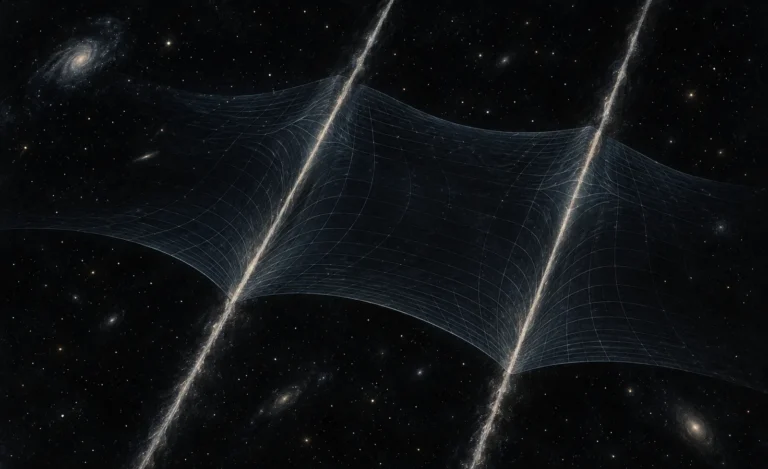
The Caltech team used spacecraft measurements of Mars’ gravity rather than relying only on surface appearance. Gravity changes slightly wherever the distribution of mass changes. A thick, dense crust pulls more strongly than a thinner or less dense one, and buried structures can leave a measurable imprint even when they are invisible in photographs. The researchers compared those signals with models of heat moving through the crust and mantle.
Their preferred solutions require the southern interior to be warmer than the north. In some versions of the model, the difference is large enough for parts of the deep interior to remain partially molten. That would not mean Mars has an Earth-like global ocean of magma. It would mean that pockets or layers of rock could still be soft enough to move slowly over geological time.
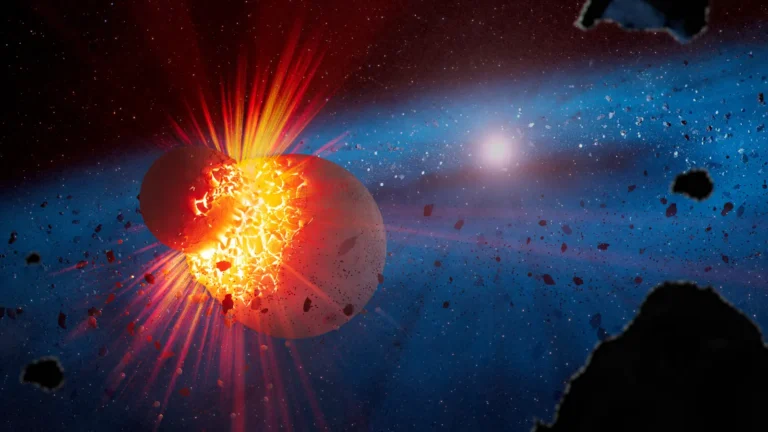
One possible explanation is an ancient collision. A very large impact can rearrange a planet’s crust, disturb its mantle and leave one hemisphere with a different thermal history from the other. Mars’ northern lowlands have often been discussed as the possible scar of such an event, although the exact evidence is still debated.
Another possibility is mantle convection. On Earth, hot material rises and cooler material sinks inside the mantle, helping drive volcanism and plate tectonics. Mars is smaller and lost heat more quickly, but convection may have continued in parts of the planet long after its global magnetic field weakened. A southern region that stayed hotter could therefore be the remnant of an uneven interior circulation pattern.
The model also allows for an explanation tied to the crust itself. Differences in crustal thickness and radioactive elements can change how efficiently heat escapes. If the southern highlands contain more heat-producing material or a thicker insulating layer, the interior below them could stay warmer even without a single dramatic event.
This is why the finding matters. Mars’ surface records a history of water, volcanism and impacts, but those clues do not tell us the whole story. The thermal state of the deep interior controls whether the planet can still produce volcanic activity, how its crust flexes, and where future missions should look for the clearest signs of ancient change.
The result also gives planners a better sense of what a long-term human or robotic presence would face. Any future base would need to work with the local geology, from the stability of the ground to the availability of buried ice. Our overview of how robots could build a first Mars base looks at the surface problems; this new study reaches much deeper, into the heat that still moves beneath it.
For now, the southern temperature contrast is a strong model result rather than a direct reading from inside Mars. Seismic observations, better gravity maps and measurements of the planet’s rotation could narrow the possibilities. The next step is not to choose one dramatic origin story, but to test which explanation survives those independent observations.