A doorway carved into solid stone can look like an entrance waiting to be opened. In an ancient Egyptian tomb, however, that appearance was often the point. A false door provided a place for offerings and contact with the dead, even though a living visitor could never walk through it.
Other monuments can look similar for very different reasons. A tomb entrance, a carved niche and a pair of standing pillars do not automatically belong to the same architectural tradition. To understand ancient doorways that lead nowhere, we need to look at what surrounds them.
Egyptian false doors had a specific purpose
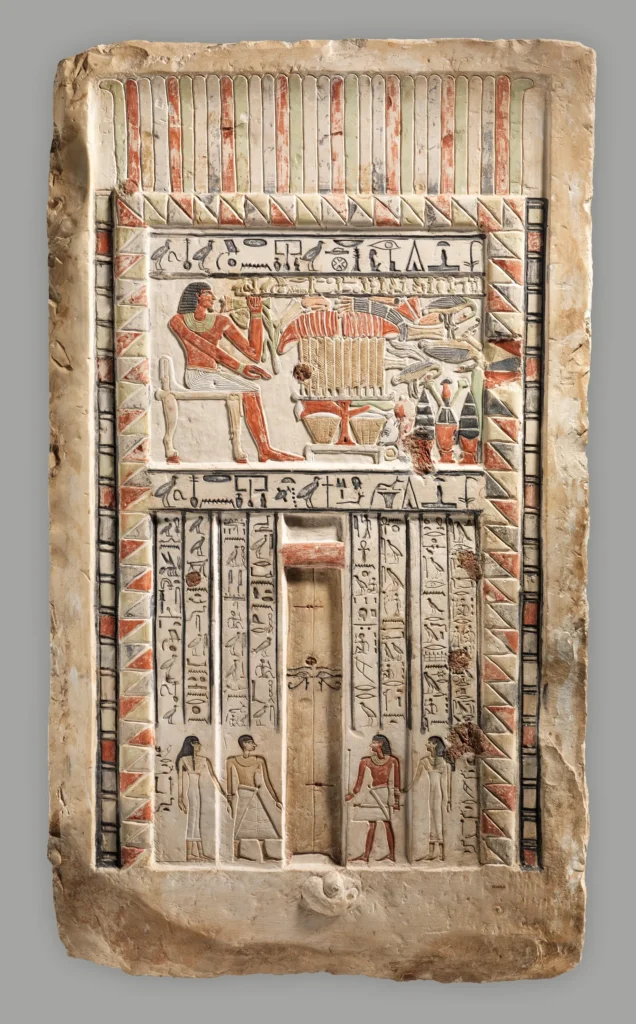
The Petrie Museum’s explanation of false doors describes a design combining an architectural niche with an image of the deceased seated at an offering table. Such monuments were common in Old Kingdom tombs and continued into the First Intermediate Period.
The carved frame could imitate features of a real doorway. Yet its purpose was funerary: the dead were believed to approach the offerings left by the living. Calling it useless because it did not open misses the activity it was built around.
A particularly revealing example is the false door in Raemkai’s tomb chapel, now at the Metropolitan Museum of Art. The museum identifies carved jambs, lintels and a feature representing rolled-up matting. Relatives and friends placed offerings in front of it.
The inscriptions also preserve the monument’s history. The chapel originally belonged to Neferiretenes and was later adapted for Raemkai; traces of the earlier wording remain. Here, the meaning comes from the architecture, texts and burial setting together. It is not inferred from the outline of a door alone.
A portal tomb is a burial structure
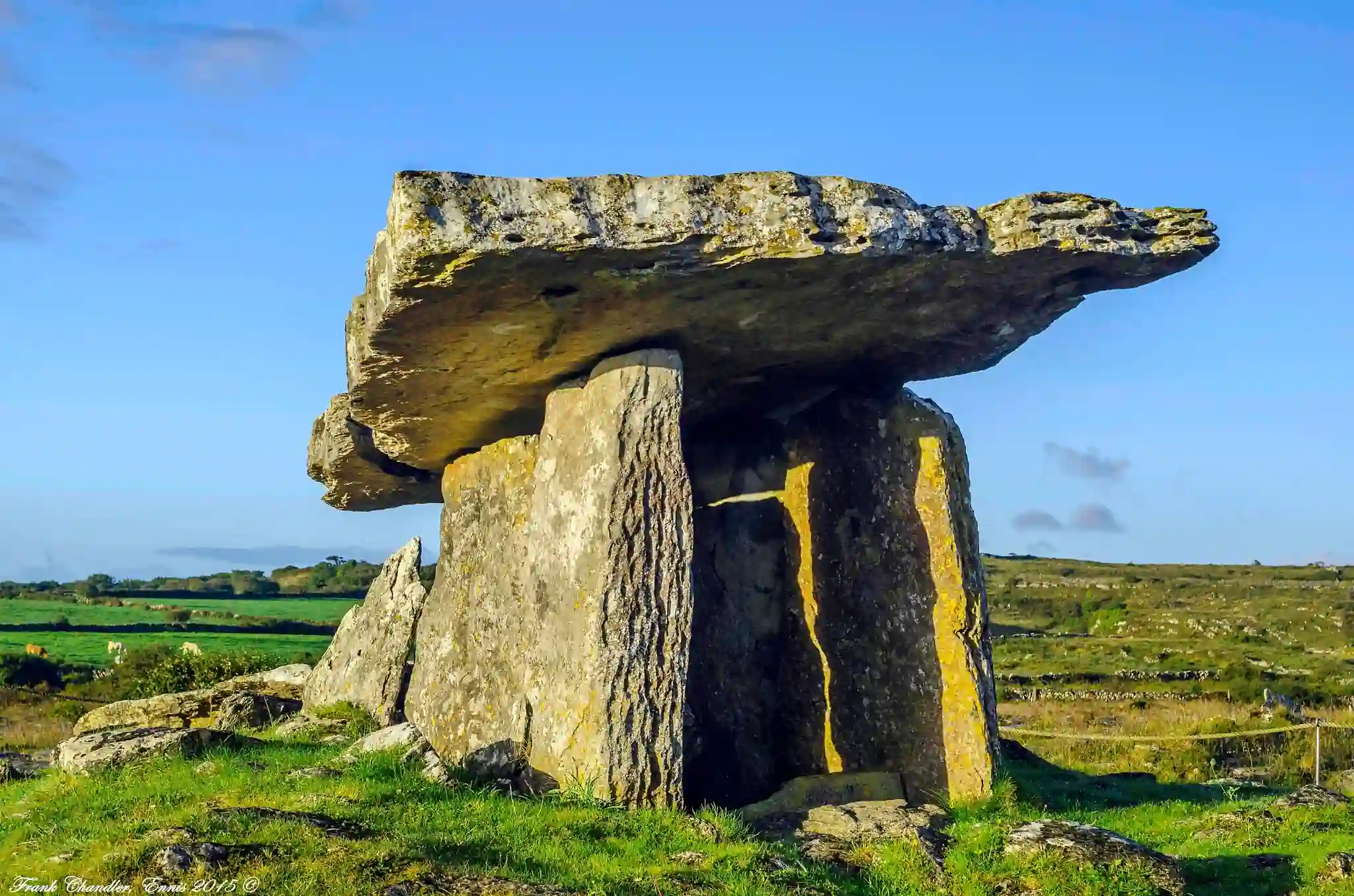
Poulnabrone in Ireland is often photographed as a huge capstone balanced above an open space. Heritage Ireland identifies it as a portal tomb, with upright stones supporting the roof. Excavations recovered the remains of 33 people dating to 3800–3200 BCE, as well as a much later infant burial.
Those finds establish a burial function. They do not support a claim that the opening was simply a symbolic frame with no chamber or practical role. Nor should solar alignments documented at one monument be assigned to every dolmen. Orientation has to be measured and interpreted at the individual site.
Petra’s facades can lead into real chambers

At Petra, the elaborate carving of a facade can draw attention away from the space behind it. The Petra authority’s account of Al-Khazneh, the Treasury, describes its chamber entrance and discusses its debated date and function.
That makes the familiar Treasury photograph a poor illustration of a door leading nowhere. A decorated rock-cut frontage and an Egyptian false door are different things. Individual blind niches may require explanation, but a whole tomb facade cannot be classified as nonfunctional just because its interior is not visible in a photograph.
Göbekli Tepe’s pillars are not established gateways

The T-shaped pillars at Göbekli Tepe offer another caution. The excavation project’s account points to carved arms, hands, belts and clothing as evidence that they represent human-like figures. Their interpretation as anthropomorphic statues does not establish that the spaces between them were portals to another realm.
Our reporting on settlement evidence at Göbekli Tepe also explains why its buildings need to be considered within a wider inhabited landscape. Reducing the site to a collection of mystical doorways loses that archaeological context.
How to assess a doorway claim
Start with the setting. Does an opening lead to a chamber? Were human remains or offerings found nearby? Do inscriptions name an owner or describe a ritual? Could missing masonry have changed the structure’s appearance? These questions give a stronger basis for interpretation than visual resemblance.
Stories about stargates, magnetic anomalies or energy portals need their own evidence. They cannot be established by the precision of a carving or by the fact that its purpose is uncertain.
A false door can be meaningful without being a passage. The Egyptian examples show that clearly: people approached a carved surface to maintain a relationship with the dead. Understanding that practice brings us closer to their world than assuming every unfamiliar opening shares one hidden explanation.
Correction: An earlier version grouped unrelated monuments as a global doorway mystery and included unsupported claims about energy, magnetic alignments and stargates. This revision distinguishes documented funerary architecture from other structures and unsupported interpretations.