The Milky Way is not the center of the universe. No observation has placed Earth or our galaxy in a privileged position, and the large-scale universe looks broadly the same in every direction.
Avi Loeb recently explored a stranger possibility: a distant future in which observers in the Milky Way see so little of the wider cosmos that our galaxy and Andromeda appear to occupy the middle of an otherwise empty universe.
That would not mean the Milky Way had moved to a cosmic centre. It would mean that expansion had changed what future observers could see.
The map is changing while we read it
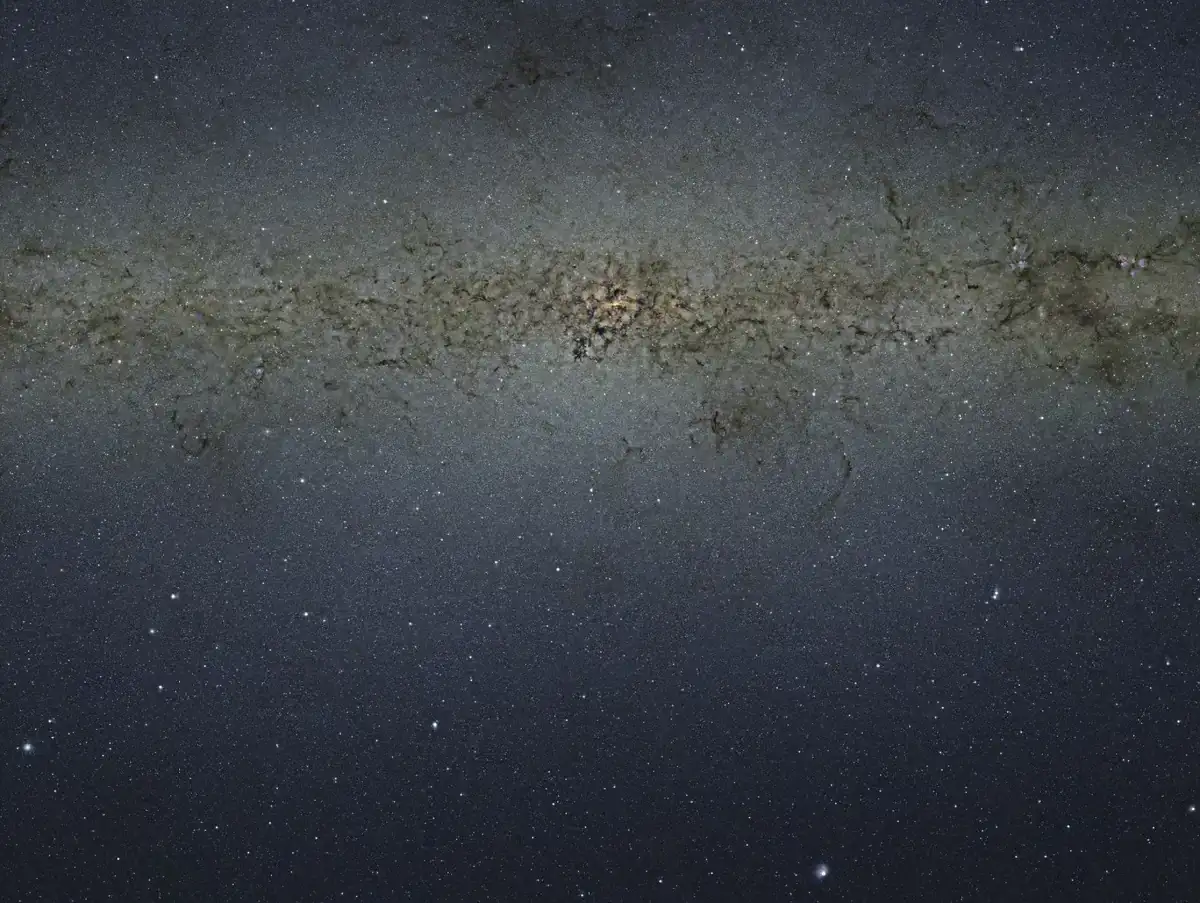
The Dark Energy Spectroscopic Instrument, or DESI, has spent five years measuring the spectra of galaxies and quasars across much of the northern sky. The collaboration says it has mapped more than 47 million galaxies and quasars, along with about 20 million Milky Way stars, ahead of its original target.
DESI’s measurements are used to trace the history of cosmic expansion. Results from the collaboration have strengthened hints that dark energy may evolve rather than behave as a perfect constant. The signal is interesting, not settled. The full five-year data set is still being processed, and the first major results from that complete survey are expected in 2027.
What dark energy changes
Dark energy is the name given to whatever is driving the accelerated expansion of the universe. In the standard cosmological model, it behaves like a cosmological constant. If its behaviour changes with time, the long-term future of the universe could differ from the simplest version of that model.
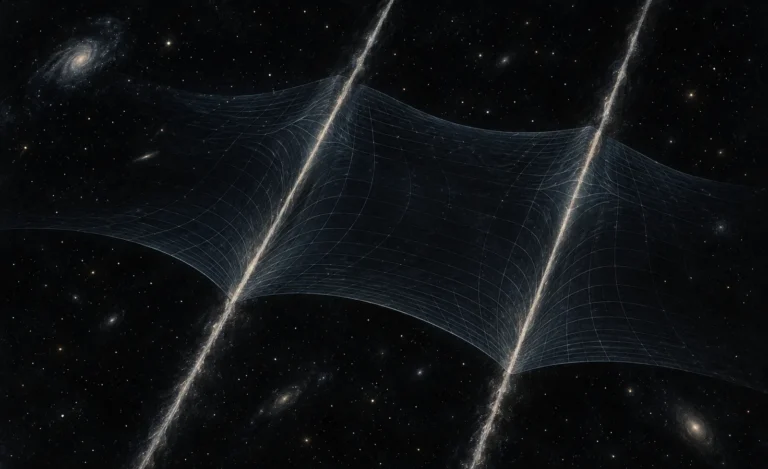
Even with a constant dark energy density, the expansion of space gradually carries distant galaxies beyond the region from which their light can reach us. Galaxies in the Local Group—especially the Milky Way and Andromeda—remain gravitationally bound to one another, while more distant systems continue to recede.
Over immense spans of time, the light from many currently visible galaxies would disappear from the sky. A future astronomer could look outward and see a local island of stars surrounded by darkness. The galaxy would still be one part of a much larger universe; the evidence for that larger universe would simply have travelled beyond the observer’s reach.
Why that would create an illusion
Astronomers infer cosmic structure from patterns: the distribution of galaxies, the relic light of the early universe, and the way matter bends light. Remove most of those signals and the same local group could look unusually isolated.
The observer would not be wrong about what the telescope can see. The mistake would come from treating the visible region as the whole of reality. We already face a smaller version of this problem with the observable universe. Its horizon is centred on each observer because light travels at a finite speed, not because any observer occupies the centre of everything.
Loeb’s thought experiment is useful because it turns a familiar cosmology lesson into a warning about evidence. A future civilization could have excellent telescopes and still inherit a poorer view of the universe than we have today.
The Milky Way will not become the centre. It may, however, become the apparent centre of a much smaller cosmic neighbourhood. That is one reason today’s sky is scientifically precious: it contains information that expansion will eventually hide.
A future sky with fewer clues
The loss would not happen all at once. As light from distant galaxies becomes increasingly redshifted and faint, some objects would slip below the sensitivity of future instruments. Others would cross the cosmic horizon, making their later light impossible to receive. The local group would remain visible because gravity binds it together, but the wider web of galaxies would become harder to reconstruct.
That future makes today’s measurements unusually valuable. DESI’s map is not simply a collection of pretty points. It records how galaxies cluster across distance and time, giving cosmologists a way to compare the expansion history with different models of dark energy. The collaboration’s completed survey is a foundation for later work; it is not a final answer about the fate of the universe.
If the apparent dark-energy evolution survives new data, the long-term picture may change. If it fades, the standard model will remain standing with tighter measurements. Either result will help future astronomers understand why the universe looks the way it does now—and why a later civilization might see a very different sky.
Why the distant future changes the view
Cosmic expansion does not make the Milky Way move toward a special place. It changes the distances between gravitationally bound groups of galaxies. The Local Group, which includes the Milky Way and Andromeda, will remain tied together while more distant galaxies gradually recede beyond what future observers can see.
For astronomers in that far future, the evidence available today may be hidden behind the expansion of space. They could still measure the stars and galaxies around them, but the broader pattern that reveals an expanding universe would be much harder to reconstruct.