Archaeologists working at Huaca Pucllana in Lima have found an adult buried inside an ancient canal near the base of the site’s great adobe pyramid. The body lay on its left side, with the skull turned toward the monument and the Pacific Ocean.
This was not an ordinary cemetery burial. The canal had formed part of a water system connected with a ceremonial pool. Gladys Paz, the archaeologist leading the excavation, believes the person may have been placed there as an offering when the channel was closed.
If that interpretation is correct, the burial records a deliberate ending: water stopped moving through the canal, the space lost its former purpose, and a human body marked the change.
A burial placed in the architecture
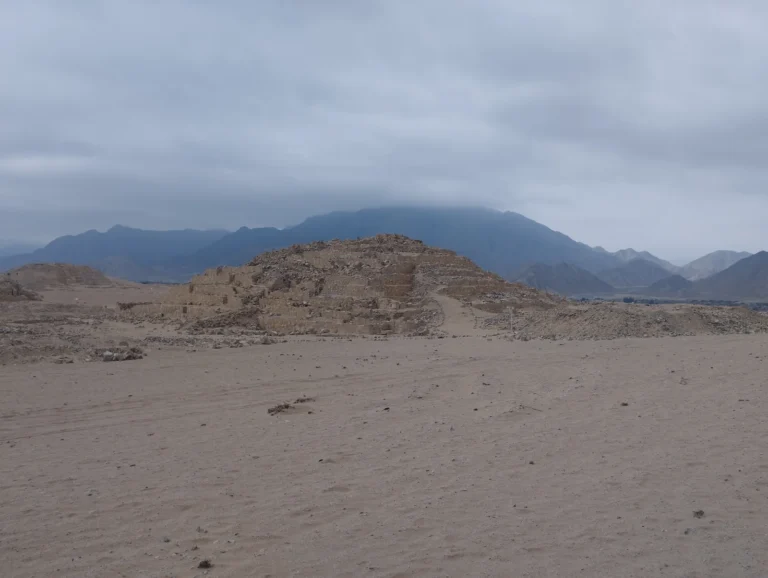
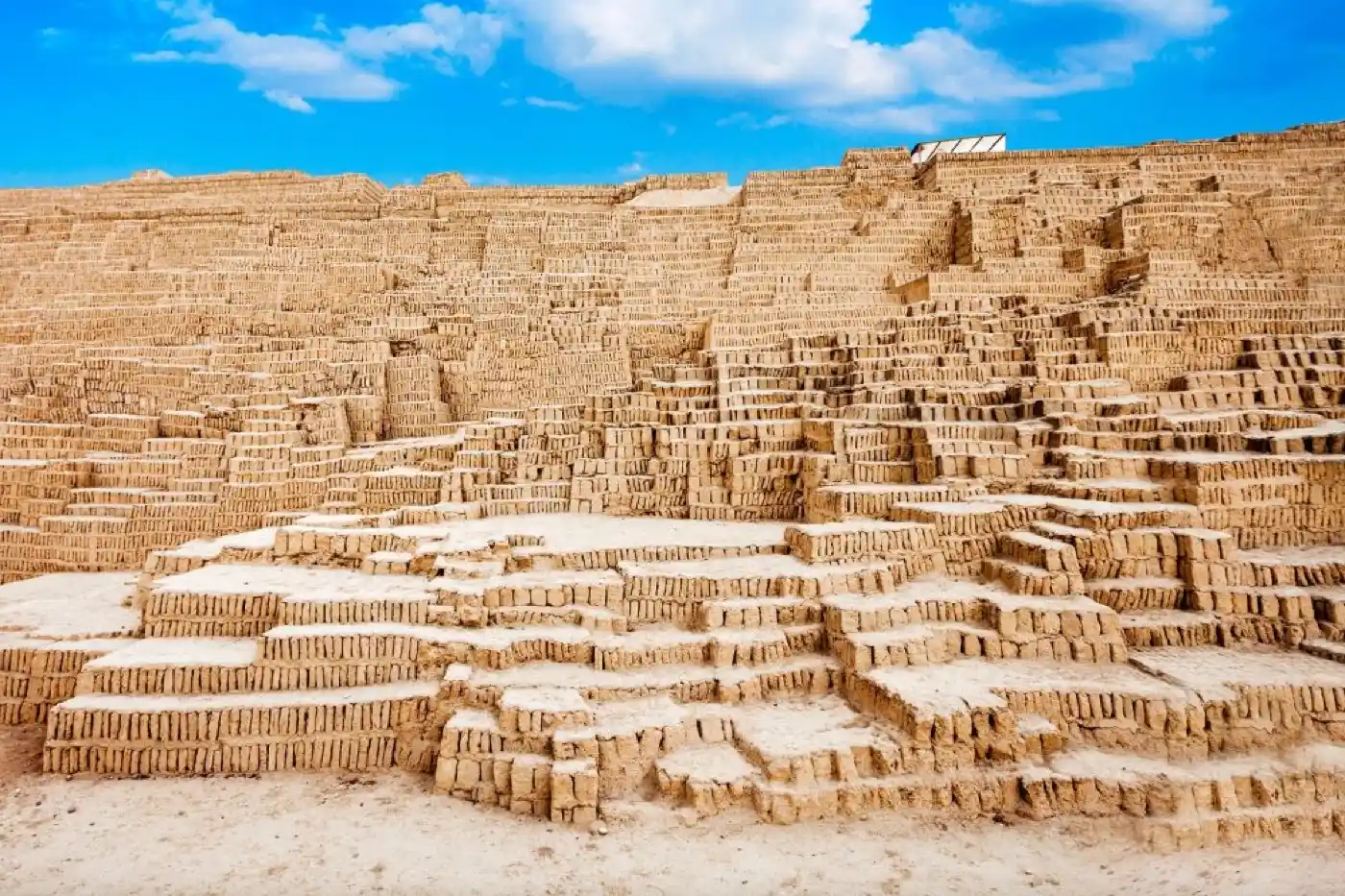
Huaca Pucllana was built by the Lima culture, which flourished on Peru’s central coast during the first millennium AD. Its stepped pyramid was made from millions of small adobe bricks, many set vertically in rows that resemble books on a shelf. Plazas, ramps, walls, patios, and water installations surrounded the monumental core.
The newly reported burial was found in a canal rather than a tomb cut away from the complex. Its orientation appears to have been planned. The skull faced both the pyramid and the sea, two dominant presences in the physical and ceremonial landscape of ancient Lima.
Archaeologists identified the individual as an adult, probably male, although laboratory work will be needed to refine the estimate. A ceramic object shaped like a snake’s head was found nearby. The relationship between that object and the burial has not yet been established, and it should not be treated as proof of a particular belief before the excavation is published in detail.
The canal’s connection to a ceremonial pool gives the setting its strongest clue. On Peru’s dry coast, water was never a neutral background. It made agriculture possible, organised settlements, and tied communities to rivers whose seasonal behaviour could determine whether crops survived. Controlling water was practical work, but water could also carry political and sacred meaning.
Why close a canal with an offering?
Ancient buildings and water systems did not always end through neglect. Archaeologists across the Andes have documented spaces that were cleaned, filled, burned, broken, or sealed in deliberate sequences. Such acts are often called termination or closure rituals.
The phrase does not mean that every discarded object was ceremonial. A canal can be filled because it no longer works. A wall can be dismantled to reuse bricks. Flooding, erosion, and later construction can also create deposits that resemble deliberate closure.
At Huaca Pucllana, however, a carefully positioned body inside the channel requires an explanation beyond routine maintenance. If the canal was being taken out of use, the burial may have transformed a practical act into a public or religious one. The system was not simply abandoned; its ending was acknowledged.
Who was the person? That question cannot be answered from posture alone. The individual may have been killed for the event, selected after death, or moved from another burial. The word “offering” describes the archaeological interpretation of the placement, not the person’s identity or the precise circumstances of death.
Careful analysis may show cut marks, trauma, binding, disease, diet, and place of origin. Radiocarbon dating can establish when the burial occurred. Sediment inside the canal can reveal whether water still flowed shortly before the body was placed there. Together, those details may show whether the act belonged to the Lima culture’s original use of the complex or to a later community that inherited the monument.
Huaca Pucllana outlived its builders
The pyramid stands today in Miraflores, surrounded by streets, apartment buildings, restaurants, and offices. That modern setting makes it easy to imagine the site as an isolated ruin. It was once part of a wider inhabited landscape shaped by fields, settlements, roads, and irrigation canals.
Huaca Pucllana also had a long life. The Lima culture built and used the monument, but later groups returned to it, buried people there, and reinterpreted old spaces. The site’s archaeology includes Wari-period tombs and evidence connected with the Ychsma, who occupied the central coast centuries later.
That long sequence is why the date of the canal burial matters. A body placed during the canal’s original closure would reveal something about the people who operated the water feature. A later burial would show how descendants or newcomers used an ancient monument whose first meaning had changed.
Curiosmos previously examined how Huaca Pucllana survived inside modern Lima and why its adobe construction is so distinctive. The new find brings attention to a quieter part of the site: not the height of the pyramid, but the channels and pools through which people organised water at its base.
The Pacific coast shaped the monument’s world
The burial’s orientation toward the ocean should be recorded without forcing a single meaning onto it. The Pacific supplied fish, shellfish, birds, transport routes, fog, and a western horizon. Marine materials moved inland, while crops and fibres travelled back toward the coast. Sea and irrigation were parts of the same economy.
The Lima culture built in a region where rivers descend from the Andes across one of the world’s driest coastal deserts. Communities could support large populations only by directing water through canals. Building and maintaining those systems required labour, negotiation, and authority.
Ceremonial water installations may have made those relationships visible. A pool inside a monumental complex could stage gatherings, offerings, or controlled access to water. Closing such a place may have required an act equal to its importance.
The body in the canal therefore sits at the meeting point of several systems: the pyramid above, the water route around it, the ocean on the horizon, and the society that decided when each space could be opened or closed.
What the excavation must establish next
The first report gives the position of the body and the team’s initial interpretation. The next stage is slower.
Osteologists will study age, sex, health, trauma, and any changes to the skeleton after burial. Dating will anchor the individual within Huaca Pucllana’s long chronology. Isotopes from teeth and bone may indicate where the person grew up and what they ate. Botanical remains, sediments, and residues could reveal what the canal carried before it was sealed.
The ceramic snake head also needs context. Was it placed with the body, washed into the channel, or deposited during a different episode? Its precise layer and position matter more than its dramatic appearance.
For now, the most important fact is the setting. Someone placed a human body inside a water channel and aligned it with the monumental and natural features around Huaca Pucllana. That was not a casual disposal. It was an act made inside the architecture, at the moment one part of the ancient complex appears to have reached its end.