On a plateau above the Andarax River, near the present-day town of Santa Fe de Mondújar, archaeologists have excavated one of Europe’s best-known Copper Age strongholds: Los Millares. The site’s main occupation is generally placed between about 3200 and 2200 BCE, centuries before Egypt’s Old Kingdom pyramid-building began at Saqqara in the 26th century BCE with the Step Pyramid of Djoser.
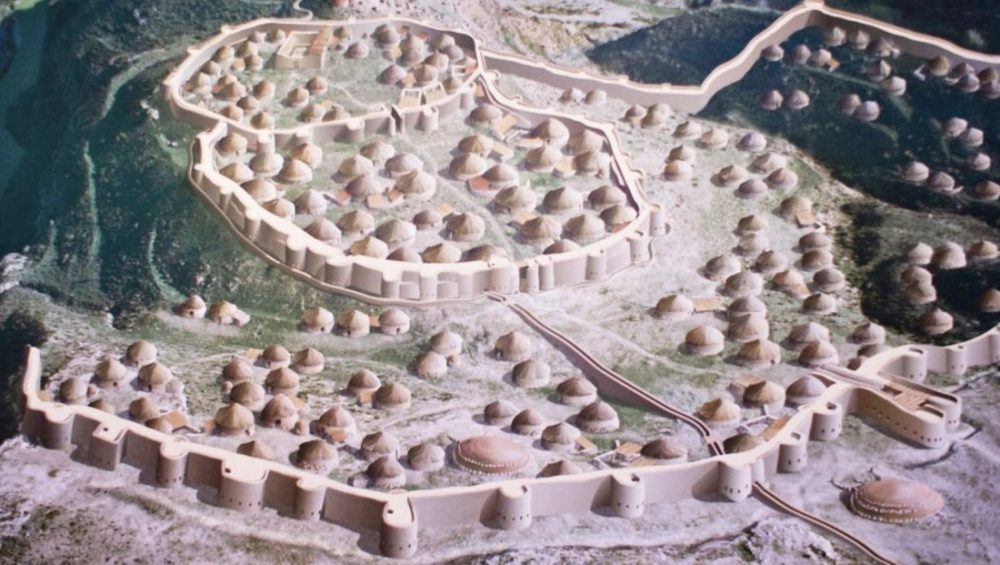
Los Millares stands out for scale and planning. It combines multiple lines of stone defenses, a large necropolis of collective tombs, and clear evidence of copper working, all in a landscape engineered for control of movement and access. Official site information from Andalusia’s cultural heritage authorities describes a settlement with concentric fortifications, a “citadel” zone, and a defensive network of nearby outposts.
A fortified community on a strategic ridge
Los Millares occupies a spur-like mesa formed between the Rambla de Huéchar and the Andarax. The location matters: steep flanks and clear sightlines make it easier to monitor approaches, while the settlement’s built defenses suggest a community that invested heavily in perimeter security and internal organization.
Keep exploring
Continue with Curiosmos
According to the Junta de Andalucía’s site description, the complex included a settlement with four concentric lines of walls and a further inner fortified area described as a citadel, creating multiple controlled thresholds from the outside into the core. The same source notes 13 small forts positioned on nearby high points along the Huéchar gully, extending the defensive system into the surrounding terrain. A visitor brochure produced for the site likewise describes those “13 forts” as part of a broader security architecture rather than a single enclosed town.
Population estimates are inherently uncertain for prehistory, but Los Millares is often presented as unusually large for its period. Spain’s official tourism portal describes a peak community of “as many as 1000 people” living inside the fortifications, framing the settlement as a major Copper Age center rather than a small hamlet.
The necropolis: collective tombs on a monumental scale
If the walls defined the living space, the cemetery defined the settlement’s footprint and identity. The Andalusian heritage authority states that the necropolis covered about 13 hectares outside the settlement and consisted of around 80 large tombs, along with other ceremonial structures.
Those tombs were communal. The same official description lays out the basic architecture: circular chambers, often several meters across, sometimes with side niches; access via a corridor; and an exterior tumulus of earth and stone. Roofs could be formed by corbelling to create a “false dome,” or by a flat closure supported by a central post.
Other summaries sometimes give higher counts for tomb structures at the site. Spain’s tourism portal, for example, describes a necropolis with 100 tumulus tombs. The difference likely reflects what is being counted and how documentation has evolved over decades of research and site management. What is consistent across official descriptions is that burial space at Los Millares was extensive and formalized, and that funerary practices were central to the settlement’s social landscape.
Copper work at the heart of the place
Los Millares sits in the period archaeologists call the Copper Age, or Chalcolithic, when copper extraction and working spread across parts of Iberia alongside established farming and herding. At Los Millares, metalworking is not a marginal add-on. Spain’s official tourism portal calls it “the city of prehistoric metallurgy,” and points to furnaces for smelting copper as part of what distinguishes the site.
Research on southeastern Iberia more broadly supports the idea that copper working was widespread by around 3000 BCE and that settlements of the Los Millares horizon often contain crucibles, reduction vessels, kilns, ores, and droplets from production. A synthesis on Copper and Bronze Age metallurgy in the region notes the spread of copper technology in southeast Iberia around 3000 BC, aligning with the broader chronological window that the Junta de Andalucía gives for Los Millares.
What that means in practical terms is that Los Millares was not simply a defensive refuge. It was a productive community with specialized activities, including metallurgy, embedded within a wider economy of agriculture, herding, hunting, and craft production. The official site description lists those mixed livelihoods explicitly, alongside references to planned features related to water distribution and storage.
Size, phasing, and the long end of a settlement
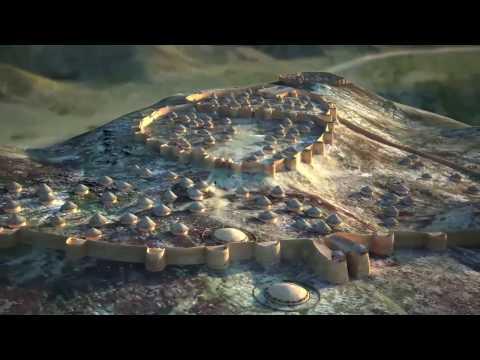
Los Millares did not appear overnight. Its fortifications were built in successive lines, and the site’s own interpretive material emphasizes development over time. The Andalusian authority describes multiple concentric walls segmenting the settlement, with an additional inner fortified area, a structure consistent with growth, redesign, and changing needs.
The occupation span most commonly cited in official Andalusian materials is roughly 3200 to 2200 BCE, placing Los Millares’ end close to the period of transition toward Early Bronze Age lifeways in parts of Iberia. Some popular accounts push the abandonment later, into the early second millennium BCE. The better-supported anchor, however, is that the settlement’s main Copper Age phase ended by the close of the third millennium BCE, after which regional patterns changed.
One of the major names attached to those changes is El Argar, an Early Bronze Age culture of southeastern Iberia. A scholarly overview published by Cambridge describes the El Argar phenomenon as spanning roughly 2200 to 1500 cal BCE, a timeframe that overlaps with the end horizon often given for Los Millares and helps explain why the site is frequently positioned as a predecessor rather than a contemporary.
A cautious comparison across the sea
The site is sometimes discussed alongside other monumental or platform-like constructions in the western Mediterranean. One comparison that appears in general writing is to Sardinia’s Monte d’Accoddi, a raised stone platform accessed by a ramp and often described as altar-like in function.
Monte d’Accoddi is a real and well-studied site, but the safest way to handle the comparison is architectural rather than genealogical. The monument is documented by Sardinia’s regional cultural portal as a complex built and rebuilt in prehistoric phases associated with local cultures, including Ozieri. An Italian heritage museum entry describes its platform form, size, and access ramp, and dates construction to the Copper Age.
Similarity in form does not, by itself, demonstrate contact, shared builders, or a single cultural template. It does, however, underline a broader point: across parts of the western Mediterranean in the fourth and third millennia BCE, some communities invested in large-scale stone construction, whether for defense, ceremony, or both.
A fascinating site
Los Millares is one of the clearest excavated examples in Iberia of a settlement where fortification, burial practice, and early metallurgy appear as an integrated system. Its defenses show sustained planning and labor mobilization. Its necropolis shows enduring, organized mortuary traditions on a scale that reshapes the map of European prehistory. Its evidence of copper production places it in the technological shift between late Neolithic lifeways and Bronze Age transformations.
Taken together, the site argues for complexity without anachronism. Los Millares was not “urban” in the later sense of Mediterranean city-states, and its material culture belongs squarely to Copper Age Iberia. But the investment in walls, the density implied by estimates near a thousand inhabitants, the specialization implied by metallurgy, and the size of the funerary landscape make it hard to dismiss as a simple village behind a fence.
In that way, Los Millares remains a useful corrective to a pyramids-first mental map of early complex society. The stones above the Andarax do not need legends or overreach. They show, in measurable architecture and excavated practice, that organized, defended, metalworking communities were taking shape in Europe while Egypt was still centuries away from its first great pyramid complex.