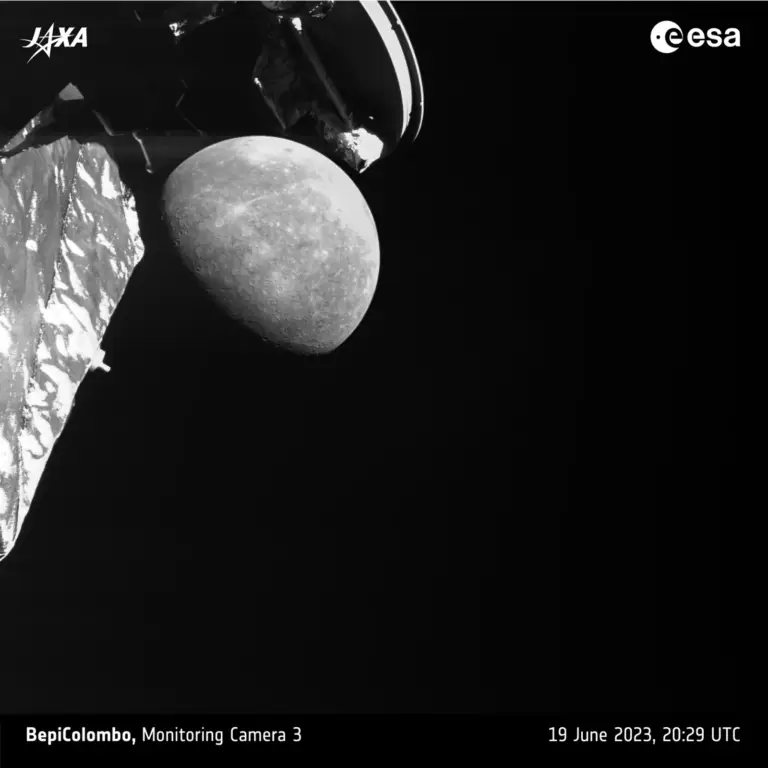
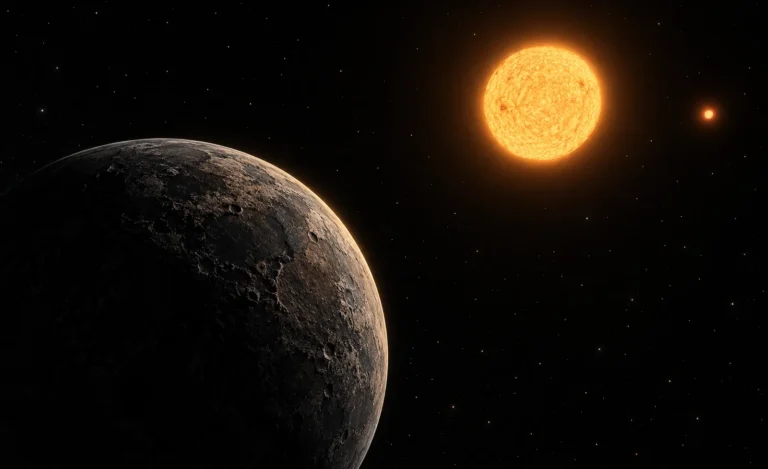
Europe and Japan's BepiColombo entered orbit around Mercury on 21 November using a first-of-its-kind capture method. A software glitch changed its orbit, but the mission is on track.
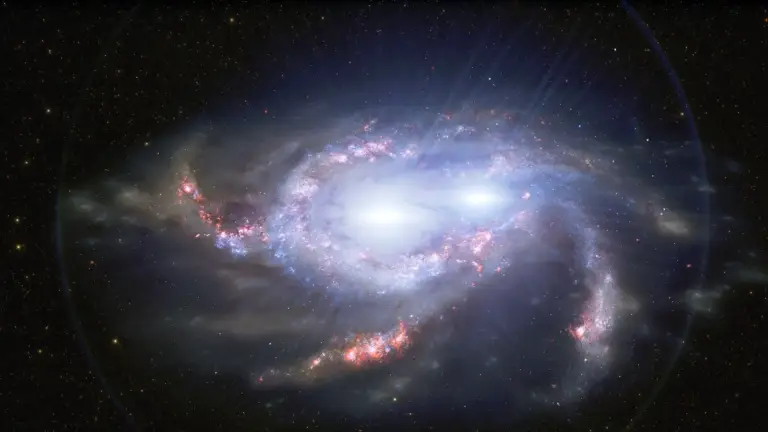
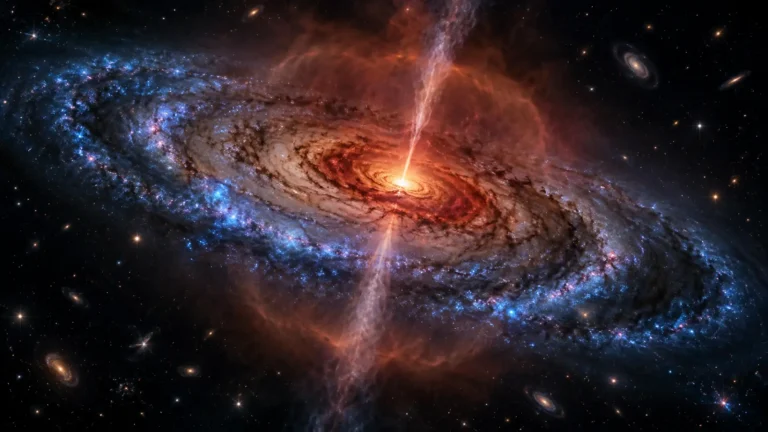
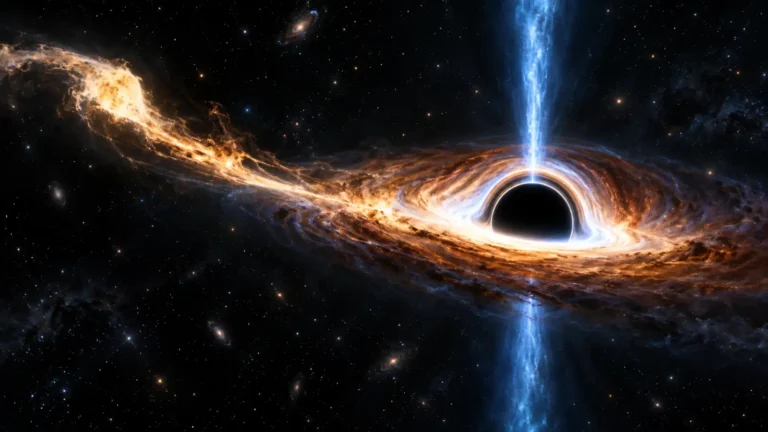
The pair, J1602+4228AB, is the most distant close quasar pair ever seen and only the third known from cosmic dawn. Its black holes were already enormous, and no theory fully explains how.
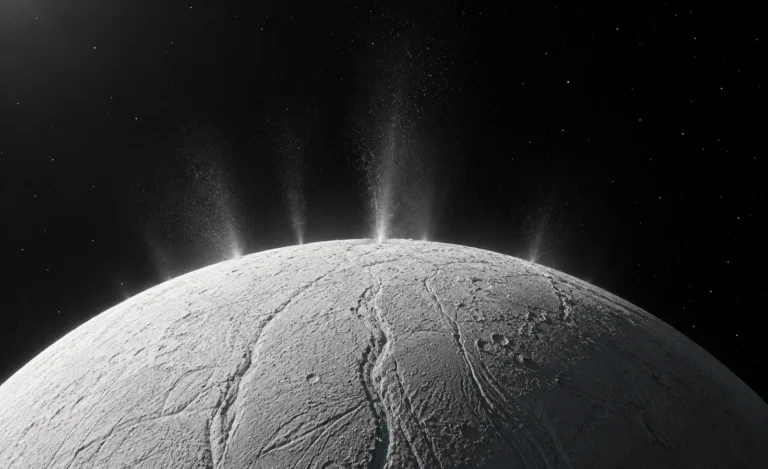
Two new studies follow ocean ingredients into plume ice and test methane production in a laboratory seafloor analogue. Both refine how scientists could search for life.
His early Mars expedition called for 70 people, orbital assembly and winged landers. The design reveals how much depended on a planet nobody had visited.
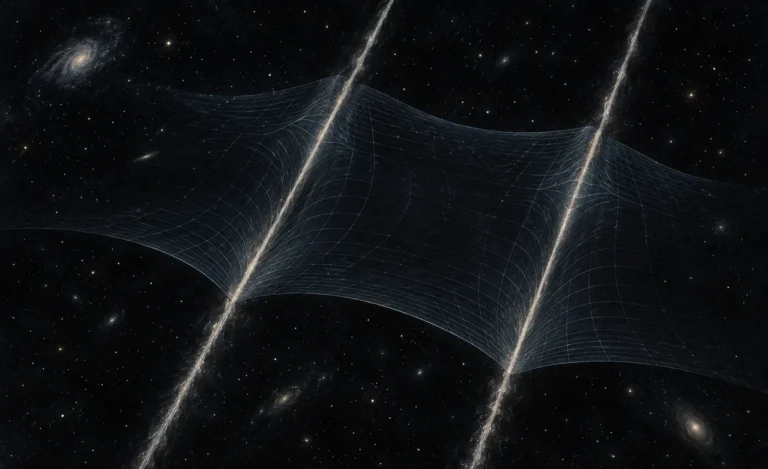
Cosmic strings feature in a mathematical time-travel proposal. Explore Gott’s solution, its physical obstacles and the gravitational-wave searches for the strings themselves.
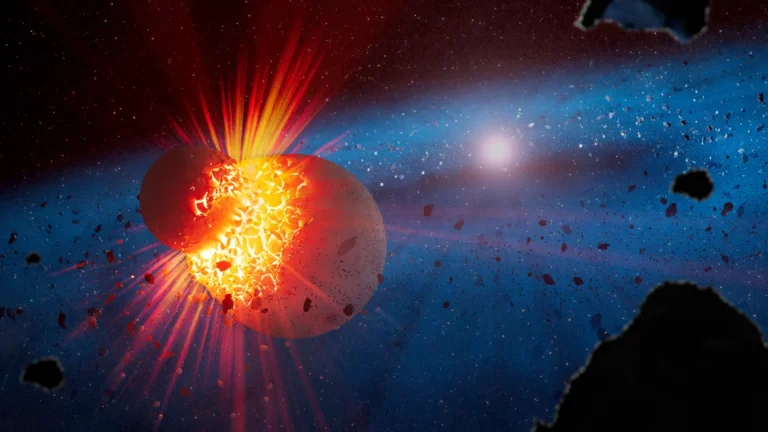
Spectra from 21 extreme debris disks reveal heated minerals that may trace impacts between growing rocky worlds, including bodies roughly the size of Mars.
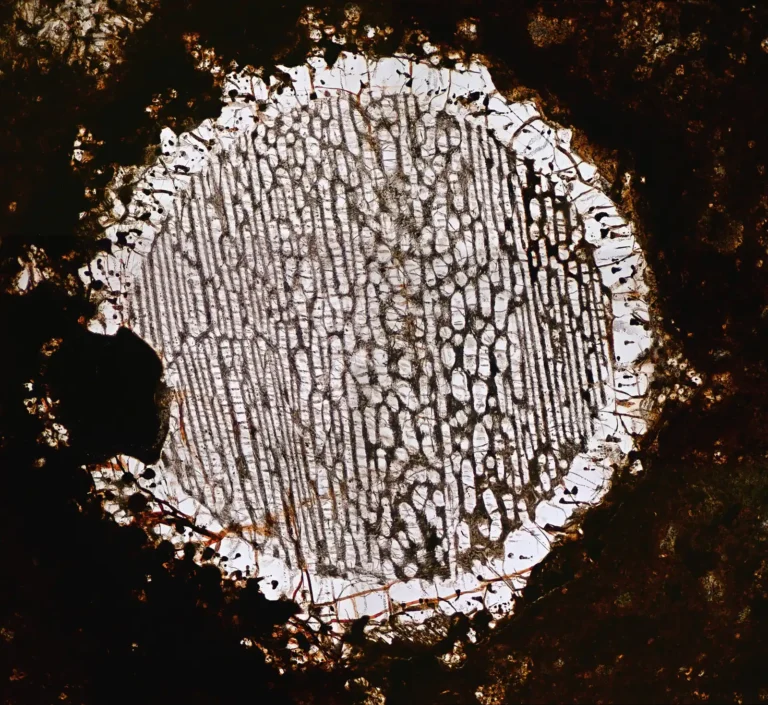
Meteorites are more than rocks from space. Their minerals, isotopes and tiny chondrules preserve a record of how the young Solar System took shape—and what they cannot tell us.
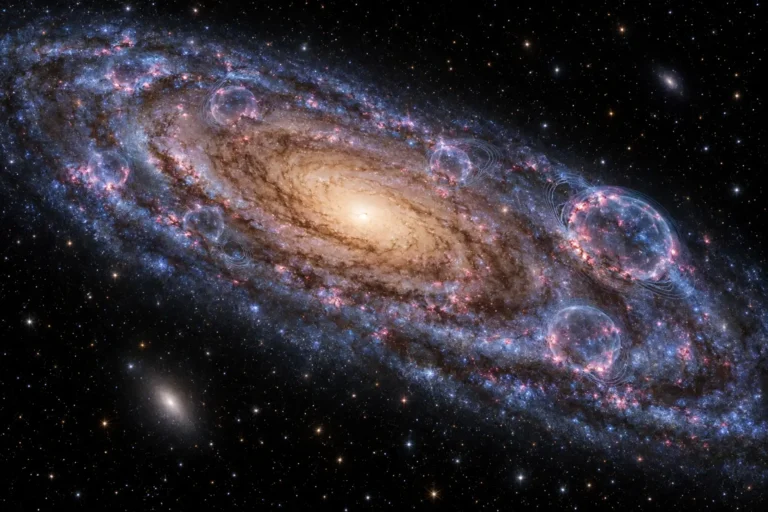
Astronomers identified 118 expanding hydrogen superbubbles across Andromeda and found that clustered supernovae can supply enough energy to sustain the galaxy’s observed turbulence.
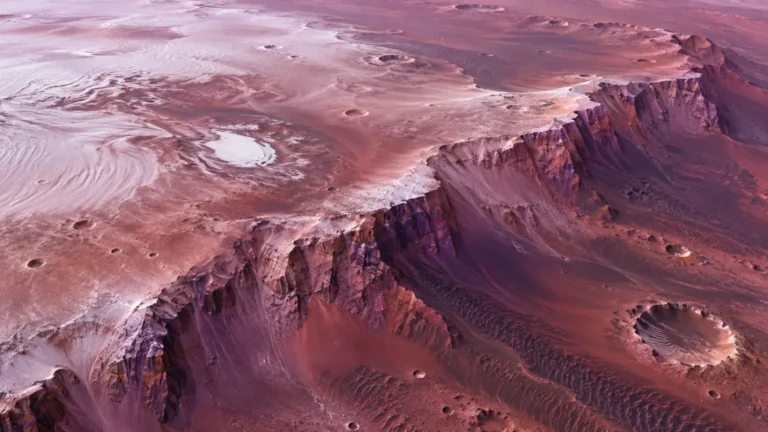
A Mars Express view of Thyles Rupes near the south pole reveals kilometre-high cliffs, frozen dunes and a landscape shaped by cooling, dust and frost. Mars is usually pictured in…
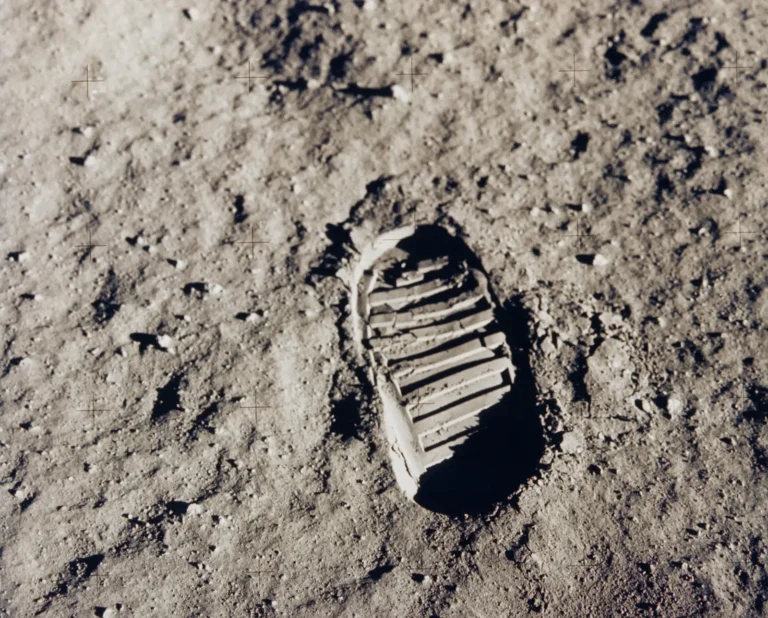
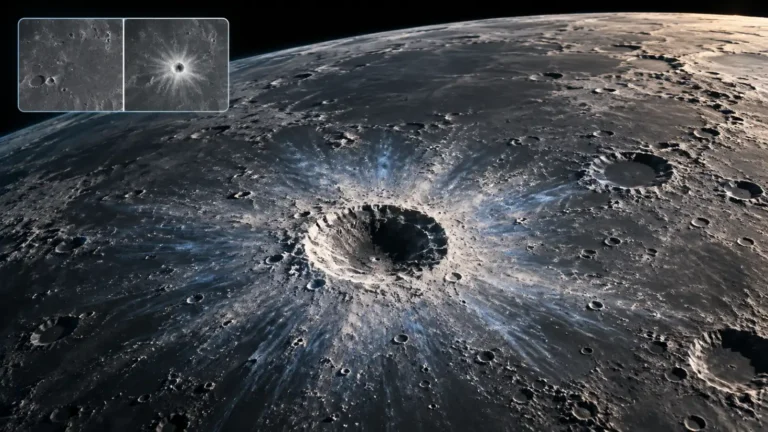
A 222-metre crater formed on the Moon in 2024 but was found only after a routine comparison of Lunar Reconnaissance Orbiter images. Here is what the fresh impact reveals about the lunar surface.
A habitable world is not the same as a living world. Here is how scientists define biosignatures, test false positives and build a case for life beyond Earth.
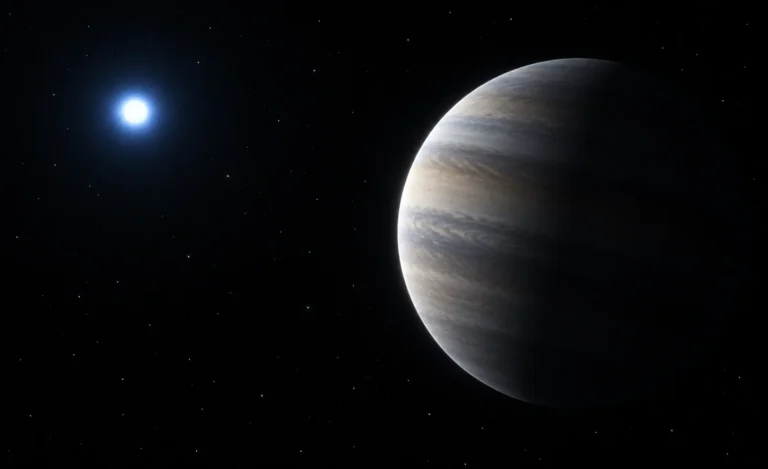
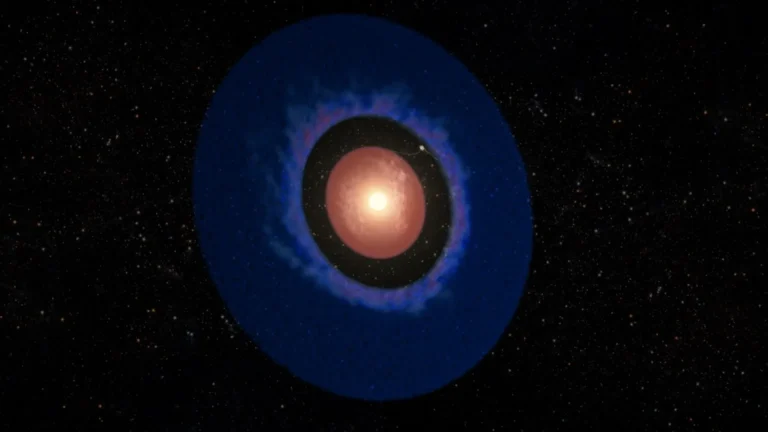
Astronomers confirmed Elias 2-24 b, a Jupiter-mass world less than a million years old still growing inside its star’s birth disk. Here is how they found it.
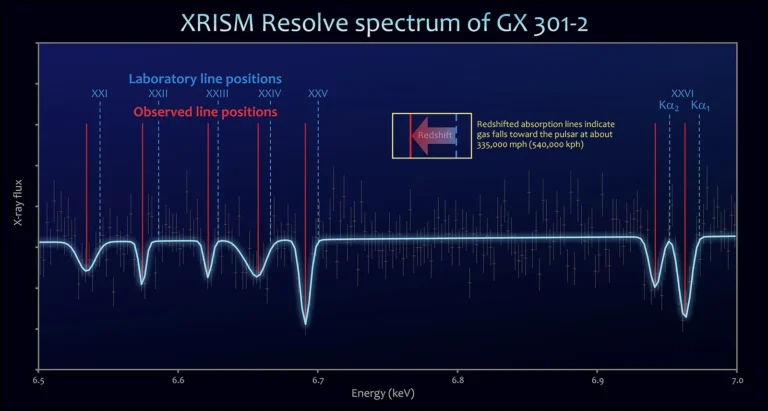
A neutron-star pulsar is pulling gas from a blue hypergiant 13,000 light-years away. XRISM’s X-ray spectra show how astronomers can follow that material as it falls.
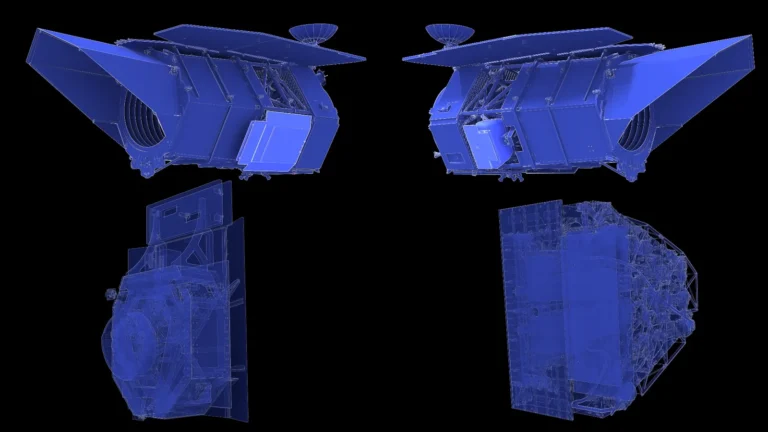
Something remarkable happened on the way to the next great map of the universe. NASA’s Nancy Grace Roman Space Telescope has activated its main science instrument, a 300-megapixel infrared camera…
After nearly eight years and 9.9 billion kilometres, ESA and JAXA’s BepiColombo has released the module that powered its journey to Mercury. The spacecraft has reached the arrival phase—but orbit insertion is still months away.
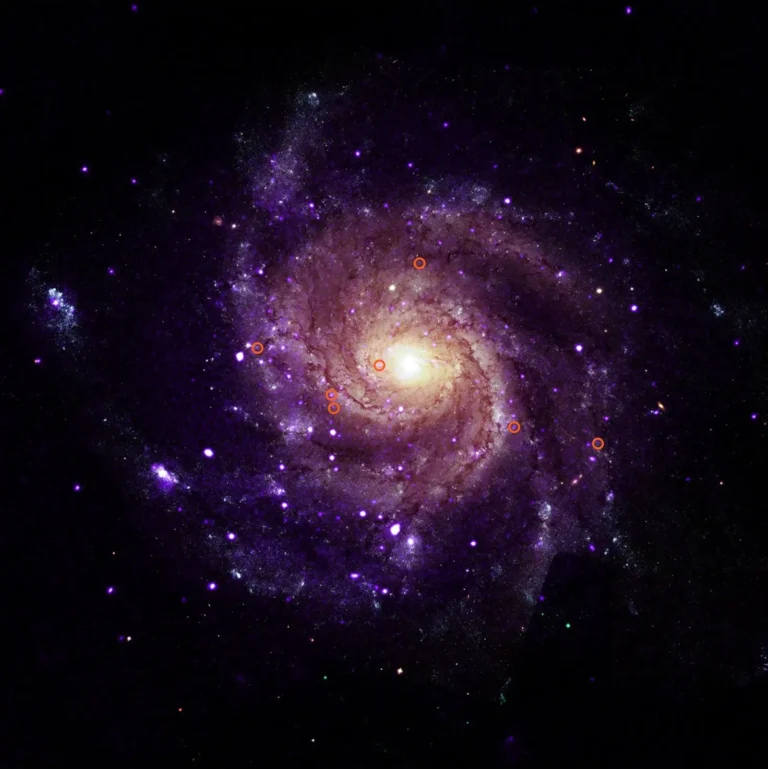
Astronomers have found 84 objects in nearby galaxies that do not behave like the familiar X-ray sources catalogued over the past six decades. They are bright at the lowest X-ray…