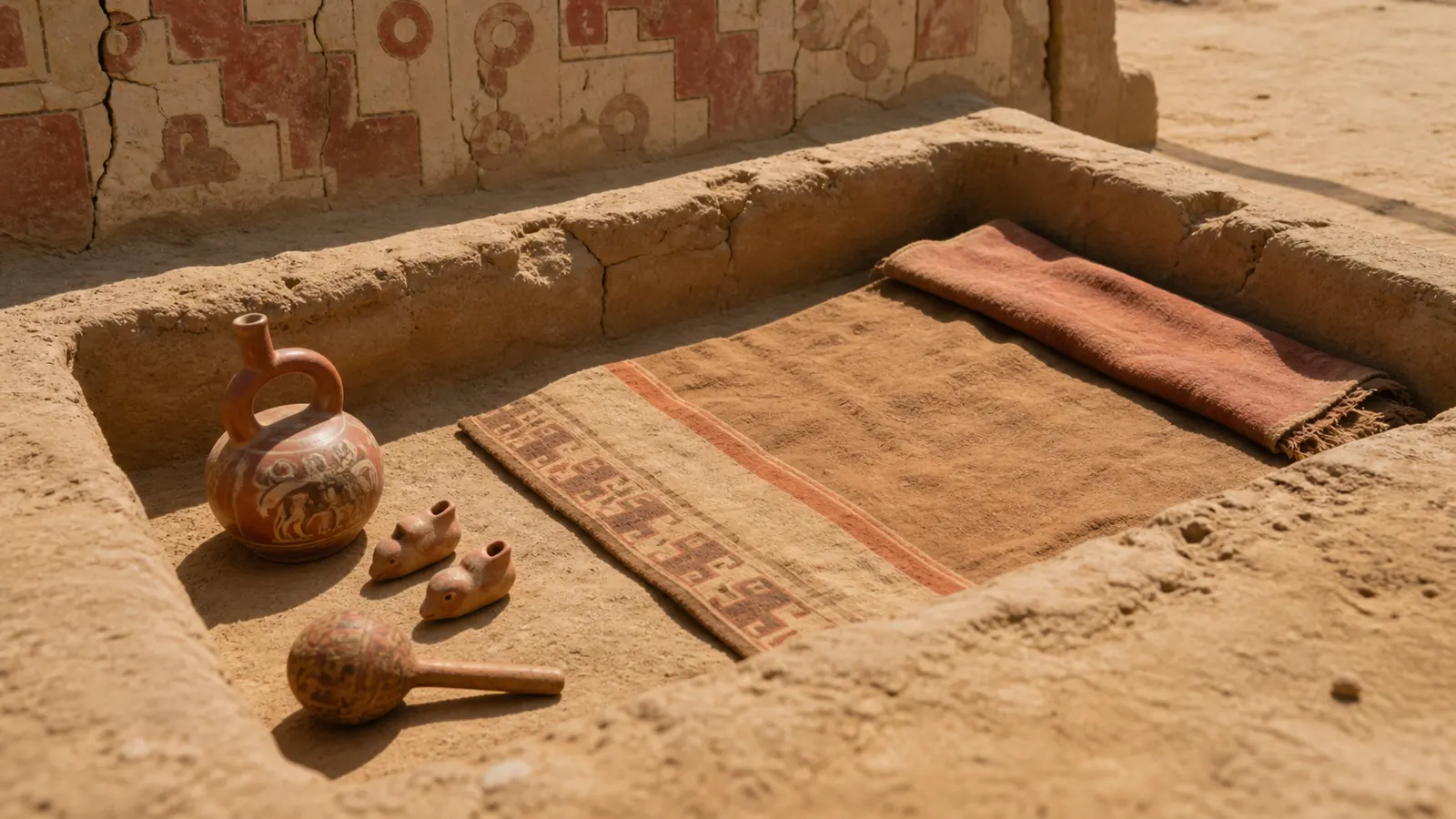
At Huacas de Moche on Peru’s north coast, archaeologists have excavated the burial of a child who died about 1,500 years ago. The child, estimated to have been around 18 months old, was buried with two whistles, a rattle, and a sculpted ceramic vessel—objects that offer an unusually intimate glimpse of one family’s response to death.
The burial was found in a residential area of the Moche settlement, rather than in one of the monumental temple platforms for which the site is known. That setting matters because it places the child within an ordinary living neighbourhood, among the houses and daily activities of the community.
Objects beside the child
The two whistles and rattle were made to produce sound. Their presence may indicate that music, play, or ritual accompanied the burial, but archaeologists cannot tell which interpretation is correct from the objects alone. A toy can become a grave offering, and a ritual object can be shaped like something a child used in life.
The sculpted ceramic vessel adds another layer. Moche potters were known for vessels that represented people, animals, plants, and scenes from daily life. The newly excavated piece was placed with the child, but its exact role—personal possession, family offering, or part of a funerary ceremony—remains uncertain.
Burial goods are not a simple inventory of what a person owned. They reflect choices made by the living: what to place beside the body, what to keep, and what to give up. In this case, the objects may have carried emotional meaning for the family even if they also served a ceremonial purpose.
A settlement behind the monuments
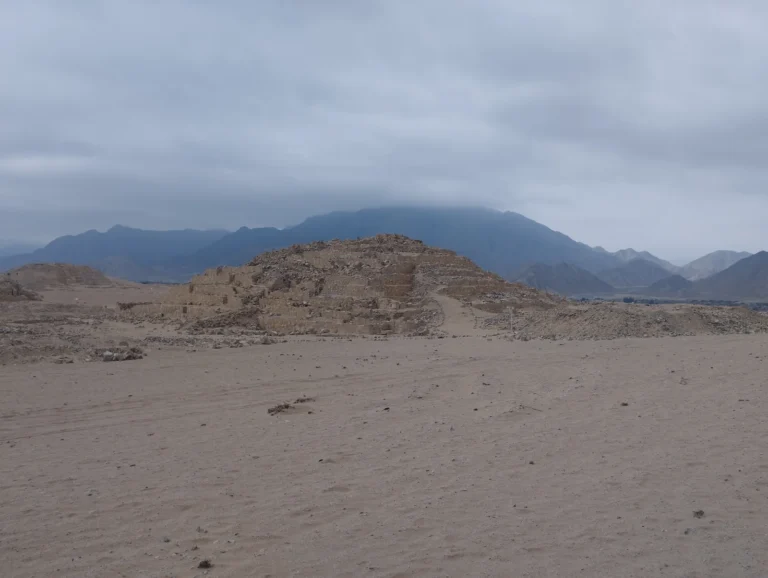
Huacas de Moche is a large archaeological complex built by the Moche, a society that flourished in northern Peru between roughly A.D. 100 and 800. The site includes the Huaca del Sol and Huaca de la Luna, monumental platforms associated with public ceremonies, elite authority, and carefully staged visual art.
Residential excavations show a different side of the same society. Workshops, kitchens, storage spaces, burials, and house compounds reveal how people made food, produced objects, raised children, and managed the practical work that sustained the monuments. A small burial in that setting can therefore tell archaeologists as much about community life as a much larger ceremonial discovery.
The child’s age also raises questions that the excavation cannot answer on its own. Infant and toddler burials can be especially difficult to interpret because the body is fragile and the surviving objects may have been selected by adults for symbolic reasons. Osteological analysis, the exact arrangement of the grave, and comparisons with other Moche burials may clarify whether the burial followed a local pattern or was unusual.
What remains unknown
The whistles do not prove that the child was a musician, and the rattle does not prove it was a toy. They do show that sound-producing objects were considered appropriate—or meaningful—at the moment of burial. The safest interpretation is that the family chose objects with a connection to the child, to ceremony, or to both.
Future analysis may identify traces of pigments, residues, or wear that reveal how the objects were used before they entered the grave. The burial’s position within the residential compound can also show whether it was marked, revisited, or incorporated into the house over time.
The find gives a human focus to a society often represented through rulers, warriors, and spectacular temples. At Huacas de Moche, the archaeological record also preserves the decisions made for one very young child. Those decisions cannot reconstruct a complete biography, but they show that family memory had a place inside the larger Moche world.
Curiosmos has covered the Moche world and its monumental centres alongside how archaeologists date pottery. The new burial adds a quieter kind of evidence: the objects people placed beside someone they did not want to forget.