In 1972, routine measurements at a uranium-processing plant in France revealed something that looked impossible at first. Uranium ore from Oklo, in what is now Gabon, contained less uranium-235 than ordinary natural uranium. The missing isotope was not evidence of a modern theft. It was the signature of a chain reaction that had run inside the Earth long before humans existed.
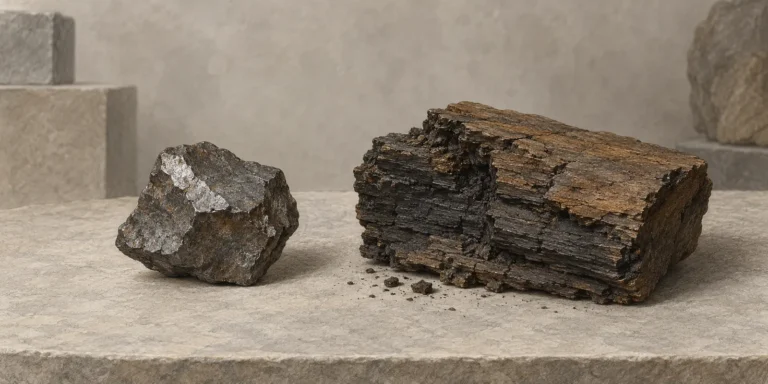
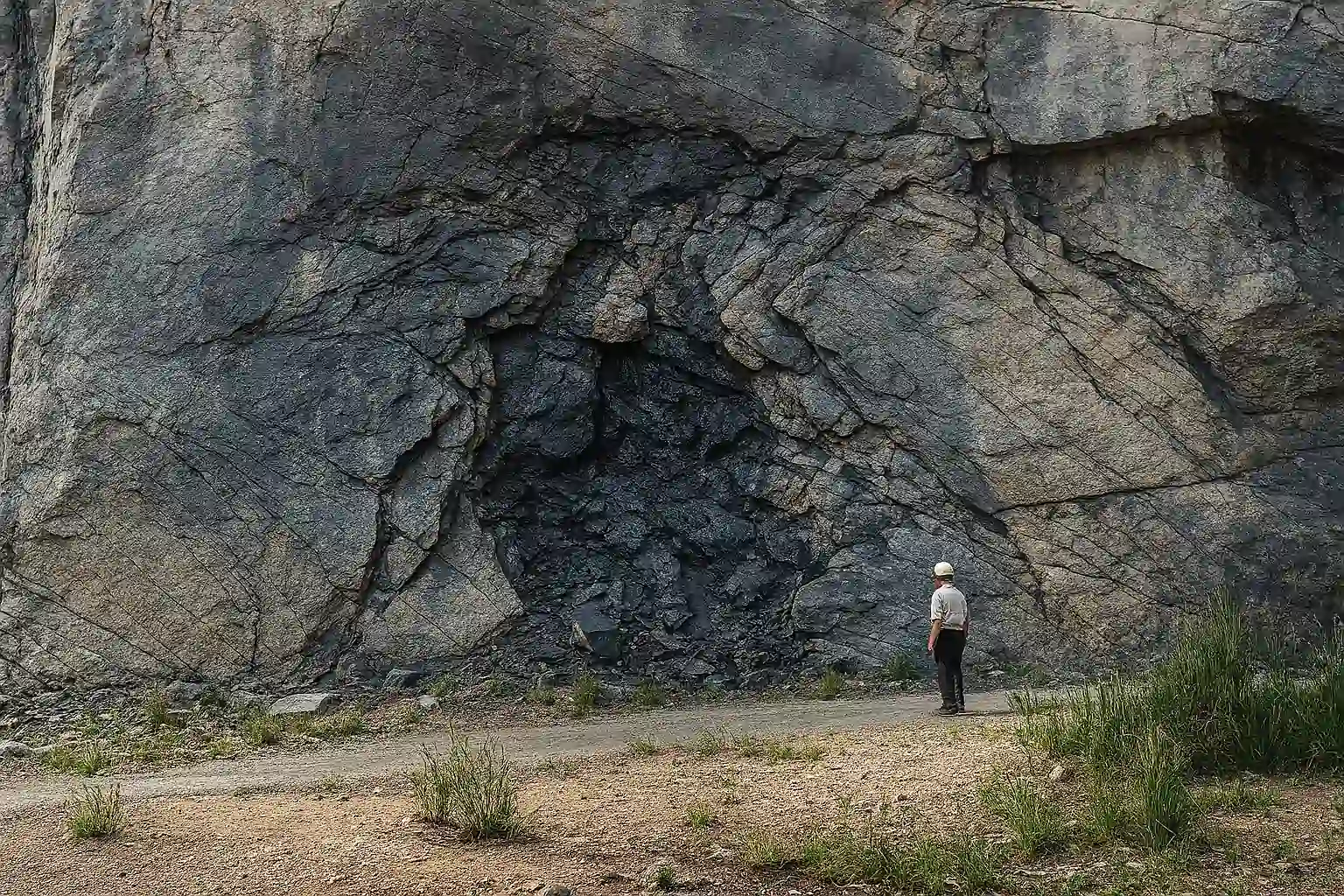
Oklo was not a reactor built by an ancient civilization. It was a rare geological arrangement: uranium-rich ore, enough uranium-235, and groundwater that slowed neutrons so fission could continue. The discovery remains one of the clearest examples of nature producing a process usually associated with human engineering.
How scientists noticed something unusual
Natural uranium is made mostly of uranium-238, with a much smaller amount of the fissile isotope uranium-235. In the 1970s, the expected proportion was well known. Samples from Oklo were different. They had been depleted in uranium-235, and they also contained fission products that are difficult to explain through ordinary geology alone.
Researchers from the French Atomic Energy Commission concluded that the deposit was the fossil remains of a natural nuclear reactor. The International Atomic Energy Agency’s account of natural reactors describes the discovery as evidence that fission reactions had occurred spontaneously in the distant past. The conclusion was extraordinary, but the evidence was chemical and measurable rather than speculative.
What made Oklo capable of fission?
A reactor needs more than uranium. A fissioning nucleus releases neutrons; those neutrons must encounter other fissile nuclei before escaping. In a modern reactor, engineers control the arrangement of fuel and moderator. At Oklo, geology supplied the arrangement by accident.
Roughly two billion years ago, uranium-235 made up a larger fraction of natural uranium than it does today because it decays faster than uranium-238. Uranium-rich zones in the Francevillian Basin were concentrated enough to become critical under the right conditions. Groundwater acted as a moderator, slowing neutrons and allowing the chain reaction to continue. When the water boiled away, the reaction stopped. After the rock cooled and water returned, the process could begin again.
That natural pulse explains why Oklo did not behave like a bomb. The reactions were controlled by the movement of water and the expansion of the hot ore. The result was a series of low-power reactor zones that operated intermittently, not a single violent explosion.
How long did the ancient reactors run?
Estimates vary by reactor zone and by the assumptions used in the model, but the evidence points to repeated operation over hundreds of thousands of years. The total energy was modest by the standards of a modern power station, yet the process altered the minerals around it and left behind fission products that could still be measured after almost two billion years.
One of the most useful clues came from xenon and other products trapped in mineral grains. Their distribution records the conditions under which the reactions took place. In effect, the rocks preserve a rough operating history: water entered, fission accelerated, heat drove the water away, and the reaction slowed until the system cooled.
Why Oklo matters to nuclear science
Oklo is a natural laboratory. Scientists have studied it to learn how fission products move through rock and how well geological formations can contain radioactive material. That makes the site relevant to questions about nuclear-waste storage, even though a natural ore body is not a ready-made blueprint for a modern facility.
The reactors have also been used to test whether fundamental constants of physics have changed over geological time. The measurements are subtle and the interpretations remain technical, but the principle is simple: if the nuclear reactions at Oklo depended on different physical constants two billion years ago, their products would preserve that difference. The data have placed tight limits on any such change.
What Oklo does not show
Oklo is sometimes described as an ancient nuclear power plant or as proof that an earlier civilization mastered atomic energy. Nothing in the geological record supports that interpretation. The reactor zones formed without tools, buildings, wiring, or human control. Their existence is more impressive when left in its natural form: Earth assembled the conditions for sustained fission through chemistry, water, and time.
The discovery also does not mean nuclear energy is automatically safe. Oklo was small, slow, and locked inside a particular mineral deposit. Modern reactors involve concentrated fuel, engineered systems, heat removal, regulation, and waste management. The comparison is useful only when the differences are kept in view.
A reactor written into stone
The wonder of Oklo is not that it resembles a hidden machine. It is that the rocks record a natural process we once assumed belonged only to laboratories. The French researchers were not looking for an ancient reactor when they noticed the uranium anomaly. They found it because the isotope ratios did not fit the expected pattern.
That is the lasting lesson of Oklo. A strange result is not automatically proof of a lost civilization or a supernatural event. Sometimes it is a clue that nature has already performed the experiment we thought we invented.
Sources and further reading
International Atomic Energy Agency: natural nuclear reactors at Oklo.
American Physical Society: the pulse of an ancient nuclear reactor.
Journal of Geochemical Exploration: the evolution of the Oklo reactors.