The oldest light we can see
The universe was once filled with a hot, dense mixture of particles and light. In that early state, photons could not travel very far before colliding with free electrons. Space was bright, but it was also opaque, more like a fog than an open sky.
About 380,000 years after the Big Bang, the expanding universe had cooled enough for electrons to join with atomic nuclei. Neutral atoms formed, and the fog lifted. Light could then travel across space. That ancient radiation is what astronomers call the cosmic microwave background, or CMB.
The CMB is not a shell surrounding Earth, and it is not light coming from one ordinary object. It fills the universe. Wherever an observer is located, the CMB appears to arrive from every direction because it was released throughout the early universe and has been travelling ever since.
Cosmic expansion has stretched the light’s wavelengths. Radiation that began as much hotter light now arrives mainly in the microwave part of the electromagnetic spectrum, with an average temperature of about 2.7 kelvin—only a few degrees above absolute zero.
Why the CMB looks almost smooth
Early maps of the CMB showed an almost even glow. That smoothness is important, but so are the tiny variations hidden within it. Across the sky, the temperature changes by only about one part in 100,000.
Those variations are the marks of slightly denser and slightly thinner regions in the young universe. Gravity later amplified the denser regions, helping them grow into the galaxies, clusters, and enormous cosmic structures we see today.
The pattern also records the universe’s ingredients. The relative size and spacing of features in CMB maps tell researchers about ordinary matter, dark matter, radiation, and the geometry of space. The maps are therefore much more than a picture of the early sky; they are a measurement of the conditions from which the later universe developed.
How spacecraft made the afterglow visible
The cosmic microwave background was first detected by accident in 1965, when Arno Penzias and Robert Wilson found a persistent microwave signal they could not remove from their antenna measurements. The signal came from every direction, and it matched the predicted afterglow of the hot early universe.
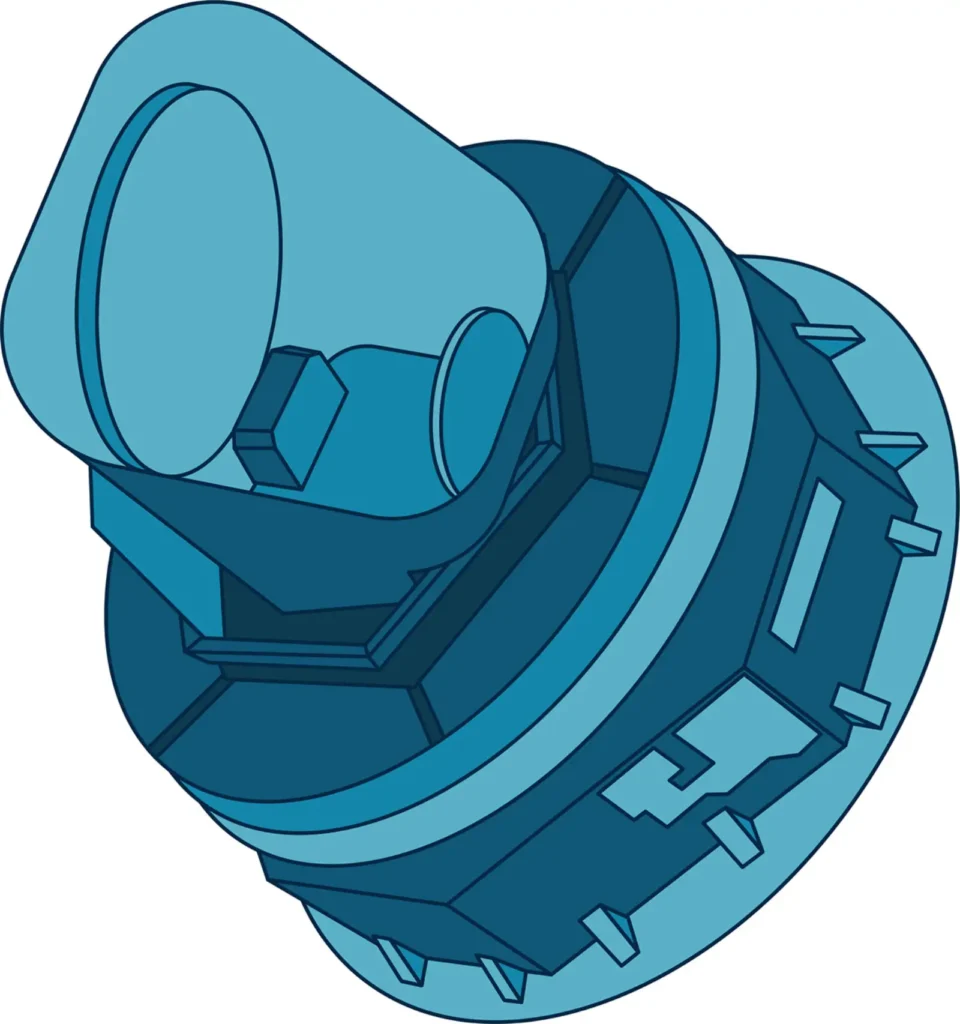
Later missions turned that discovery into precision cosmology. NASA’s Cosmic Background Explorer measured the CMB’s spectrum and found it to be an almost perfect thermal glow. The Wilkinson Microwave Anisotropy Probe mapped its small temperature variations in greater detail. ESA’s Planck mission measured those variations with still higher precision.
Each mission improved the picture. The maps helped constrain the universe’s age, composition, geometry, and early growth. They also gave astronomers a way to compare the early universe with measurements of cosmic expansion today.
What the CMB can—and cannot—tell us
The CMB shows the universe at a very early stage, but it does not show the first instant of the Big Bang. Before the light was released, the universe was opaque, so ordinary photons from that earlier period cannot reach us directly.
The CMB also does not show the first stars or the first galaxies. Those formed later, after a long period when the universe contained mostly hydrogen and helium gas. The faint patterns in the CMB are the starting conditions that helped shape those later structures.
That distinction matters when the CMB is used to test cosmological ideas. It provides a detailed snapshot of the early universe, while galaxy surveys, supernovae, and other observations describe later stages. Comparing those different eras is how astronomers test whether one model can explain the entire history of the cosmos.
The comparison is still active. The CMB is central to the discussion of the Hubble tension, because its measured pattern can be used to predict the universe’s present expansion rate. It also provides the background against which unusual features such as the Eridanus supervoid and the CMB cold spot are studied.
Why this ancient glow still matters
The cosmic microwave background is a message from a time before stars, planets, and galaxies existed. Its broad uniformity tells us that the young universe was remarkably smooth, while its tiny irregularities contain the seeds of everything that came later.
Modern observatories are still studying the CMB’s temperature and polarization. The aim is to refine the history written into those faint patterns and to test ideas about the universe’s earliest expansion. The afterglow is ancient, but it remains one of the sharpest tools astronomers have for checking whether our picture of cosmic history holds together.
Continue reading on Curiosmos
- The Eridanus Supervoid and the CMB Cold Spot: What We Know
- What Does the Universe Expand Into?
- How Can the Universe Be 93 Billion Light-Years Across?