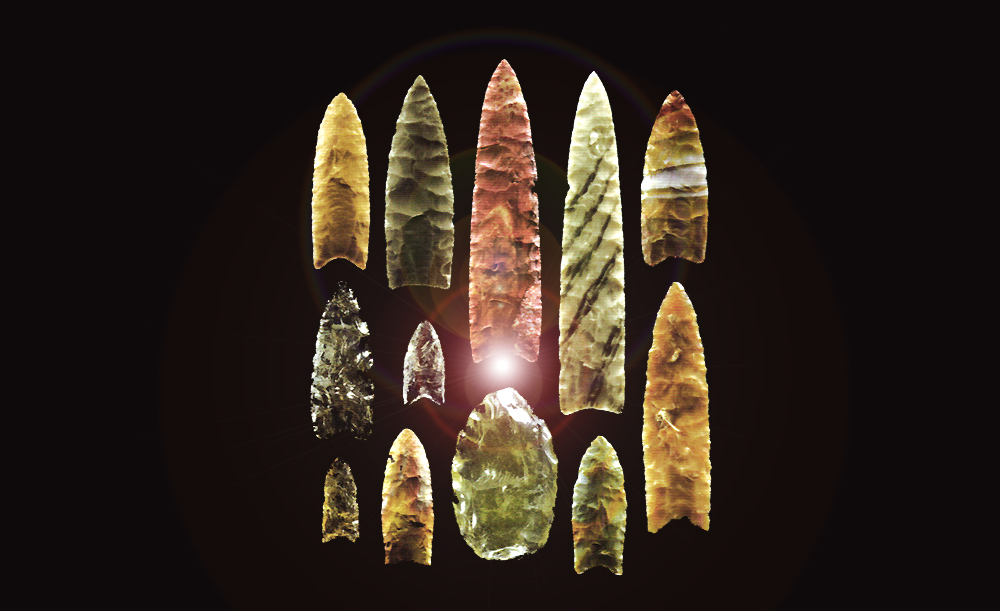
The Holzman archaeological site in central Alaska may finally clarify the mystery of how the American continent was populated, suggesting a direct link between Ice Age hunters and the Clovis culture. Researchers at the site have discovered mammoth ivory artifacts dating back approximately 14,000 years that bear a striking resemblance to tools later used by the first people to spread across North America. This discovery reopens the debate over who the first Americans were and which route they took south.
Most scholars agree that the first humans reached North America on foot from Siberia, crossing the frozen Bering Strait. However, what happened after their arrival in Alaska is a subject of heated debate. For a long time, it was believed that the prehistoric group known as the Clovis culture descended directly from these early settlers and moved down from Alaska to the Great Plains through an ice-free corridor in the Rocky Mountains around 13,500 years ago.
In recent years, this theory has been challenged by discoveries suggesting a human presence on the continent much earlier. For instance, footprints found at White Sands, New Mexico, have been dated to more than 20,000 years ago, implying that the Clovis people were not the first inhabitants. Consequently, an alternative theory was proposed suggesting that the initial wave of migration followed a route along the Pacific coast before the inland passage through the ice opened up.
Return of the Inland Corridor Theory


The authors of a new study published in the journal Quaternary International challenge the coastal migration idea and argue that the Clovis people were indeed the original Americans. They base their thesis on an analysis of the Tanana Valley in Alaska, where the Holzman site is located. The mammoth ivory tools and weapons found there indicate that Ice Age Alaskans were descendants of specialized mammoth hunters from Siberia—the very same people who first crossed the Bering Strait.
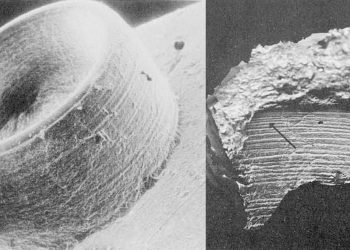
The key evidence lies in ivory rods, the oldest of their kind ever found in the Americas, dated to around 14,000 years ago. Although their exact function remains unclear, researchers point out that they match well in size, shape, and weight with similar objects found at Clovis sites across the US, which are generally around 13,000 years old. The authors emphasize that ivory working was a shared trait of Clovis-era traditions in the mid-continent after 13,500 years ago.
The scientists behind the study also express skepticism regarding supposedly older finds, such as those at White Sands. They argue that the dating method used in that case, which relied on signals in water stored inside ancient seagrass seeds, is not convincing enough to dismantle the theory of the Clovis as the first inhabitants.
Cultural Connections and Diet
Further argument for linking early Alaskans with the Clovis culture comes from the analysis of the only human skeleton ever found at a Clovis site—a 12,900-year-old toddler from Anzick, Montana. Stable isotope analysis revealed that the mother of the child, who was still breastfeeding, had a diet consisting of mammoth meat. The study authors use this as evidence of a cultural and dietary link between these communities.
Combining this evidence with the lack of Ice Age archaeological sites along the Pacific coast, the researchers conclude that the first migration from Alaska southward did indeed take place through the ice-free inland corridor. In their view, it was the ancestors of the Clovis people who undertook this journey between 14,000 and 13,000 years ago, thereby reinforcing the classic theory of the peopling of the Americas.