Editor’s note (November 6, 2026): This article was updated to correct descriptions of the Sphinx, pyramid interiors and passages, and the Great Pyramid’s faces.
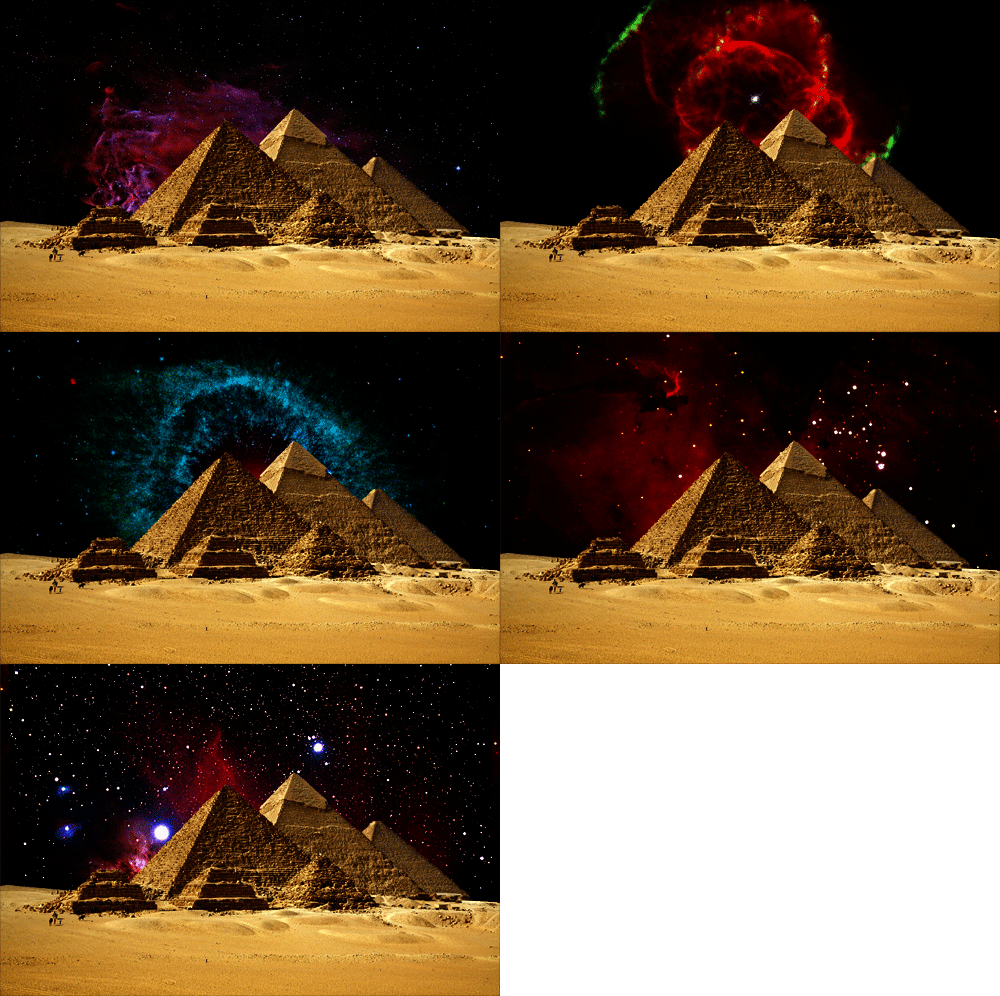
The truly gigantic size of the pyramids of Giza is hard to describe. The three main pyramids—perhaps the most famous in the world—are located at the edge of the Western Desert, some 9 km (5 mi) west of the Nile River in the city of Giza, and approximately 13 km (8 mi) southwest of the city center of present-day Cairo. These pyramid complexes included royal tombs and temples associated with the kings of Egypt.
The three main pyramids, and accompanying temples and mastaba tombs, make up the so-called Giza pyramid complex.

The area where the pyramids, the Sphinx and remnants of ancient temples stand is also known as the Giza Necropolis.
The most prominent pyramids at the plateau are its three main attractions. According to mainstream Egyptologists, the three pyramids of Giza, also known by many as the “Great Pyramids” (Although three is only one Great pyramid in Egypt), are thought to have been built in three generations; Khufu, Khafre and Menkaure.

Although the three pyramids are a great tourist attraction, a massive statue which has stood guard at the footstep of Khafre’s pyramid for thousands of years is another jewel at the Giza plateau. Considered the largest monolithic statue on Earth, the Great Sphinx of Giza is shrouded in mystery, perhaps just as much as the massive pyramids behind it.

The Great Sphinx was carved from bedrock. Egypt’s Ministry of Tourism and Antiquities associates it with Khafre’s reign on archaeological grounds. The French Egyptologist Gaston Maspero proposed an earlier date.

In an 1895 edition of his archaeology manual, Maspero suggested that the Sphinx already existed in Khufu’s time. That was a historical interpretation, not a direct date for the monument.
Many details about how the pyramids were built remain uncertain. Ancient written records nevertheless survive, including later texts that refer to the Sphinx.

Archaeologists consider the Sphinx’s relationship to nearby structures among the evidence used to assess its date, while questions about the monument continue to be studied.
The Giza plateau and its stumping monuments are therefore as mysterious as they are beautiful. It is perhaps that very same mystery that gives the ancient monuments of Egypt a special charm.

One later record is the Dream Stela, erected between the Sphinx’s paws by Thutmose IV more than a millennium after the commonly accepted Fourth Dynasty date. It tells a story about the monument but does not by itself establish when the Sphinx was carved.
The human-headed lion was associated with royal power, and Egyptologists connect the Sphinx with Khafre’s nearby pyramid complex.

Royal pyramid complexes included tombs, temples and causeways. The decoration of pyramid interiors varied across periods.
Some ancient Egyptian tombs were decorated with scenes of the tomb owner and the afterlife.

Egyptian pyramids were not all undecorated inside: the burial chamber of Unas’s Fifth Dynasty pyramid bears funerary inscriptions known as the Pyramid Texts.

The Great Pyramid also contains workers’ marks in its relieving chambers. Egyptologist Zahi Hawass describes inscriptions naming work gangs and Khufu.
Those inscriptions are among the evidence researchers consider when associating the monument with Khufu’s reign.

The Great Pyramid contains several chambers. Researchers continue to study their functions and how the passages relate to them.
The Great Pyramid has ascending and descending passages. A satellite pyramid beside Sneferu’s Bent Pyramid at Dahshur also has both.

The Great Pyramid has four principal faces. Parts of its exposed core display irregular recesses whose origin has been debated.

Photogrammetric analysis has mapped indentations in the exposed masonry. Their appearance changes with lighting, but their present form alone does not establish an eight-faced design.

Flinders Petrie described the hollowed core masonry in 1883, decades before later aerial photographs. Researchers have proposed different explanations for its form.
The question illustrates how careful measurements can help distinguish the monument’s present condition from its original appearance.

But many other striking facts are embedded within this ancient pyramid.
The Great Pyramid of Giza, which remained the tallest building on the surface of the planet for 3,800 years after it was completed, was built with unprecedented precision and alignment.

According to the survey of J.H. Cole of the monument in 1925, the accuracy of the pyramid’s workmanship is such that the four sides of the base have an average error of only 58 millimeters in length. (Survey of Egypt, Paper No. 39; Government press, Cairo.)

Source: Library of Congress / Wikimedia Commons.
Furthermore, as revealed by Flinders Petrie, the sides of the square base of the Great Pyramid are closely aligned to the four cardinal compass points (within four minutes of arc) based on true north, not magnetic north, and the finished base was squared to a mean corner error of only 12 seconds of arc.

It seems that whoever designed the pyramid—according to mainstream scholars the builder of the Great Pyramid was Hemiunu—was a great scientist and mathematician. Measurements of the pyramid have further revealed that the ratio of the perimeter to height of 1760/280 Egyptian Royal cubits equates to 2π to an accuracy of better than 0.05 percent.
True wonders of ancient engineering, it is believed that the pyramids at Giza were built by the ancient Egyptians in a span of 85 years between 2589 and 2504 BC.

However, Egypt has more than just the pyramids at Giza.
Not far from the Giza plateau, to the south of the “Great Pyramids” stands the oldest pyramid of Egypt. This is believed to be the Third-Dynasty pyramid of King Djoser, the so-called Step Pyramid of Saqqara.
According to mainstream experts, the Step Pyramid was built some 4,700 years ago. This ancient structure is thought to have laid down the necessary foundations for pyramid building in Egypt, and it is the monument responsible for the pyramid building in Egypt.

Eventually, future generations of rulers worked and developed the design of the pyramid until the “perfect” pyramid was created.
This is the Red Pyramid of Fourth Dynasty king Sneferu, Khufu’s father.
Sneferu is ancient Egypt’s greatest pyramid builder. He erected three pyramids; one at Meidum and two at Dahshur. His pyramids at Dahshur were revolutionary in many ways. The Red Pyramid is believed to have laid down the foundations for the construction of the Great Pyramid.

Sneferu’s Red Pyramid is regarded as the first successful smooth-sided pyramid in Egypt.
As explained by Egyptologist Mark Lehner, the truly gigantic pyramids of Egypt were built over the course of three ancient Egyptian generations starting with King Sneferu, his son Khufu and grandson Khafre.
Sneferu’s three pyramids alone contain more than 3.5 million cu. meters (124 million cu. ft) of stone.
All other ancient pyramids of ancient Egyptian Kings combined, excluding Queen’s pyramids and satellite pyramids contain only 41 percent of the total mass of the pyramids of Sneferu, his son Khufu and grandson Khafre.
Although Menkaure who built the third-largest pyramid at Giza used multi-ton blocks, his pyramid was smaller in total mass even compared to Egypt’s first pyramid.
Join the discussion and participate in awesome giveaways in our mobile Telegram group. Join Curiosmos on Telegram Today. t.me/Curiosmos
Related: Here’s What the Ancient Egyptian Pyramids Look Like From Space