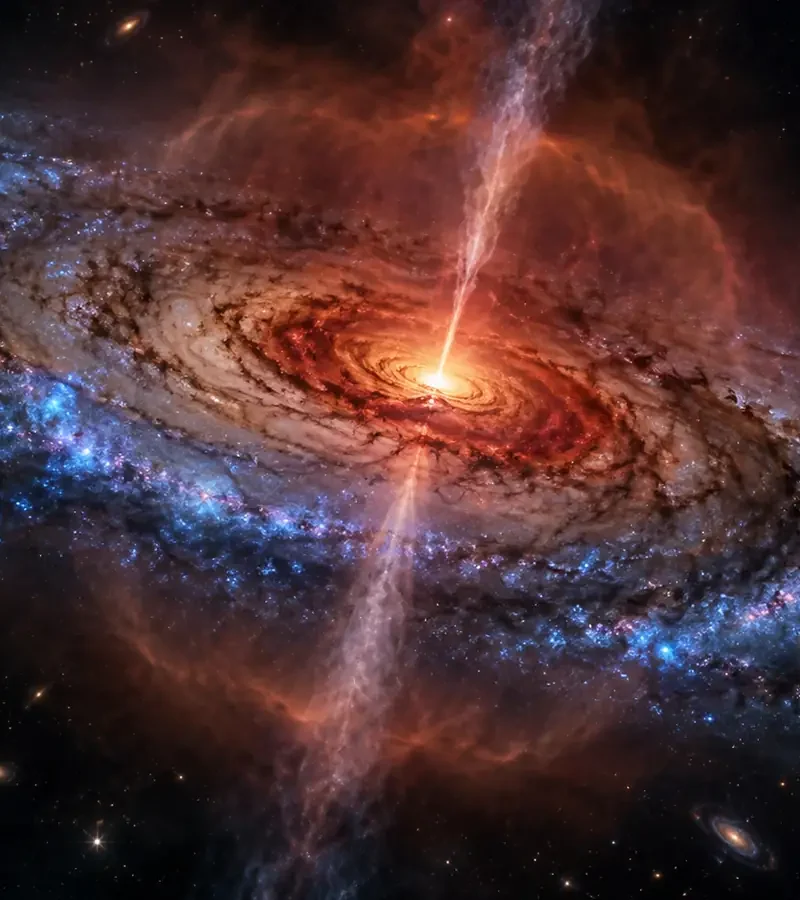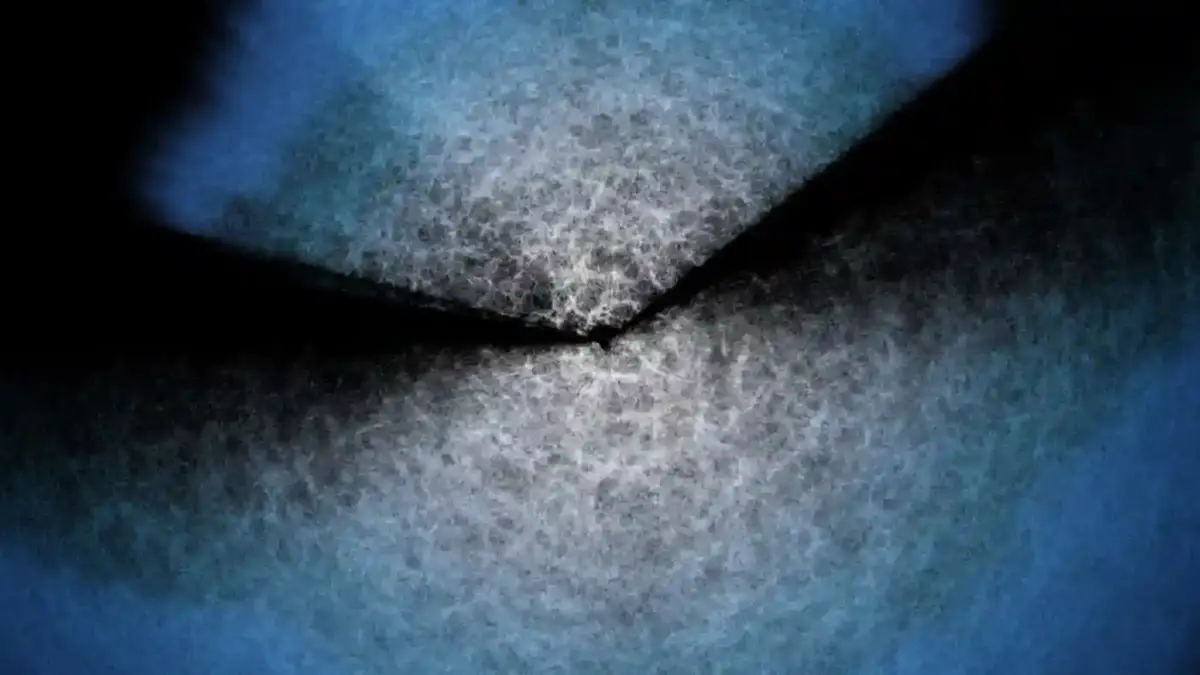
The Dark Energy Spectroscopic Instrument has completed the observing campaign that was designed to map the large-scale structure of the universe. The survey has recorded spectra for more than 47 million galaxies and quasars, along with about 20 million stars in the Milky Way.
That is a major observational milestone. It is not yet the final answer to the dark-energy question.
DESI’s five-year survey ran from the Mayall Telescope at Kitt Peak, where thousands of robotic fibre positioners collect light from selected objects. The spectra reveal redshifts, which allow astronomers to build a three-dimensional map and measure how matter was arranged at different stages of cosmic history.
Keep exploring
Continue with Curiosmos
Why the map matters
The universe is not expanding at a constant speed. The expansion was slowing under gravity until roughly five billion years ago, when it began to accelerate. Dark energy is the name given to whatever drives that late acceleration.
The standard model treats dark energy as a cosmological constant. DESI’s earlier results, released with other cosmological data, found a preference for models in which dark energy may change over time. The signal is interesting, but it has not crossed the threshold at which cosmologists can treat the standard model as defeated.
The full map should improve the measurements. It will also give researchers more ways to look for systematic errors—small effects caused by calibration, galaxy selection, supernova samples, or assumptions in the analysis.
What comes next
The DESI collaboration says the first major results from the complete five-year survey are expected in 2027. That delay is not a sign that the telescope stopped producing science. Processing millions of spectra, checking the calibration, and combining the observations with other surveys takes time.
The coming papers will test several questions at once. Is the apparent change in dark energy consistent across different redshift ranges? Does it survive when compared with cosmic microwave background measurements and supernova distances? Can another survey reproduce the pattern with different instruments and methods?
Those checks are where a possible discovery becomes a reliable result. A few years ago, a hint that dark energy might evolve would have been a curiosity. With a much larger map, the same question can be examined with sharper statistics and more independent tests.
A map, not a photograph of the past
DESI does not take a single picture of the universe. It measures light from galaxies at different distances, and therefore from different moments in cosmic history. The final product is a record of how galaxies cluster across time.
That is why the survey connects to the question of the universe’s future. If dark energy is constant, the distant cosmos will gradually disappear beyond our observable horizon. If its strength changes, the long-term picture could be different. Neither possibility has been settled by the latest milestone.
The sensible headline is simple: DESI has finished gathering the main survey data. The harder work—turning that map into a verdict about dark energy—is still ahead.
What the map can—and cannot—answer
DESI’s map is not a photograph of dark energy. It is a record of where galaxies and quasars were located when their light began its journey to Earth. By measuring the pattern of that distribution, researchers can reconstruct how quickly the universe expanded at different times.
That distinction matters because dark energy is inferred from its effects. DESI does not collect a sample of the substance or point to a single object that causes expansion. It tests competing descriptions of the universe against a large, carefully calibrated set of observations. The more precise the map becomes, the narrower the range of models that can survive.
The next stage is therefore less dramatic than a single “answer,” but more useful: combine DESI’s measurements with the cosmic microwave background, supernovae and other surveys, then ask whether the same model explains all of them.