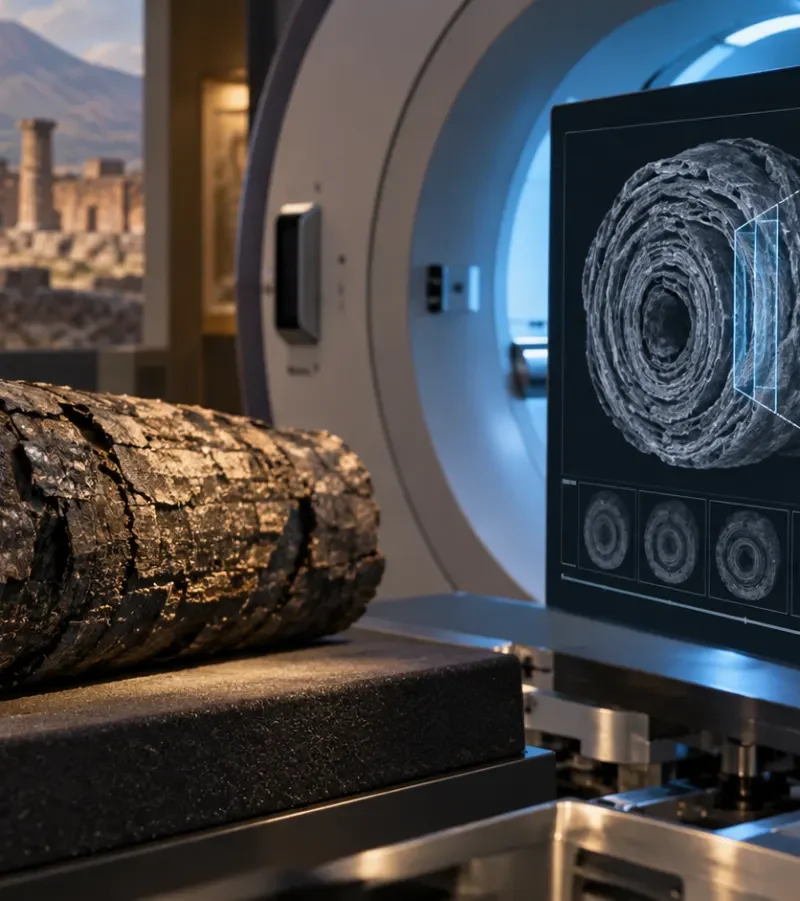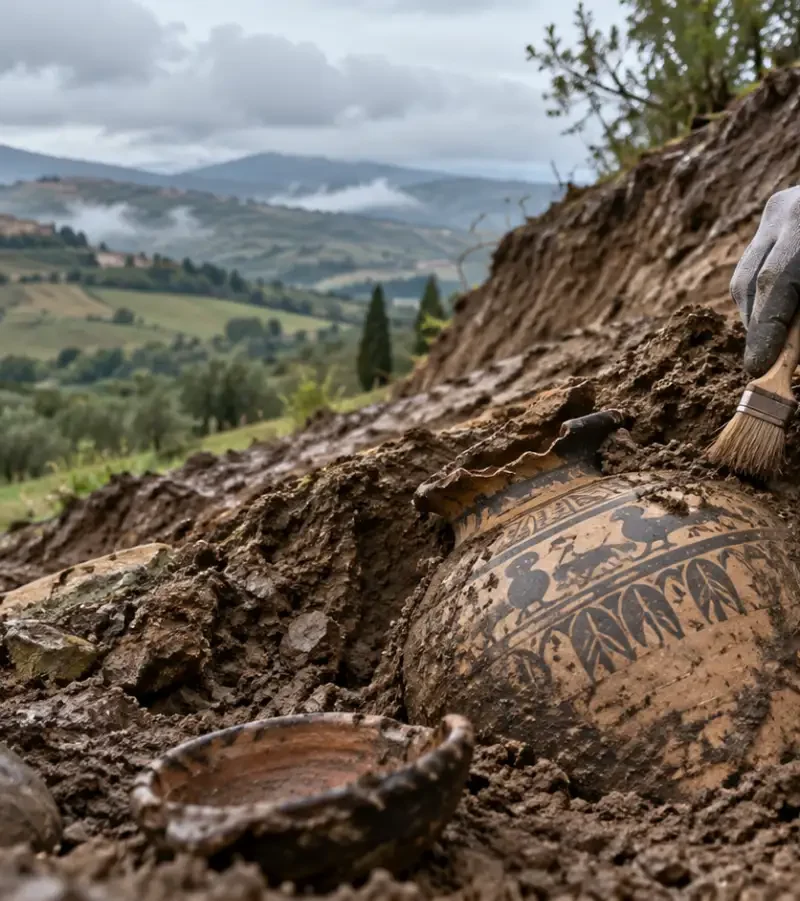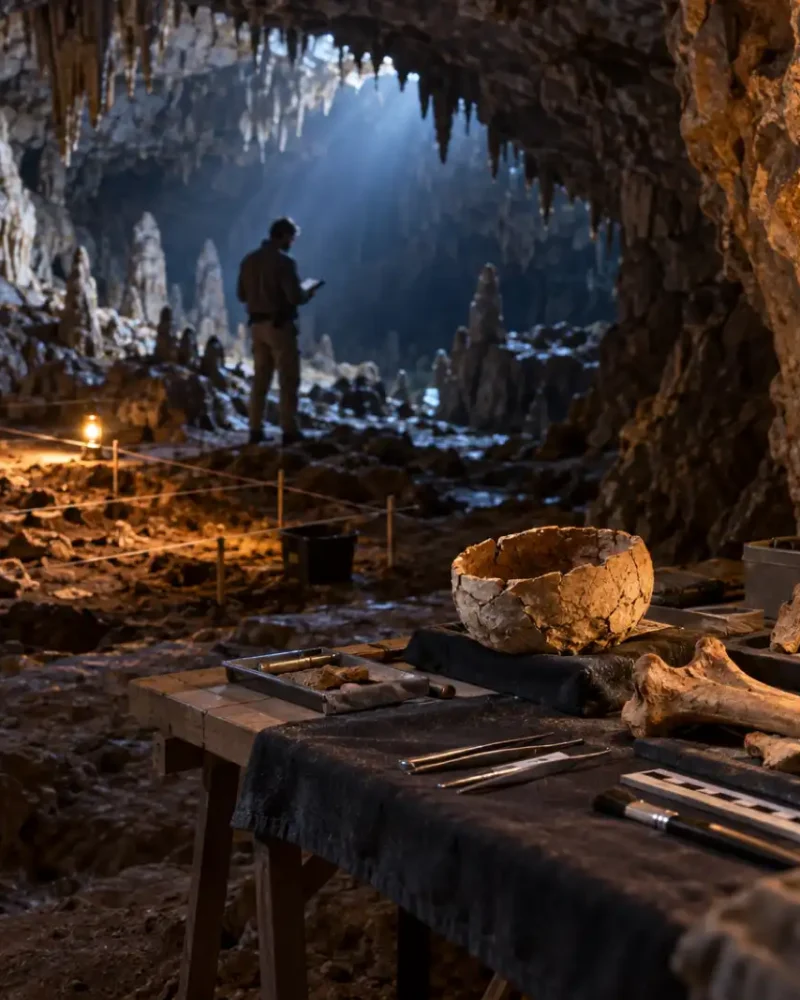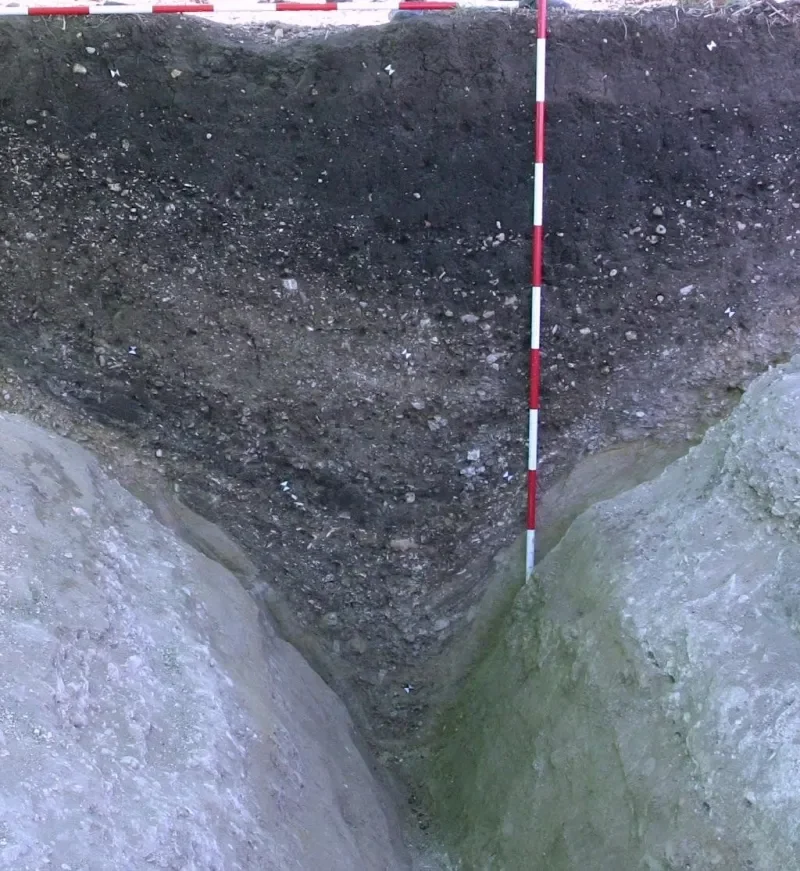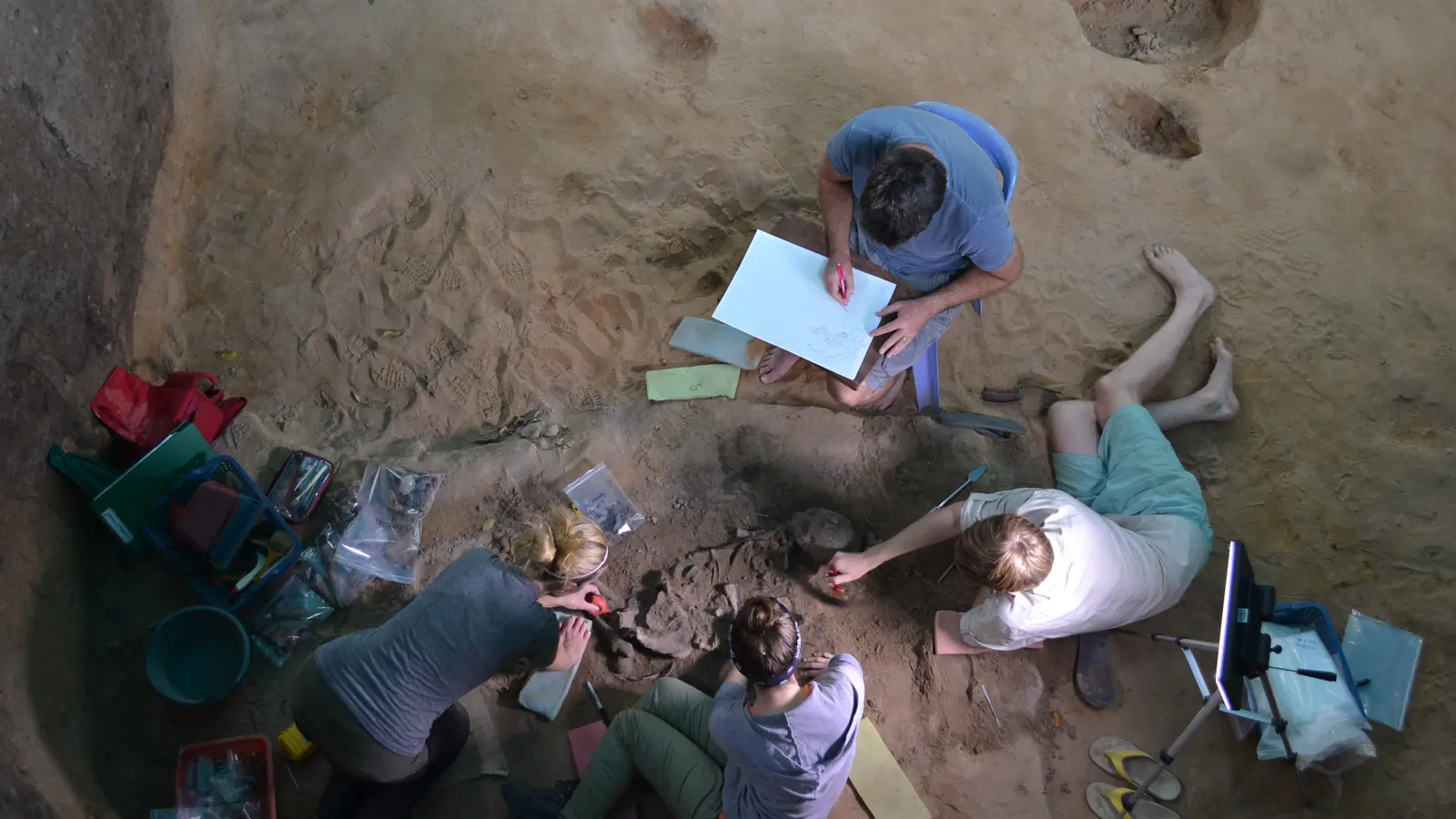
How do archaeologists reconstruct an ancient diet? They rarely find a complete meal waiting in a bowl. Instead, they assemble small traces: charred seeds, animal bones, fish scales, grinding stones, residues inside pottery, and the chemistry locked in human teeth and bones. Each clue records a different part of the journey from landscape to kitchen to body.
The result is not a menu for every person who lived at a site. Food remains are shaped by preservation, sampling and social difference. A palace, a household, a hunting camp and a refuse pit can tell very different stories. Archaeologists therefore compare several kinds of evidence before deciding what a community could eat, preferred to eat or was forced to eat.
Seeds and pollen preserve the plant world
Seeds survive best when they are charred, waterlogged or sealed in unusually dry conditions. Flotation tanks can separate light plant remains from heavier soil, allowing researchers to recover grains, pulses, fruit stones and weeds. The list of plants shows what was cultivated, gathered or brought into a settlement, but it does not always show what people actually consumed.
Keep exploring
Continue with Curiosmos
Pollen and phytoliths add another layer. Phytoliths are microscopic silica bodies formed inside plants. They can survive where soft plant tissue disappears and sometimes identify grasses, cereals or other vegetation. Pollen may reveal the surrounding landscape, although wind and later disturbance can carry it away from its original source.
Bones record animals, cuts and cooking
Animal bones can show which species were present, how old they were when killed, and whether they were butchered. Cut marks, burning and breakage provide clues about processing. A site with many young animals may reflect a preference for tender meat, while a collection dominated by older animals may indicate the use of wool, milk, traction or breeding before slaughter.
Fish bones and shells can reveal coastal or riverine food, but their absence is not proof that people never ate aquatic resources. Delicate remains are easier to destroy, and excavation methods can miss them. Good research records both what is present and what the site’s preservation conditions would have allowed to survive.
Pottery can keep a meal’s chemical trace
Cooking vessels absorb fats and other residues into their pores. Chemical analysis can sometimes distinguish dairy products, meat fats, plant oils, beeswax or aquatic resources. The signal is strongest when the vessel’s archaeological context is secure and contamination has been considered.
Grinding stones carry use-wear and microscopic plant particles. Hearths preserve charcoal, ash and the remains of food preparation. Together, these objects show what people had available and how they prepared it—grinding it into flour, boiling it, roasting it, fermenting it or storing it.
Teeth and bones reveal long-term choices
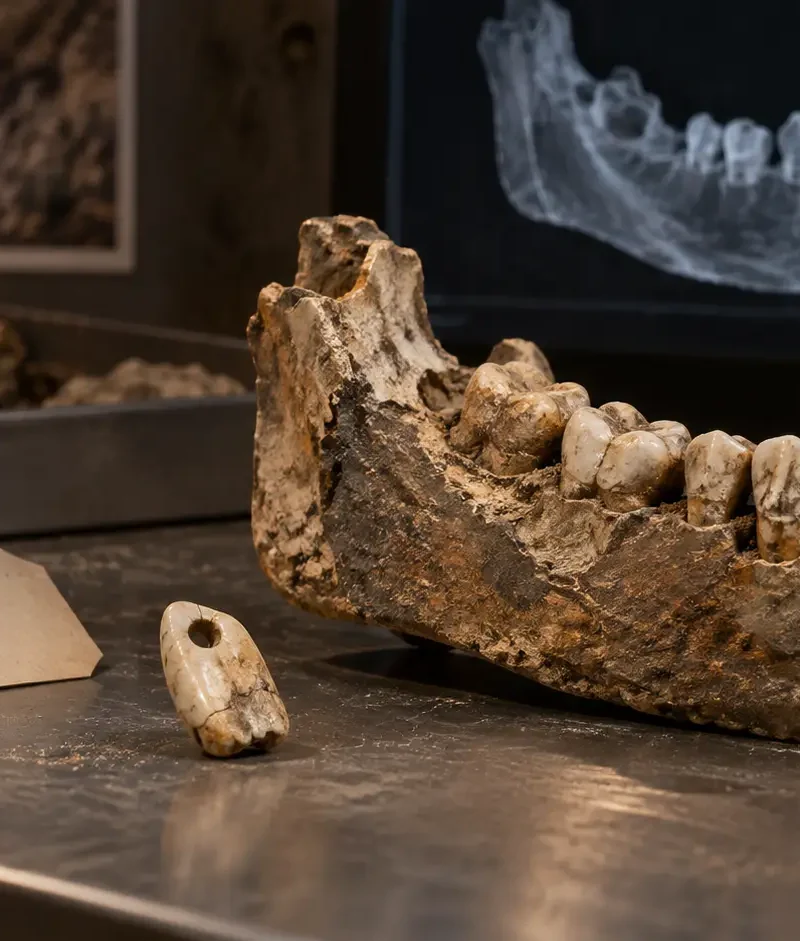
Human teeth can preserve calculus, the hardened material that builds up around the gum line. Tiny plant fragments, proteins and starch grains trapped inside can offer direct evidence of foods that were chewed. Teeth can also show cavities, wear and changes associated with diet.
Stable isotopes provide a broader view. The chemistry of bone collagen and tooth enamel reflects the plants and animals that entered the body over different periods of life. Carbon and nitrogen isotopes can help distinguish broad dietary patterns, while strontium and oxygen isotopes may provide clues about childhood geography. These methods have limits and must be interpreted with local ecology and other evidence.
Coprolites and seasonality fill in the gaps
Preserved human or animal dung, known as a coprolite, can hold seeds, pollen, parasites and fragments of food. In unusually dry caves or waterlogged deposits, it can provide a more direct snapshot of a meal than a general settlement layer. Researchers still need to distinguish household refuse from material that arrived through animals, soil or later disturbance.
Seasonal evidence matters too. Fish runs, ripening fruit and the birth seasons of livestock shaped when food was available. Growth rings in shells, the age of animal bones and changing plant remains can show whether a community stayed in one place year-round or moved between seasonal camps. Diet was often a calendar as much as a menu.
An ancient diet is therefore a reconstruction, not a single discovery. A seed tells one story, a bone another, and a pot residue a third. When the lines meet, archaeology can show how people adapted food to climate, trade, work and belief. The remains of a meal can become evidence for an entire way of life.
Food technology can also be a clue to wider change. The evidence discussed in our guide to Mesopotamian inventions shows how storage, cooking and cultivation shaped the societies that depended on them.
Sources and further reading: Smithsonian Human Origins: Evidence; National Park Service: Archaeology resources.