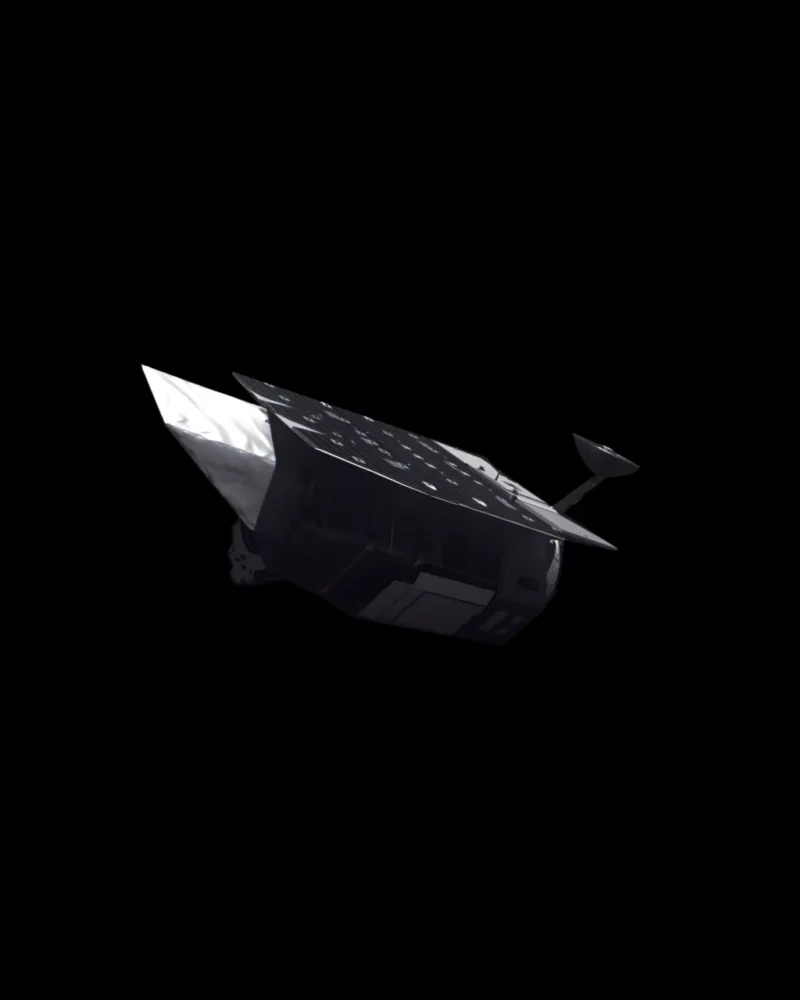
Dark energy is one of the least satisfying names in astronomy because it sounds more specific than it is. Scientists did not discover a glowing substance called dark energy. They gave that name to the unknown influence associated with the accelerating expansion of the universe.
The evidence is strong that the expansion is speeding up on the largest scales. The explanation is not settled. Dark energy may be a property of empty space, a new field, or a sign that our theory of gravity needs revision across cosmic distances.
How astronomers found the acceleration
In the late 1990s, two teams studied distant Type Ia supernovae. These stellar explosions have a useful relationship between their brightness and their distance, allowing astronomers to compare how bright they appear with how fast their host galaxies are receding.
Keep exploring
Continue with Curiosmos
The distant supernovae appeared dimmer than expected in a universe whose expansion was slowing under gravity. The simplest interpretation was that the expansion had accelerated during the later history of the cosmos.
How much of the universe is dark energy?
In the standard cosmological model, dark energy makes up roughly 68 percent of the universe’s total energy budget. Dark matter contributes about 27 percent, while ordinary matter—the atoms in stars, planets, gas, and people—accounts for only a small remainder.
Those figures describe the model that best fits several independent observations. They do not mean that dark energy has been collected in a container or weighed directly. Its presence is inferred from the way the universe expands and how large-scale structure grows.
The percentage is also a statement about the universe as a whole, not about every patch of space. Inside a galaxy, gravity from stars and dark matter dominates. Dark energy becomes important only when astronomers compare enormous regions over billions of years, where the average spacing between galaxies is changing.
Is dark energy the same as dark matter?
No. Dark matter and dark energy are different ideas. Dark matter has gravity and helps galaxies and clusters form. Dark energy is linked to the accelerated expansion of the universe and appears to act differently on the largest scales.
Curiosmos has looked separately at what dark matter may be and why astronomers think it exists. Confusing the two makes the evidence harder to follow.
What could dark energy be?
The leading possibility is a cosmological constant: a fixed energy associated with empty space. In that picture, dark energy has the same density everywhere and does not thin out as the universe expands.
Other ideas allow dark energy to change with time. A field could evolve as the universe grows, or gravity could behave differently over very large distances. Measurements of supernovae, the cosmic microwave background, baryon acoustic oscillations, and gravitational lensing help distinguish between those possibilities.
Why new maps matter
Large surveys such as the Dark Energy Spectroscopic Instrument map millions of galaxies and quasars. They use the pattern of matter across space as a record of how the universe expanded. If different observations refuse to fit the same model, the disagreement could point to new physics rather than a small correction.
For now, dark energy is a measured effect with an unfinished explanation. That is not a failure of cosmology. It is an honest description of where the evidence ends and the next questions begin.
The next answers will come from comparing several kinds of evidence rather than trusting one survey. A supernova measures distance, a galaxy map measures structure, and the cosmic microwave background records the early universe. If those records agree, the case for the standard model strengthens. If they do not, cosmology will have to explain why.