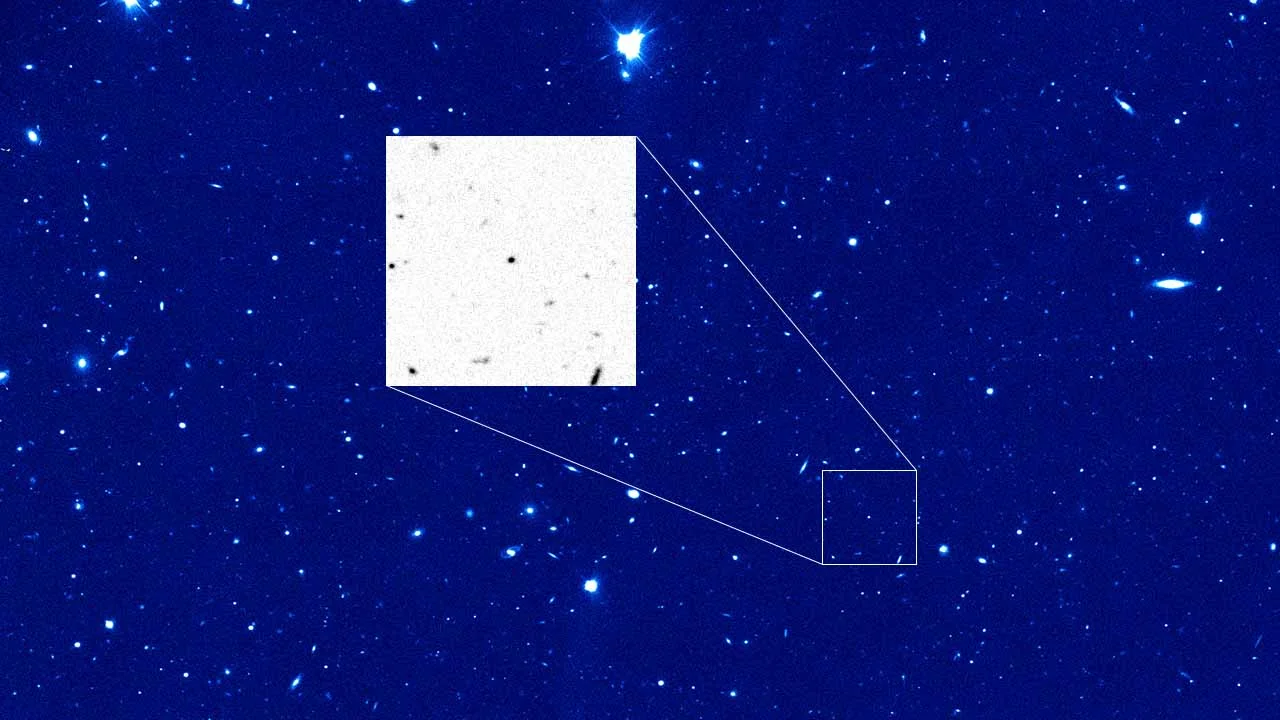
Comets are usually introduced through their tails, but a recent Subaru Telescope observation captured one without the cloud that gives a comet its familiar appearance. Comet 28P/Neujmin was more than 10 astronomical units from the Sun—farther out than Saturn—when the 8.2-meter telescope found no visible coma around its nucleus.
The image comes from Subaru’s archive and was analysed by a team led by researchers in Japan. At that distance, sunlight is weak and the surface of a comet is extremely cold. Volatile ices that would drive activity closer to the Sun can remain frozen, leaving the object looking more like a dark, inert body than a traditional comet.
What a coma tells astronomers
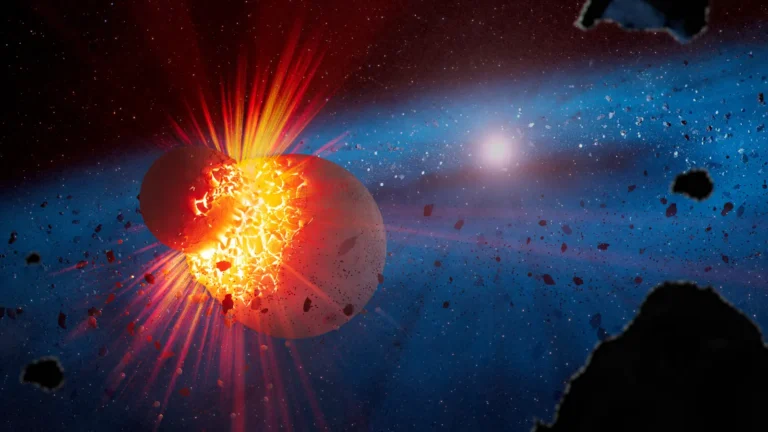
A comet’s nucleus is a mixture of ice, dust and rock. When sunlight warms the surface, some ice turns directly into gas. The escaping gas drags dust with it, building a hazy envelope called a coma. A tail can then form when sunlight and the solar wind push material away from the Sun.
Without a coma, astronomers can measure the nucleus more cleanly. The surrounding dust does not hide the object’s position or change the apparent shape of its light. That makes a distant, inactive comet a useful laboratory for studying the body before solar heating reshapes its surface.
Comet 28P is a periodic comet, meaning its orbit repeatedly brings it into the inner Solar System. The Subaru observation caught it in the cold outer part of that orbit. Its lack of visible activity does not mean the comet has stopped existing or that it will never develop a coma again. Activity can return as the nucleus moves inward and receives stronger sunlight.
A difficult target at a huge distance
At more than 10 times the Earth–Sun distance, 28P is faint even for a large telescope. The comet appears against a dense background of stars, and the light from its nucleus is spread across the detector by atmospheric turbulence and the telescope’s optics. Careful image processing is needed to separate a tiny moving object from the stationary stars.
The Subaru team compared the position of the faint source with the comet’s predicted motion. The absence of a surrounding coma was then tested against the image quality and the sensitivity limits of the observation. In other words, the result is not a claim that no gas exists at all; it means no extended cloud was visible above the detection threshold.
Why cold comets matter
Comets preserve material left over from the formation of the Solar System. Their outer layers can record how many times they have passed near the Sun, while their deeper ice may retain a more ancient chemical mixture. Observing a nucleus in a quiet state helps researchers compare an unheated surface with the active comets studied closer to Earth.
Curiosmos has covered why the Moon’s orbit can preserve a changing view of a world and how distance is measured across the Solar System and beyond. The 28P observation uses the same basic discipline: a barely visible source must be measured against a much brighter background, and the limits of the instrument must be part of the conclusion.
Future observations of 28P at different points in its orbit could show when activity switches on and which gases appear first. Comparing the comet’s quiet and active states would help identify how its surface responds to sunlight and how much material is lost on each passage.
The timing of that change may reveal whether the outer surface is covered by a layer of dust that insulates the ice. Some comets remain quiet until they are much closer to the Sun than expected, while others begin releasing gas at large distances. Repeated measurements of 28P can show whether its behaviour follows a predictable threshold or changes from one orbit to the next.
That information is useful beyond a single object. Missions and telescopes planning to observe comets need to know when a nucleus becomes active, because the coma can obscure the surface and create a much brighter target. A quiet observation such as Subaru’s supplies the baseline against which later activity can be measured.
For now, the Subaru image records a simple but valuable phase in a comet’s life. Far beyond Saturn, 28P is still a comet—but its surface is cold enough that the usual halo of gas and dust has disappeared from view.