A fragment of meteorite has preserved a magnetic snapshot from the first days of the Solar System. By studying microscopic dust inside the meteorite, researchers estimate that the disk around the newborn Sun carried a magnetic field of about 150 to 600 microteslas. That is roughly three to twelve times stronger than Earth’s present surface field.
The meteorite, known as DOM 08006, contains calcium–aluminium-rich inclusions, or CAIs. These inclusions formed among the earliest solid objects in the Solar System, during its first 200,000 years. Their minerals recorded the magnetic environment as dust and gas orbited the young Sun, before the planets had taken shape.
How a rock remembers magnetism
Some minerals become magnetised when they cool or crystallise in a magnetic field. The direction and strength of that magnetisation can remain locked inside the grain for billions of years. A laboratory instrument can measure the tiny signal and compare it with experiments that show how the mineral responds to a known field.
That work is difficult because a meteorite has passed through space, the atmosphere and a laboratory. Researchers must show that the signal is ancient rather than a later imprint from Earth’s magnetic field or from heating during the meteorite’s history. They selected pristine material and analysed individual grains to reduce the risk of mixing several magnetic episodes.
The CAIs in DOM 08006 are especially valuable because they formed before most of the later dust was assembled into asteroids and planets. Their magnetisation belongs to the disk itself, not to a finished planet. The grains therefore offer a direct test of the conditions in which the Solar System began.
A magnetic disk could organise planet formation
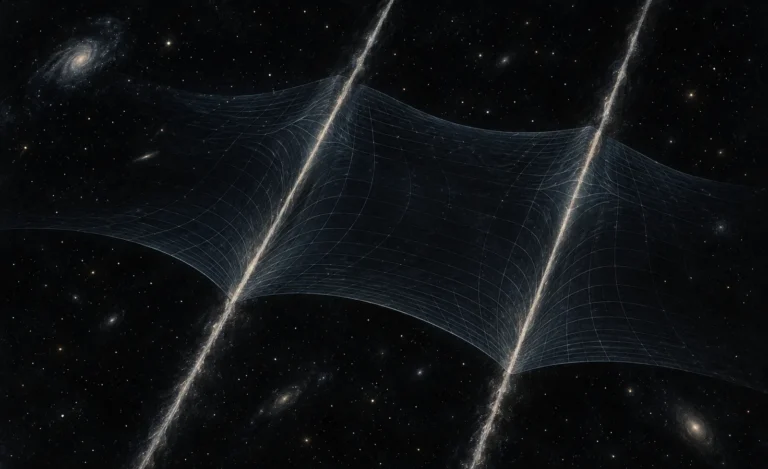
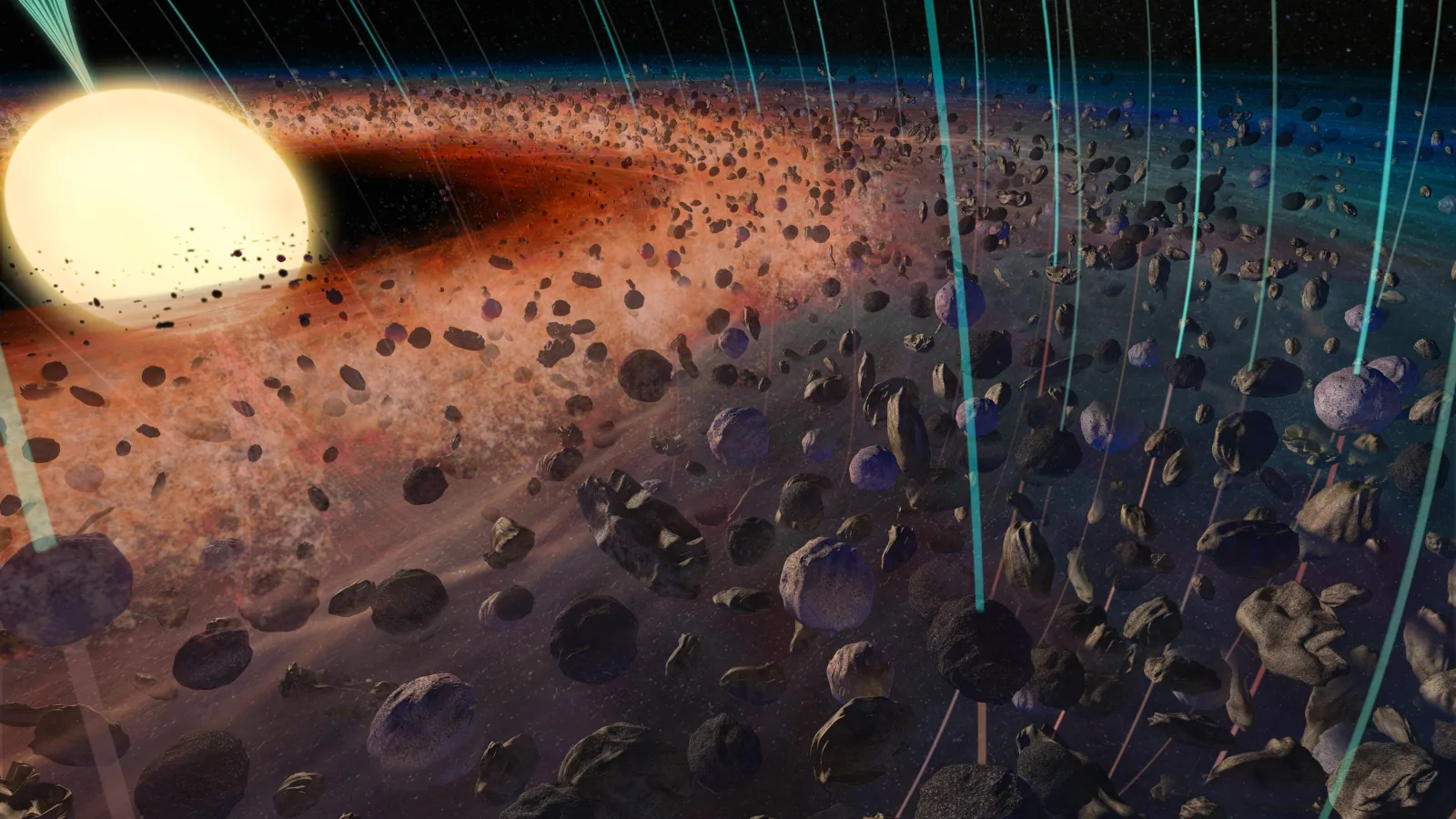
The young Sun was surrounded by a rotating disk of gas and dust. Gravity pulled material inward, while angular momentum kept much of it orbiting. A magnetic field could couple the gas to the disk, move angular momentum outward and help control how quickly material fell toward the Sun.
The strength measured in the meteorite is large enough to matter in models of the disk. It could influence the movement of dust grains, the launch of jets and the paths followed by material near the Sun. Those effects would change where solids accumulated and how quickly the first planetary building blocks grew.
The result does not show that magnetism alone built the planets. Turbulence, gravity, collisions and heating also shaped the disk. It gives researchers a physical value to place into those models instead of treating the early magnetic field as an adjustable guess.
Why one meteorite is not enough
DOM 08006 records one location and one moment in the early disk. The field may have varied with distance from the Sun or changed as the disk evolved. Other primitive meteorites will need to be measured to discover whether the same strength appears across different reservoirs of early material.
The team’s analysis is published in Proceedings of the National Academy of Sciences. It links microscopic laboratory measurements to a large question: how did a cloud around a newborn star become a system of planets with distinct orbits and compositions?
Curiosmos has explained how stars change as their fuel is used up and how astronomers measure distance across the universe. Meteorites provide the complementary record from our own beginning. Our guide to what makes a meteorite a time capsule follows the clues in their minerals, isotopes and chondrules. Instead of looking across light-years, researchers read a chemical and magnetic archive that arrived in a stone.
A field written into dust
The strongest part of the finding is its directness. The magnetic signal is carried by grains that formed before the planets, so it preserves an environmental condition rather than a later consequence. If future meteorites confirm the same range, models of the young Solar System will have to account for a powerful magnetic field from the start.
For now, the tiny inclusions in DOM 08006 give astronomers a rare measurement of a vanished disk. The field that once threaded the Sun’s birthplace is gone, but its imprint remains in dust that became part of a meteorite and eventually reached a laboratory.
The age of the inclusions is important because the disk changed quickly. During its first few hundred thousand years, the Sun was still gathering material and the gas was dense enough for magnetic forces to organise its motion. Later, as the disk thinned and the planets grew, the same field would have had a different influence.
By dating the grains and measuring their magnetisation together, researchers can place the field on that early timeline. The result gives models a starting condition: a strong magnetic environment was present while the first solids were forming, and it may have helped determine where those solids travelled before becoming planets.