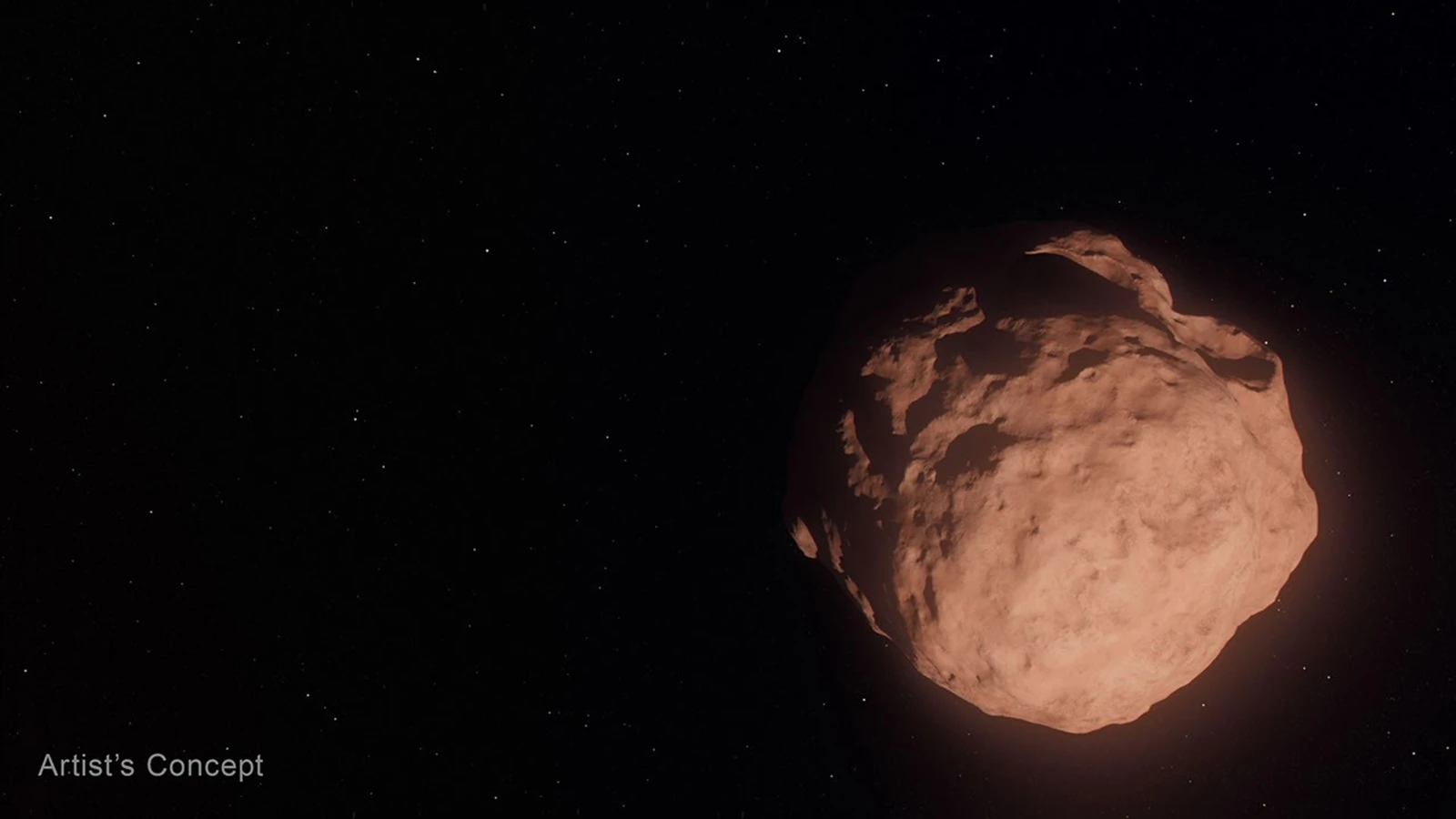
Twenty-seven faint objects beyond Neptune have emerged from a deep James Webb Space Telescope survey, extending the search for the solar system’s building blocks to worlds only kilometres across. Hubble observations of part of the sample add a second clue: their colors resemble those of larger objects, suggesting that size alone has not erased the differences inherited from their early history.
The results, described in a September 8 research announcement and two papers in the Astronomical Journal, address separate questions. One study examines how many faint objects the survey found. The other compares the light they reflect at different wavelengths. Together, they test ideas about both the formation and later collision history of the outer solar system.
Finding moving specks in a very small patch of sky
Marielle Eduardo and colleagues used Webb’s Near-Infrared Camera to search an area of just 0.05 square degrees. Their survey paper describes a technique called shift-and-stack: images are aligned for a possible moving object before being combined, allowing a faint signal to build up. A machine-learning network helped reject false detections created during that process.
Keep exploring
Continue with Curiosmos
The researchers confirmed 27 trans-Neptunian objects. Their faintest detection corresponds to a diameter of roughly 10 kilometres if the surface reflects 15 percent of the incident light. That condition matters: a darker body must be larger than a brighter one to return the same amount of sunlight. These are inferred sizes, not resolved photographs of tiny disks.
The number of detections rises toward fainter objects, but the team’s measurements constrain how steeply it rises. The announcement reports fewer small bodies than some formation models predict. This is a test of models against a defined survey, rather than a complete census showing that the entire region contains only a few small worlds.
“Hot” and “cold” describe the orbits
The Kuiper Belt beyond Neptune preserves objects with markedly different orbital histories. Astronomers call relatively orderly populations dynamically cold; excited, tilted or elongated orbits are dynamically hot. The labels do not mean one group is warm enough to melt.
That distinction lets researchers ask whether objects that formed in different parts of the early disk retain different surface properties. Planetary migration scattered some bodies away from their original neighbourhoods, while cold classical objects are thought to preserve a comparatively undisturbed population.
Hubble recovered 13 of Webb’s detections
In the companion color study, Anastasia Morgan and colleagues recovered 13 Webb-detected objects in Hubble images. Combining optical and near-infrared measurements covered wavelengths from 0.35 to 3.2 micrometres.
The small cold classical objects followed a narrow color sequence already recognised among larger members of that population. The dynamically excited objects showed a wider spread, again resembling larger examples. The characteristic color differences therefore continue into a size range that earlier work could scarcely reach.
Colors alone cannot provide a complete chemical inventory, and similar colors do not establish that a surface has never changed. The result instead weakens the expectation that smaller bodies must look systematically different because collisions have processed them differently.
The useful comparison is now between models that predict both the abundance of small objects and the survival of these color patterns. A model that reproduces the number counts but erases the observed differences between orbital populations would still leave part of the evidence unexplained.