Two infants buried at Salango, on Ecuador’s Pacific coast, were found with the crania of older children placed around their heads. The arrangement is unusual enough to have earned a nickname: “skull helmets.” It is also easy to mistake the nickname for an explanation.
The graves preserve what the mourners did. They do not tell us what they thought the act meant. The excavation team raised the possibility that the crania were meant to protect the infants, but the evidence cannot settle that interpretation.
What archaeologists found
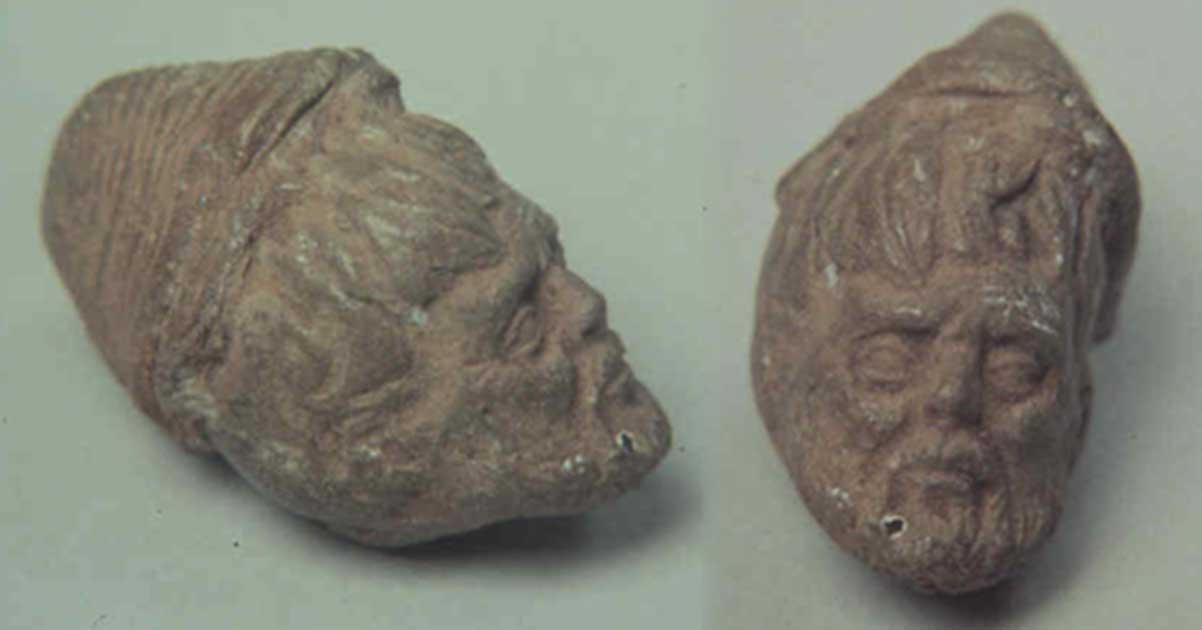
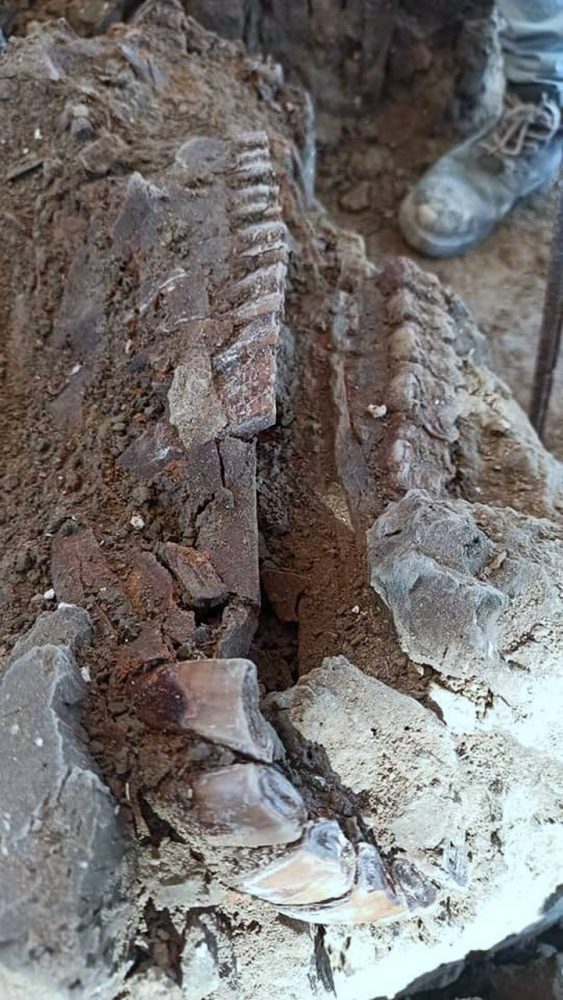
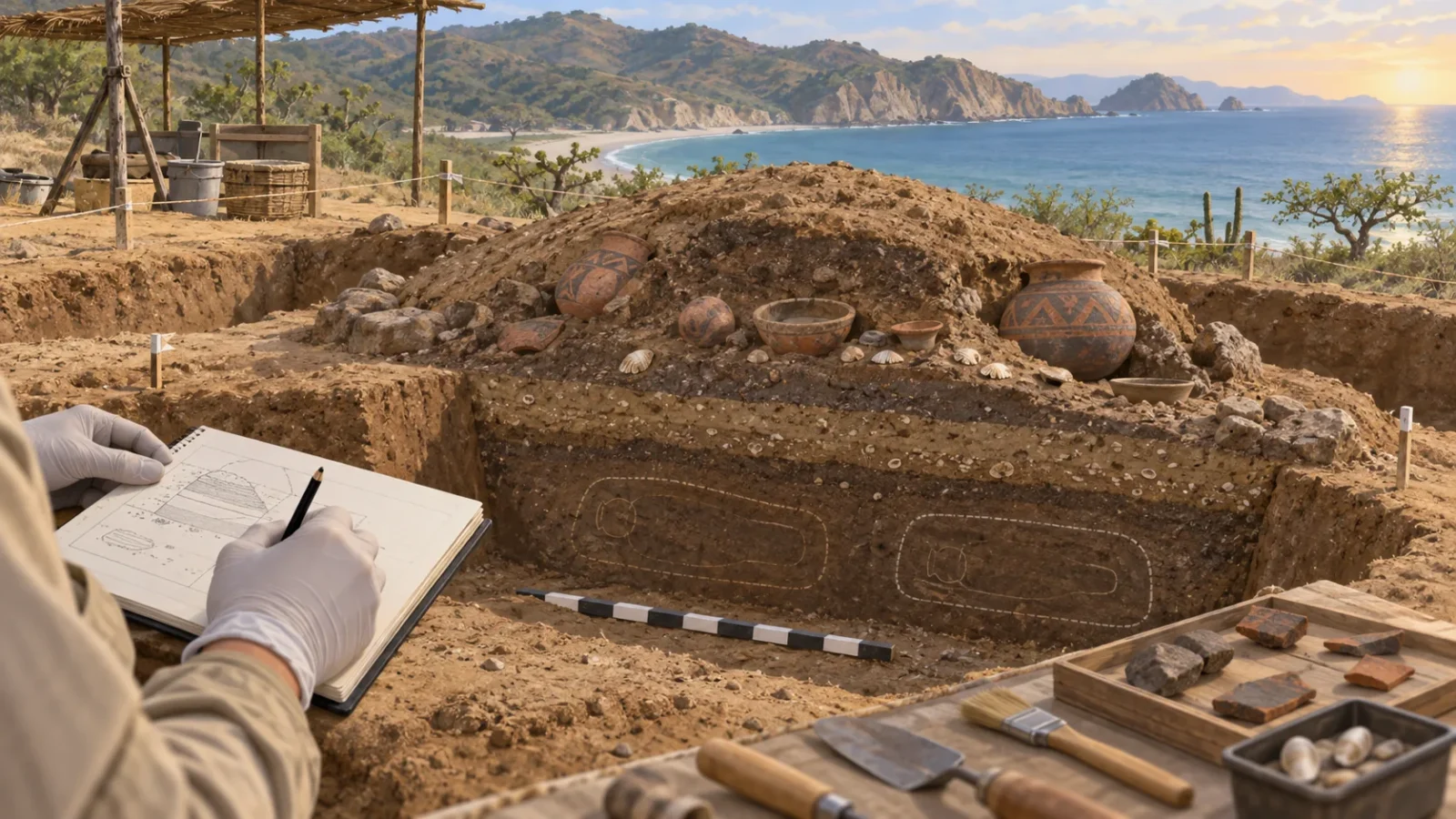
Between 2014 and 2016, researchers excavated 11 burials in two mounds at Salango. In two graves, an older child’s cranium had been placed over an infant’s head, covering the back and sides while leaving the face visible.
Keep exploring
Continue with Curiosmos
The crania were positioned as part of the burial, rather than deposited elsewhere in the grave. That detail points to a deliberate funerary choice. The researchers described the practice as unique in the archaeological record known to them at the time.
Salango was a coastal settlement and ritual site during Ecuador’s Regional Development period. The graves date to about 100 BC. Their setting lets archaeologists compare the unusual burials with the cemetery around them, though eleven excavated graves cannot stand in for every practice in the community.
A striking act, several possible meanings
The researchers suggested that the larger crania might have served a protective purpose, perhaps connected with beliefs about the infants after death. Other interpretations might link the children through ancestry, memory or a ritual relationship. Those are possibilities; no inscription or surviving account explains the ceremony.
“Helmet” describes the position of the crania, but it can make the graves sound like armor. These were human remains used in a burial, and their importance was likely social or ritual. We do not know whether the infants and older children were related. The published study did not establish a family connection.
It is tempting to supply a story that makes the scene feel complete. The responsible account is narrower: people at Salango placed an older child’s cranium around an infant’s head, twice, and buried them in a cemetery. Why they did so remains open.
What further study could reveal
Ancient DNA could test whether the individuals were biologically related, if preservation and ethical approvals allow it. Isotope analysis might help show where they spent their early lives. Comparing more burials could reveal whether the same treatment occurred elsewhere at Salango or in nearby communities.
Each method answers a different question. DNA can address biological kinship, not the beliefs behind the ritual. Isotopes can speak to movement and diet, not the mourners’ words. The position of the crania in the graves will remain the strongest evidence for the act itself.
Curiosmos has also covered Jebel Sahaba, where skeletal injuries help researchers study violence in a prehistoric community. Salango offers a very different glimpse of the relationship between the living and the dead: two rare burials whose details survive, even though their meaning does not.
Sources
- Juengst, Lunniss, Bythell and Ortiz, “Unique Infant Mortuary Ritual at Salango, Ecuador, 100 BC,” Latin American Antiquity.
- University of North Carolina at Charlotte research record.
- UNC Charlotte research summary.
- Bioarchaeology International, later research on identity and mortuary context at Salango.