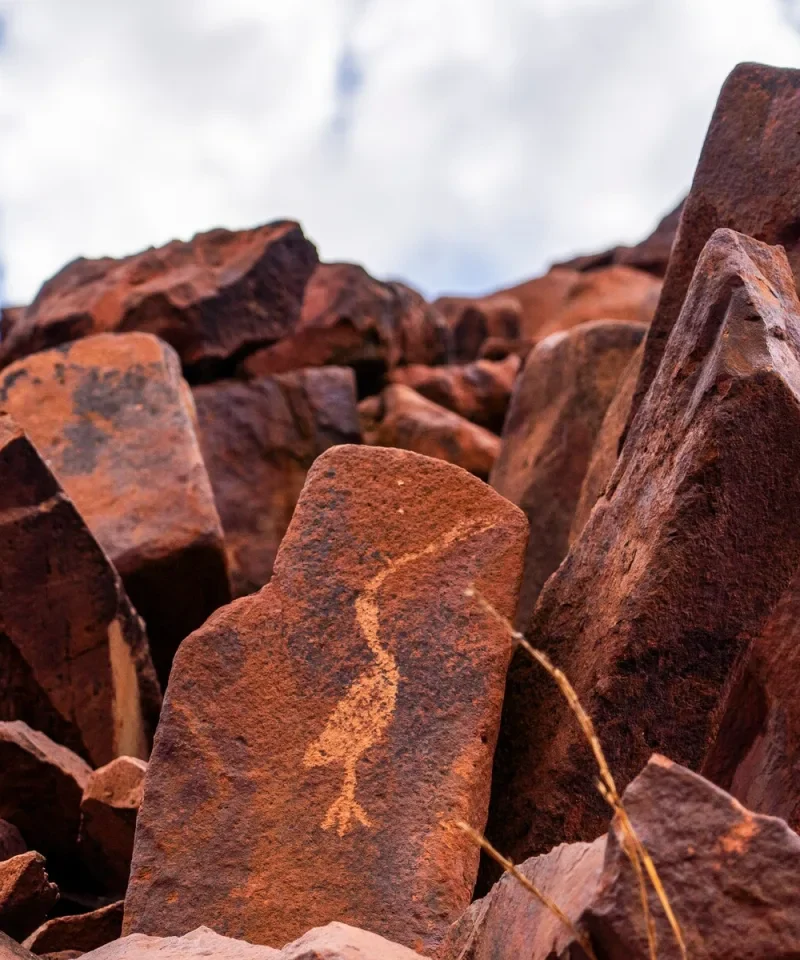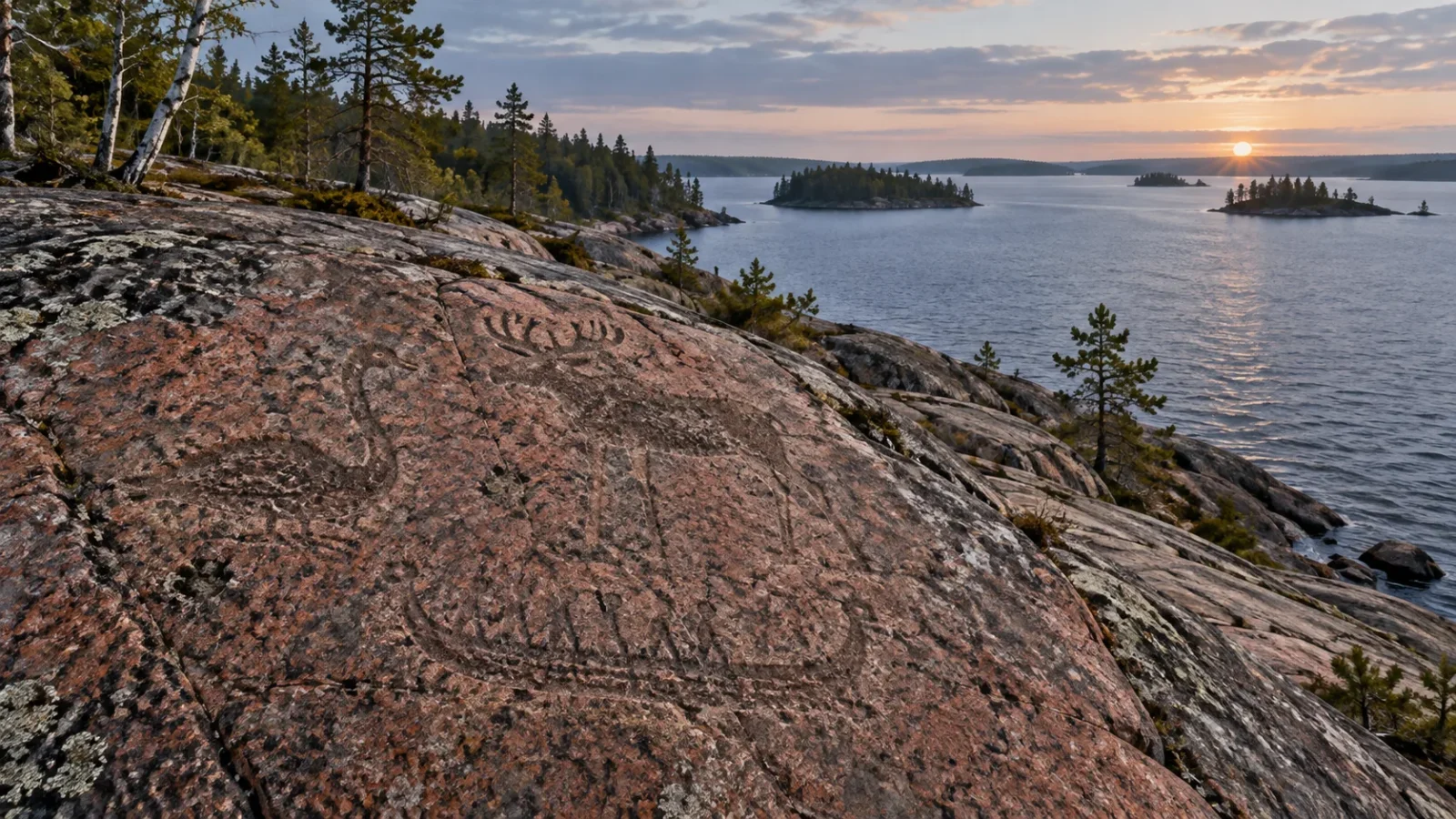
At Lake Onega in Karelia, a few shallow lines in the granite can turn into the shape of a swan. Other marks form elk, boats and figures that seem to combine human and animal features. The carvings are thousands of years old, but the people who made them left no key to their images.
Photographs often isolate one striking figure. On the shore, the carvings belong to a much larger landscape of rock, water, settlements and routes. That wider view helps explain why so many animals and boats appear together—and why the meaning of any one sign is hard to pin down.
A vast gallery along northern waters
UNESCO’s World Heritage site brings together the petroglyphs of Lake Onega and the White Sea. Across both regions there are more than 4,500 figures at 33 sites. The Lake Onega group alone contains over 1,200 carvings in 22 clusters.
Keep exploring
Continue with Curiosmos
Most are dated to roughly 4,500–3,500 BC. Archaeologists build that chronology from nearby settlements and artefacts, the condition of the rock surfaces and other dating methods. There is no date carved beside a figure, and one measurement cannot date every image at every cape.
At Besov Nos, researchers have tested microerosion dating, which measures tiny changes on a carved surface. It can offer another line of evidence, but results depend on the rock and the assumptions used. The dates are estimates to weigh alongside archaeology, not timestamps cut into the stone.
Swans, elk and the people who watched them
Water birds are a distinctive feature of Lake Onega’s art. Swans appear in both realistic and unusual forms. A study of the carvings found that swan images often occur alongside cervids, especially elk, and that some figures were deliberately carved over one another.
That recurring pairing suggests the images were arranged with care. It does not give us a translation. The birds and elk may have been tied to seasonal movements, hunting, stories, social groups or ideas about the sky and water. More than one of those meanings could have mattered at once.
The animals also belonged to the northern environment. Elk, deer, bear, beaver and waterfowl feature in research on the region’s economy and rock art. The figures can speak to practical knowledge of animals while also carrying ritual or symbolic meaning. Those readings need not compete.
Boats connect the carvings
The White Sea carvings include boats, hunting scenes, tracks and equipment. Their distribution fits a region where water made travel possible. UNESCO’s nomination links the sites to communities associated with Pit-Comb Ware and argues that some movement from Lake Onega toward the White Sea likely followed water routes.
Nearby settlements and a burial ground add a human setting to the carved panels. Even so, a boat does not tell us whether its image records a particular journey, a story, a ritual or some mix of the three. It does show that movement across water belonged in the visual world people chose to preserve.
How “sky beings” became part of the story
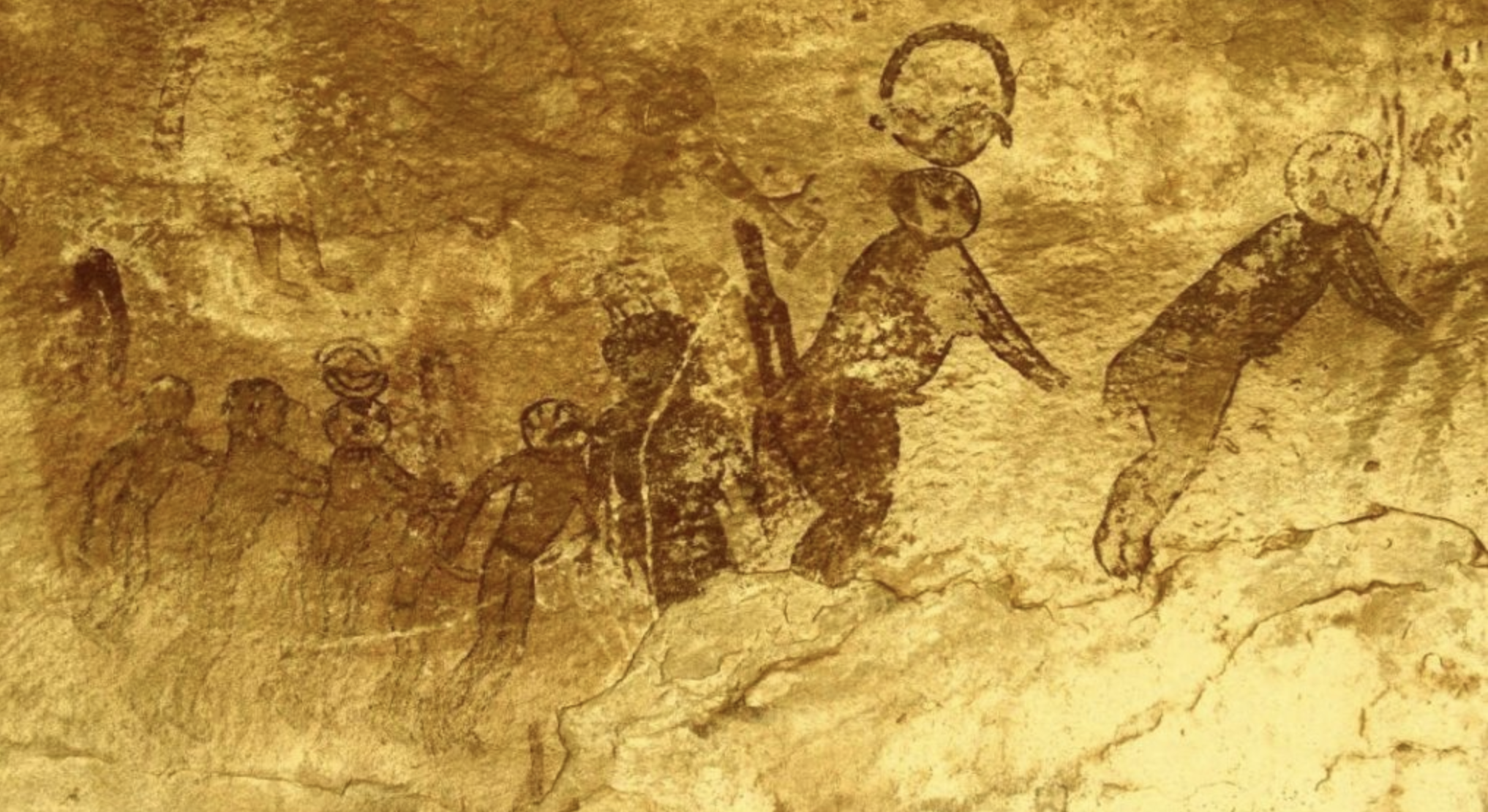
Some shapes are ambiguous. Circles, crescents, radiating lines and human-animal forms can look startling in a close-up photograph. Modern accounts sometimes call them visitors from the sky, but no feature in the carvings requires that explanation.
Researchers have explored whether certain signs relate to the sun or moon, and recent studies examine how the figures sit within larger compositions. Those interpretations draw on placement and comparison with other archaeological evidence. They remain scholarly proposals, not portraits of extraterrestrial visitors.
Besov Nos offers a reminder that the same rock could mean different things to people centuries apart. A figure now called the “Demon” acquired that later name, and a cross was carved beside it in medieval times. Someone was responding to the image, but that later response cannot tell us what Neolithic artists intended.
A shoreline that kept changing
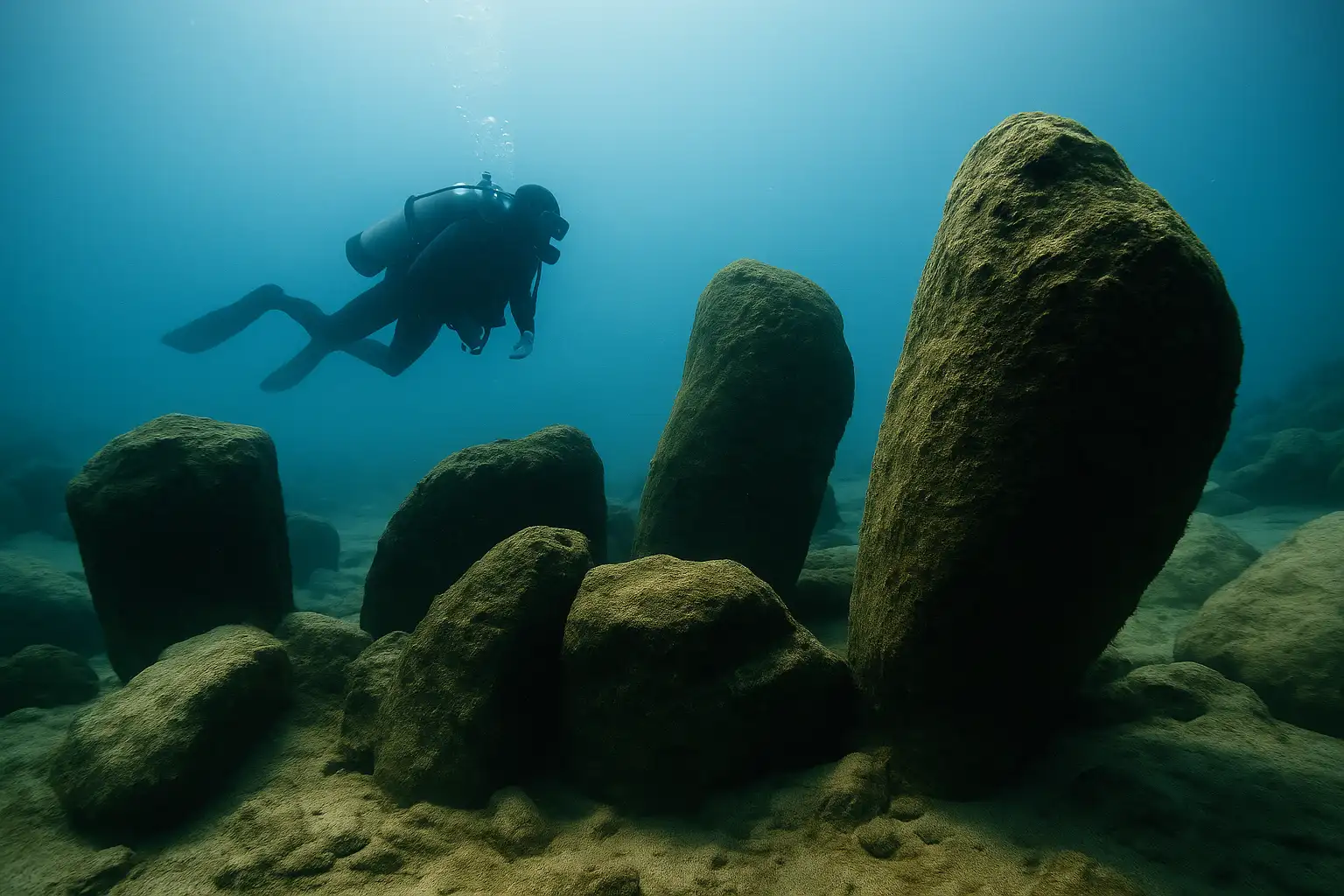
Lake levels shifted while the petroglyphs were being made. Research on the swan carvings has linked some early sites with rising water that may have covered older shore surfaces. A panel that once faced a landing place could later sit close to the water or disappear beneath it.
That changing shoreline gives the carvings a history beyond the moment they were cut. People chose particular surfaces and returned to them; the lake then altered how those images could be seen. The art was part of a living landscape rather than a fixed gallery.
Lake Onega’s carvings preserve a world of birds, animals, boats and familiar places. They tell us that people watched the lake closely and made images where land met water. Their exact stories are lost, but the repeated forms still let us ask better questions about movement, memory and life in Neolithic Karelia.
Curiosmos has also explored how imaging can bring faded rock art into view and the claims surrounding the Cochno Stone and its supposed star map. In both cases, recognizing a pattern is only the beginning of working out what it means.
Sources
- UNESCO World Heritage Centre, “Petroglyphs of Lake Onega and the White Sea.”
- Robert G. Bednarik, “Geoarchaeological dating of petroglyphs at Lake Onega, Russia,” Geoarchaeology.
- Vincent Vieira, “A Context Analysis of Neolithic Cygnus Petroglyphs at Lake Onega,” Cambridge Archaeological Journal.
- “Economic activities in the petroglyphs of Fennoscandia,” Quaternary International.
- V. I. Zhulnikov, “Astronomical signs in the Onega petroglyphs: classification and context,” Proceedings of Petrozavodsk State University.