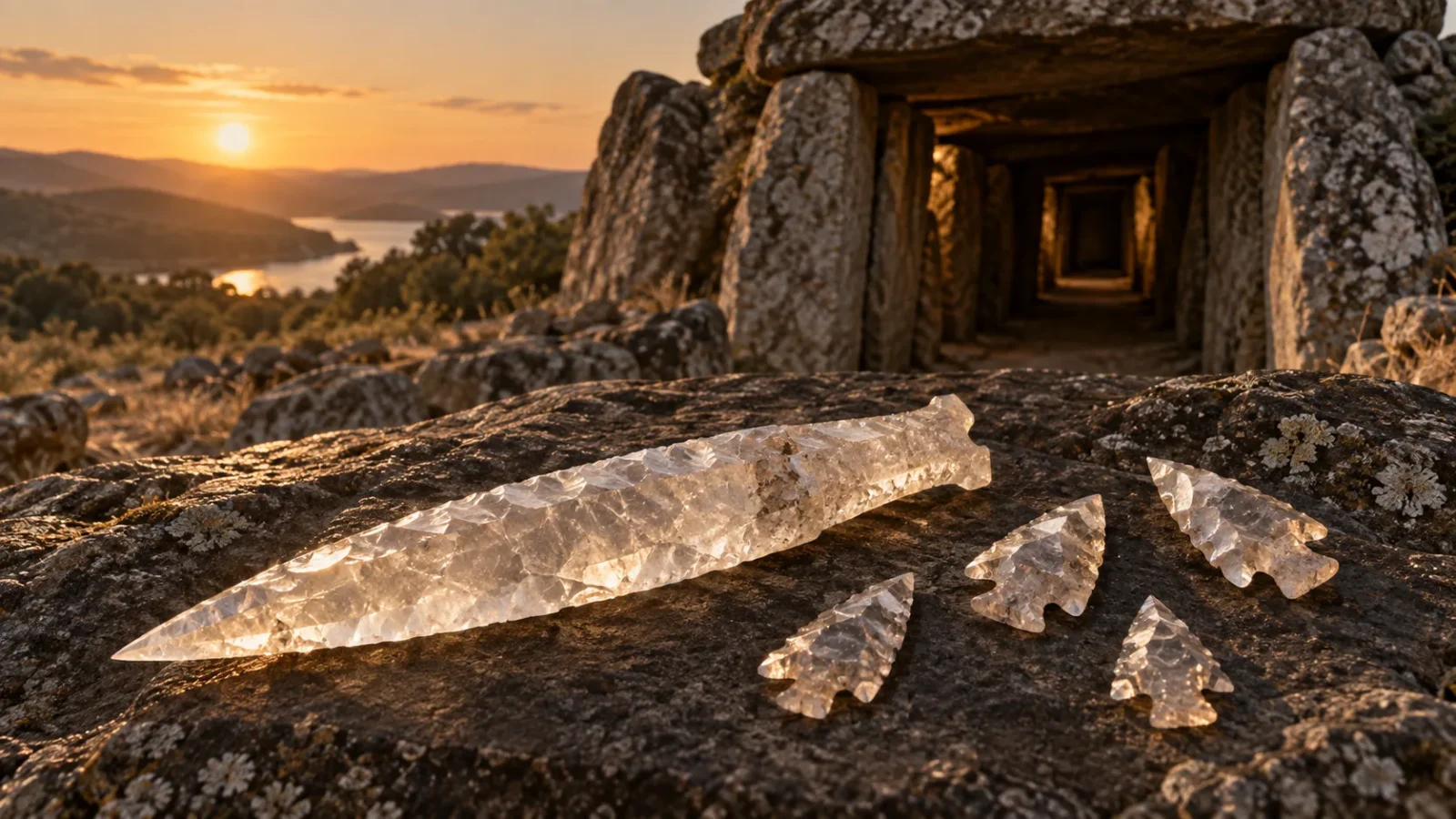
At Valencina de la Concepción, outside Seville, archaeologists found a long translucent dagger blade with 25 arrowheads and a crystal core. The objects came from Copper Age funerary contexts. They are beautiful, but their manufacture took more than an eye for appearance: rock crystal can be difficult to shape, and large clear pieces were not easy to replace.
Flint was available in southern Iberia. Why use quartz instead? The burial setting, the effort visible in the objects and the unusual material suggest that practical use was only part of their value.
A remarkable group from Valencina
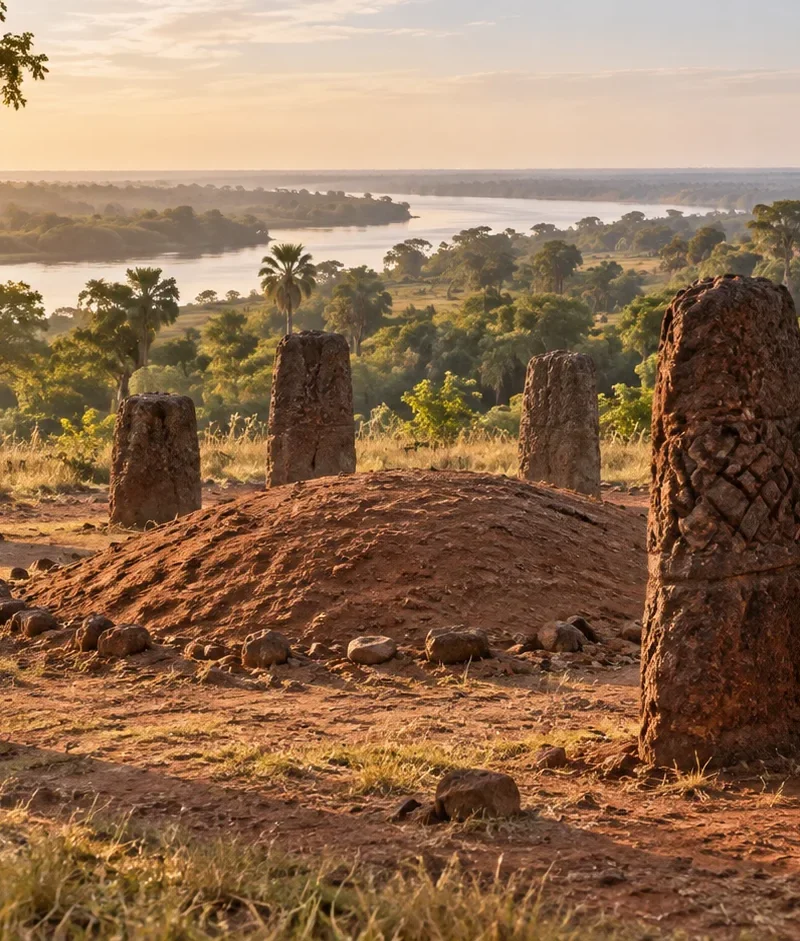
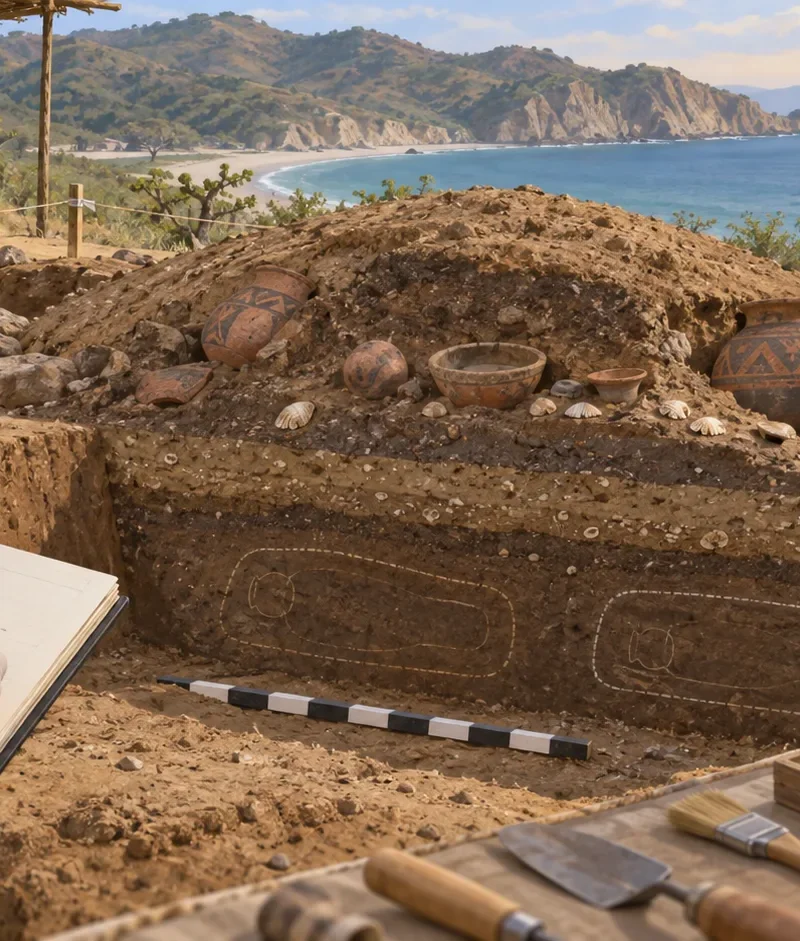
Valencina is a broad archaeological complex covering more than 400 hectares, with settlement areas, ditches, work spaces and megalithic monuments. The crystal pieces were found in funerary contexts, including the Montelirio tholos and the PP4-Montelirio sector.
Keep exploring
Continue with Curiosmos
Montelirio was a substantial passage tomb, with a long corridor leading to a circular chamber. Painted slate slabs and collective burials place the crystal objects within a carefully made funerary setting, rather than an ordinary workshop floor.
The best-known group includes a long dagger blade, 25 arrowheads and a large core from which smaller blades could be struck. Researchers describe it as the most technically sophisticated collection of prehistoric rock-crystal objects then known from Iberia.
Working a difficult material
Rock crystal is transparent quartz. It can produce a sharp edge, but it does not break just like flint. A craftsperson has to read the crystal’s shape and internal flaws before striking it. The large core at Valencina is especially unusual: it was prepared to yield small blades from a sizeable crystal, a task that requires control over where the stone splits.
The researchers studied the pieces under magnification, examined their geometry and used Raman analysis on selected samples. These methods helped identify the material and compare objects. They did not uncover a lost technology; they documented the choices a skilled knapper made with an awkward raw material.
Tools, offerings or both?
A crystal arrowhead can be sharp. A dagger blade can cut. Yet the tomb context and the time invested in the group make a purely practical reading incomplete. The objects may have been used, displayed, carried in ceremony and then placed with the dead.
The source of the crystal has not been securely identified. The researchers discuss possible origins hundreds of kilometres from Valencina. If the material travelled that far, its acquisition and transport would have added to its value. Selecting clear pieces and shaping them into a coordinated set required both access and expertise.
A burial object does not have to serve one purpose. A dagger could be useful in life and a sign of status in death. Crystal’s transparency would have caught the light during handling, while the finished edges showed what the maker could do. The same object could be a tool, an offering and a visible claim to standing.
Why crystal?
Valencina burials also contain materials such as ivory, amber, cinnabar, gold and carefully made ornaments. Their presence suggests that people valued rarity, appearance and access to distant resources. Crystal added its own qualities: a pale, transparent surface and a demanding process of manufacture.
We cannot translate those qualities into one Copper Age belief. Nor do the surviving pieces tell us who made them, who owned them or whether the dagger and arrowheads were used before burial. Their exact source and the relationship between each object remain open questions.
What the group does show is that communities in southern Iberia could bring an unusual stone into a funerary setting and make it into precise, visually striking objects. The difficult work was part of the point. Curiosmos has also explored how archaeologists read the setting of a site in this guide to settlements and ritual complexes.
Sources
- Morgado et al., “The allure of rock crystal in Copper Age southern Iberia,” Quaternary International.
- Valencina de la Concepción Municipal Museum and archaeological site.
- Junta de Andalucía, Montelirio: un gran monumento megalítico de la Edad del Cobre.
- Diputación de Sevilla, heritage record for the Montelirio tholos.