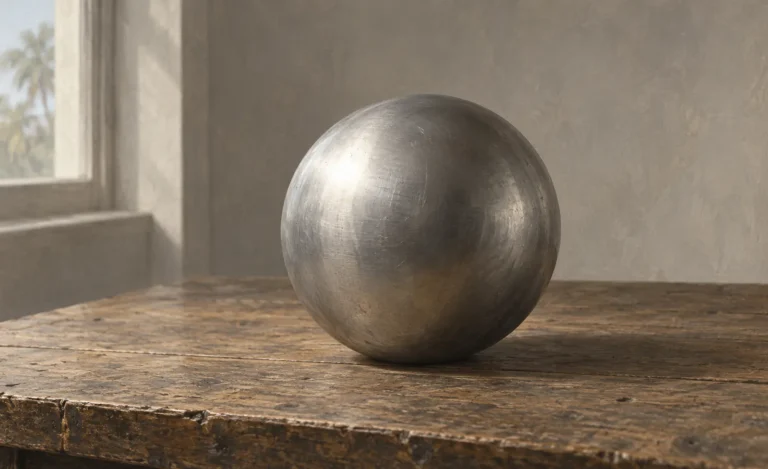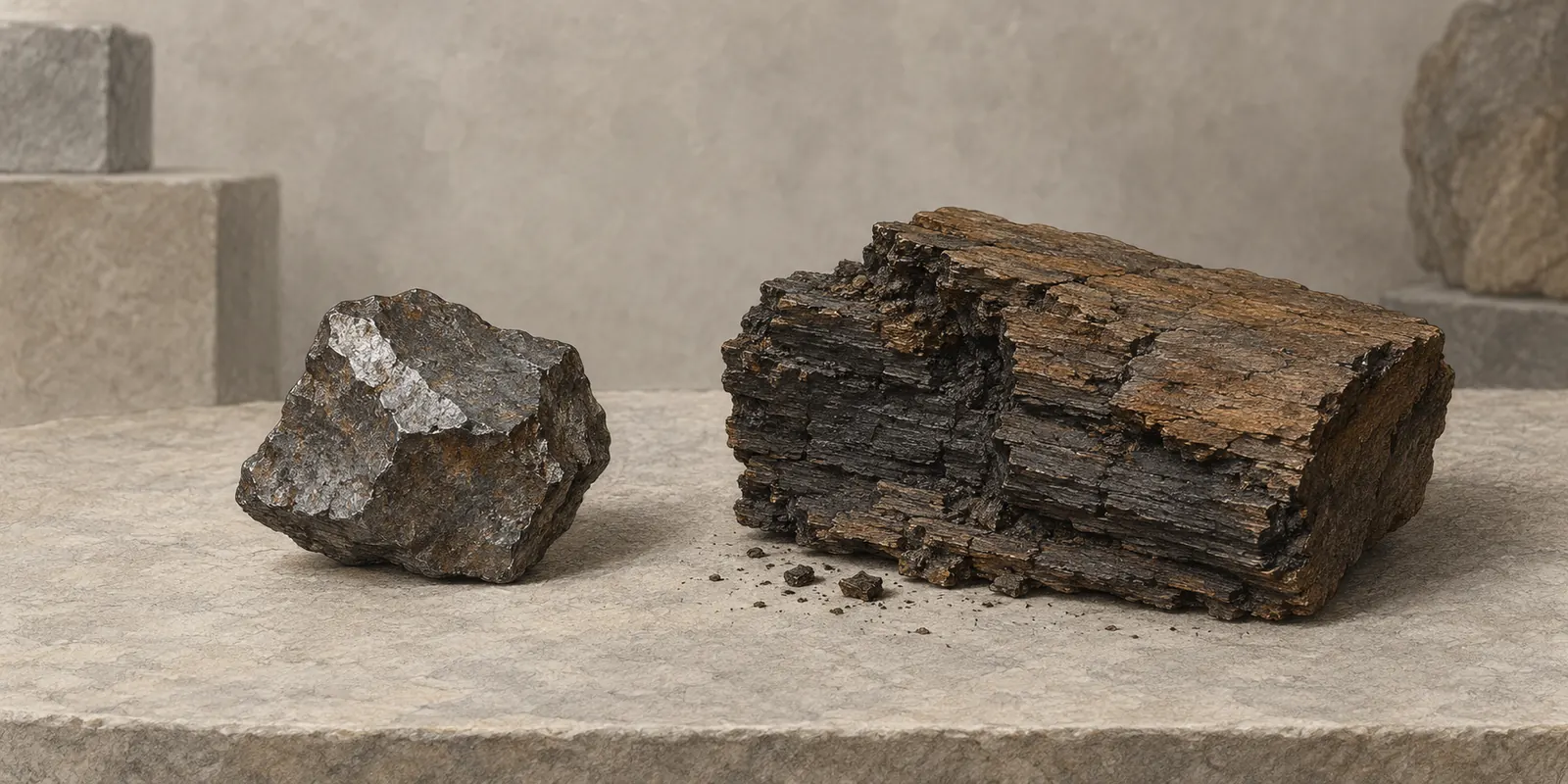
A lump of iron reportedly found in lignite at Wolfsegg, Austria, entered scientific discussion in 1886. More than a century later, the same object circulates as the Salzburg Cube: a possible machine part from a time long before people could have made one.
Those two descriptions invite very different pictures. A meteorite can travel from space and become buried in a deposit. A manufactured object would require an account of who made it, when, and how it entered the material in which it was found. Following the Wolfsegg Iron back to its early reporting reveals where those questions began.
Later accounts disagree over its composition and what its examiners concluded. The 1886 notice lets us check one of those claims against a report from the time.
What Nature recorded in 1886
The October 28, 1886 issue of Nature summarised a communication by Adolf Gurlt, with remarks by Gabriel-Auguste Daubrée, about a meteorite found in a block of Tertiary lignite from Wolfsegg.
The notice describes a mass of iron containing carbon and nickel, weighing 785 grams. It presents the meteorite interpretation as part of the scientific communication. This is an early published assessment of the object, not a modern laboratory certificate.
That distinction matters when comparing claims that it contained no nickel or could not have been a meteorite. The 1886 notice says something different. Resolving the disagreement would require examining the underlying analyses, including which sample was tested and what the test could detect.
The notice also connects the object to the age of the lignite. As with any reported discovery inside a geological deposit, the circumstances of recovery are crucial. The age of the deposit and the age of an object associated with it are questions that must be linked through documented context.
A shape can suggest a story
The name Salzburg Cube encourages us to picture a deliberately made object. Yet a name is not a measurement, and regular-looking surfaces alone cannot establish manufacture.
For an examination of a puzzling iron object, there are several distinct observations to make. Is there a groove or a worked surface? Are there marks that repeat as tool strokes would? Does the internal structure fit casting, forging or a natural process? Each question addresses a different aspect of its history.
An iron meteorite also has to be identified through more than its weight or response to a magnet. The Natural History Museum’s guide to meteorites describes iron meteorites as largely iron and nickel, with structures and compositions that researchers use in classification.
Meteorite metal and human manufacture can occur in the same object, as our report on Bronze Age Greek rings made from meteoritic iron explores. Composition and texture need to be considered together. A familiar element can occur in both natural and manufactured materials. Conversely, an unusual-looking fragment can have a conventional origin. Laboratory comparisons with known meteorites and manufactured iron could help test those possibilities.
Was the iron enclosed when the lignite formed?
To make a case for a manufactured object genuinely enclosed in ancient lignite, three histories would have to agree: the geological setting, the object’s recovery and its manufacture. A report of discovery is a lead for that investigation, but it cannot carry the entire argument by itself.
The early meteorite interpretation is also a claim to investigate. Calling it scientific does not make it immune to later evidence. A new analysis could revise an old identification, provided the object and the tested material were securely documented.
The competing explanations suggest a practical question. What observations would distinguish an iron meteorite, an industrial fragment and an object with a different history? A study designed around those alternatives would tell us far more than another dramatic age attached to a photograph.
The first report is part of the mystery
The Wolfsegg Iron’s appeal lies in the meeting of an unusual object and an unusual reported setting. Its nineteenth-century reception adds another layer: researchers were already trying to place it within natural history.
Reading the 1886 notice brings that investigation back into view. It also prevents later accounts from treating every statement about the object as if it came from the same examination. A new examination would need to establish that the tested object is the one described in 1886, then compare its composition and surfaces with the historical reports.