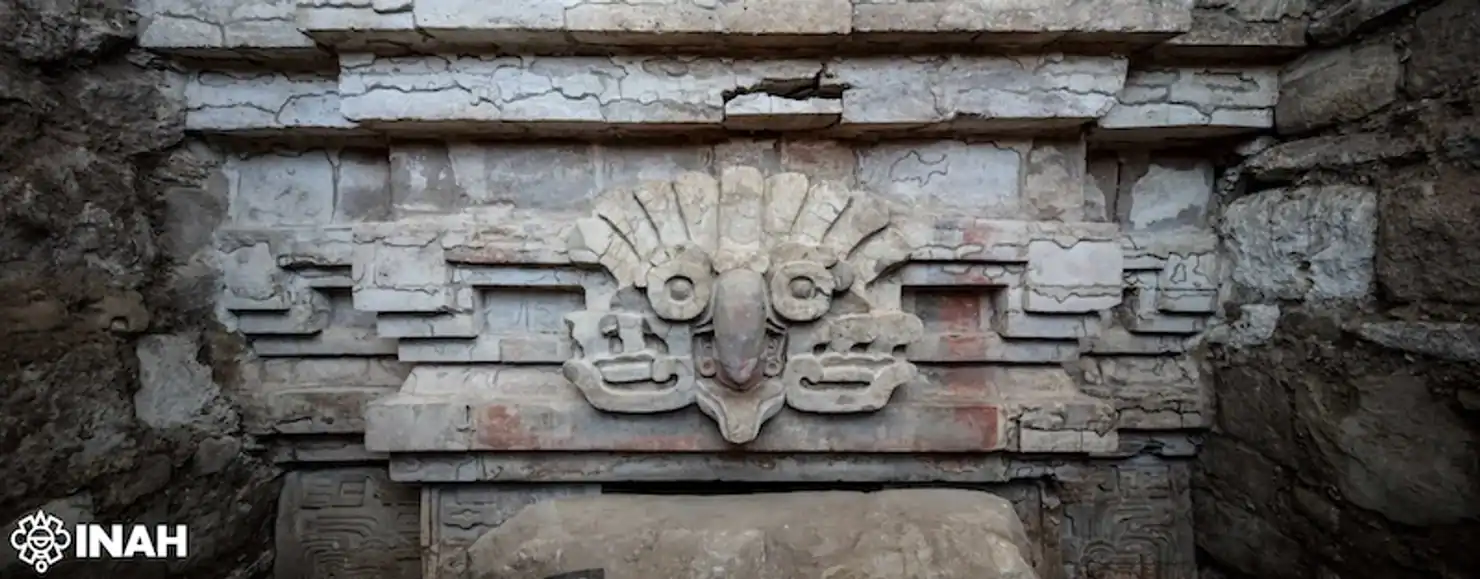
Mexican officials have announced what experts are calling the most significant archaeological find of the last ten years: a pristine, 1,400-year-old Zapotec tomb discovered in the state of Oaxaca. Located in San Pablo Huitzo, the ancient mausoleum has stunned researchers with its exceptional state of preservation and, most notably, a monumental sculpture of an owl, a guardian of the underworld, dominating its entrance.
President Claudia Sheinbaum Pardo confirmed the news on January 23, 2026, highlighting that the discovery resulted from an emergency rescue operation by the National Institute of Anthropology and History (INAH). Archaeologists were deployed following anonymous reports of looting, managing to secure the structure just in time. Dating back to approximately 600 AD, the tomb originates from the zenith of the Zapotec civilization.
The site’s most striking feature is the colossal owl sculpture guarding the antechamber. While the bird traditionally symbolized night and death in Zapotec cosmology, this specific piece holds a unique secret: its beak opens to reveal the stuccoed face of a high-ranking dignitary, likely the ancestor to whom the mausoleum was dedicated.
A Window into the ‘Cloud People’
The tomb’s interior reads like an open book on the social structure of the Zapotecs, known historically as the “Cloud People.” The threshold is guarded by stone lintels carved with calendrical names—a complex system linking leaders to their birth dates and the deities governing their destiny. Beyond the entrance, the walls are covered in polychrome murals in shades of ochre, red, green, and blue, depicting a solemn funeral procession.

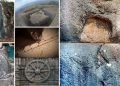
In these frescoes, ancestral figures are shown carrying bags of copal, the sacred resin used to guide souls into the afterlife. The quality of the pigments is so exceptional that technical details have survived intact for fourteen centuries, offering a rare and precious glimpse into the rituals of the elite who ruled this region long before the arrival of Europeans.
Because these fragile scenes are threatened by penetrating plant roots and environmental shifts, an interdisciplinary team from the INAH Oaxaca Center has been urgently mobilized. Specialists are currently working to stabilize the walls and analyze recovered skeletal remains, hoping to finally identify the individuals interred within this palatial complex.
This conservation effort does more than protect priceless heritage from illicit trafficking; it restores a key piece of Mexico’s past. By rescuing the tomb at Huitzo, science is not merely recovering objects, but reviving the memory of a civilization whose social and artistic complexity continues to dazzle the world