Pyramids were built in Egypt, Sudan, Mexico and Peru, but their designs and uses differ. The examples below range from stepped monuments to smooth-sided royal pyramids.
Facts About Pyramids
Why Pyramids? Of all the possible shapes and forms, why did ancient civilizations build Pyramids? The answer may be a simple one: Because a pyramid is actually one of the most stable structures that can be built on Earth.
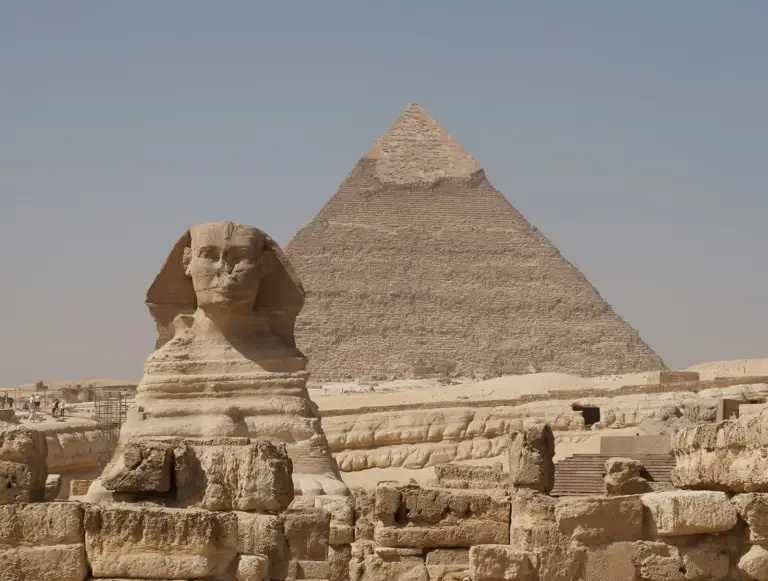
Egypt does NOT have the most Pyramids. While most of us associate pyramids with ancient Egypt, the truth is that Egypt isn’t the country that has the most pyramids on Earth. Although it is home to the most famous Pyramids, the Great Pyramid of Giza, Pharaohs’ land is home to around 138 Pyramids.
Sudan has more Pyramids than Egypt. Dubbed the Nubian pyramids, these monuments were built by the rulers of the ancient Kushite kingdoms. The area of the Nile valley, known as Nubia, which lies within the north of present-day Sudan, is home to around 240 pyramids. The Nubian Pyramids were constructed from granite and sandstone. The structures are now partially demolished.
African Pyramids. In total, it is believed that the African continent is home to as many as 380 pyramids that have been built more than 4,500 years ago. There are even pyramids in Nigeria, and they are commonly referred to as the Nsude Pyramid. The structures are located in the Nigerian town of Nsude, northern Igboland.
Oldest pyramids
Oldest Egyptian Pyramid. The Pyramid of Djoser is generally acknowledged as the oldest substantial monumental structure built of dressed stone anywhere on the planet. The Pyramid of Djoser was built circa 2630–2610 BC during the Third Dynasty of ancient Egypt.
Oldest pyramidal-shaped structures. The oldest pyramidal structures built on the planet were erected in ancient Mesopotamia. Called Ziggurats, the monuments were made mostly out of sun-dried mud-brick and brightly painted in gold or bronze.
There are different forms of Pyramids. Pyramids were built in all shapes and sizes. We’ve discovered flat-topped pyramids with a truncated platform on their summit, like some of the monuments found in Mexico and China.
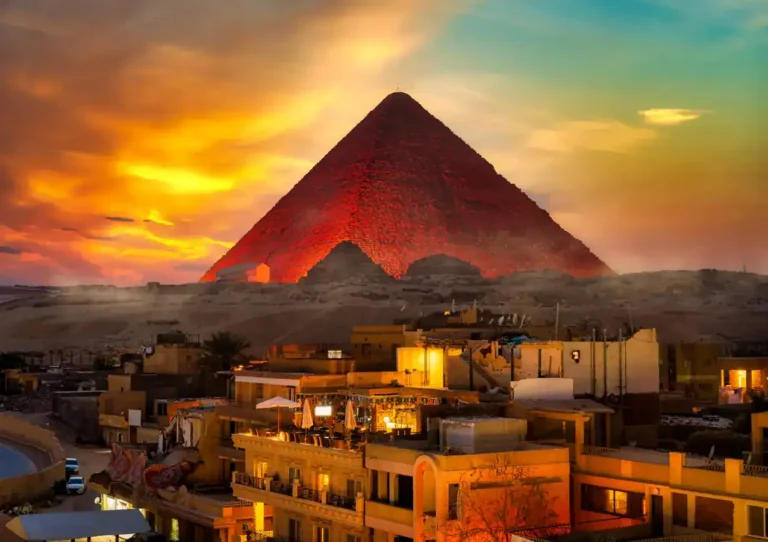
The Great Pyramid’s faces. The pyramid has four principal faces. Irregular recesses in the exposed masonry have prompted debate about how its surface came to look this way.
Mystery Mortar. The Great Pyramid of Giza is beautiful yet wonderfully strange at the same time. Many mysteries surround it, and one of them is its mystery mortar. An old Arab saying goes, “Man fears time, time fears the pyramids.” That’s true; the pyramids have stood the test of time. While experts have analyzed the mortar used in the construction of the Great Pyramid of Giza numerous times, we’ve not been able to identify its exact composition and ingredients. Whatever the mortar was made of, it made sure to help the pyramids remain standing for millennia.
There are pyramids with a round cylindrical base like the one found at Silbury Hill in England, and we even have pyramids with a rectangular base and flat-topped summit like the structures at Monks Mound in the United States.
American Pyramids
Pyramids in America. The amount of pyramids built on the American Continent is mind-bending. Different ancient cultures erected some of the most fascinating pyramids on the planet’s surface from North America to South America. Famous Pyramids in America: Great Pyramid of Cholula, the Pyramids of Teotihuacan, the Pyramid of El Castillo in Chichen Itza. There are around 1000 pyramids in Central America, according to World-Pyramids.com.
Oldest Pyramid in America. The oldest Pyramid in America is found in the archeological site of La Venta. The structure was erected on top of a closed-in platform, where Frans Blom and Oliver La Farge discovered Altars 2 and 3 and found the Olmec Civilization. Before the studies by La Farge and Blom, the site was thought to have been an ancient Maya city.
The Pyramid of La Venta is one of the earliest known pyramids to be built in Mesoamerica. The Gret Pyramid is currently 34 meters high and is believed to contain around 100,000 cubic meters of earthfill. The Pyramid of La Venta (The Great Pyramid) dates back to around.C4 B.C.
Caral and its Peruvian Pyramids. Travel to Peu, and you’ll find more than the Nazca lines and ancient temples hidden in the mountains. There are pyramids too, and they are called the pyramids of Caral. Caral is the civilization that built them, and Caral also being their capital city.
This ancient city was inhabited between 26th and 20th century B.C. The main temple complex at Caral is 150 meters (490 ft) long, 110 meters (360 ft) wide, and 28 meters (92 ft) high. The date of its construction is unknown.
The largest pyramid in the world. The largest pyramid on the surface of the planet is located in modern-day Mexico. The Great Pyramid of Cholula is, according to the Guinness Book of World Records, the largest pyramid ever built.
The pyramid itself has a volume of over 4.45 million cubic meters, which means it is much larger than the Great Pyramid of Giza (often mistaken as the largest pyramid on Earth), with a volume of around 2.5 million cubic meters.
Greek Pyramid. Greece, just like many other countries that inherited a rich ancient history, also has pyramids. Writing dating back to the second century A.D. by geographer Pausanias mentions two pyramidal-shaped structures, one of which is located at Hellinikon. The Greek Pyramids are also called the Pyramids of Argolis.
India is no exception. Just as there are pyramids in Africa, Europe, and America, there are Pyramids in India. In ancient India, many pyramids were built as massive granite temples. A few examples are the Brihadisvara Temple and the Brihadeeswarar Temple.