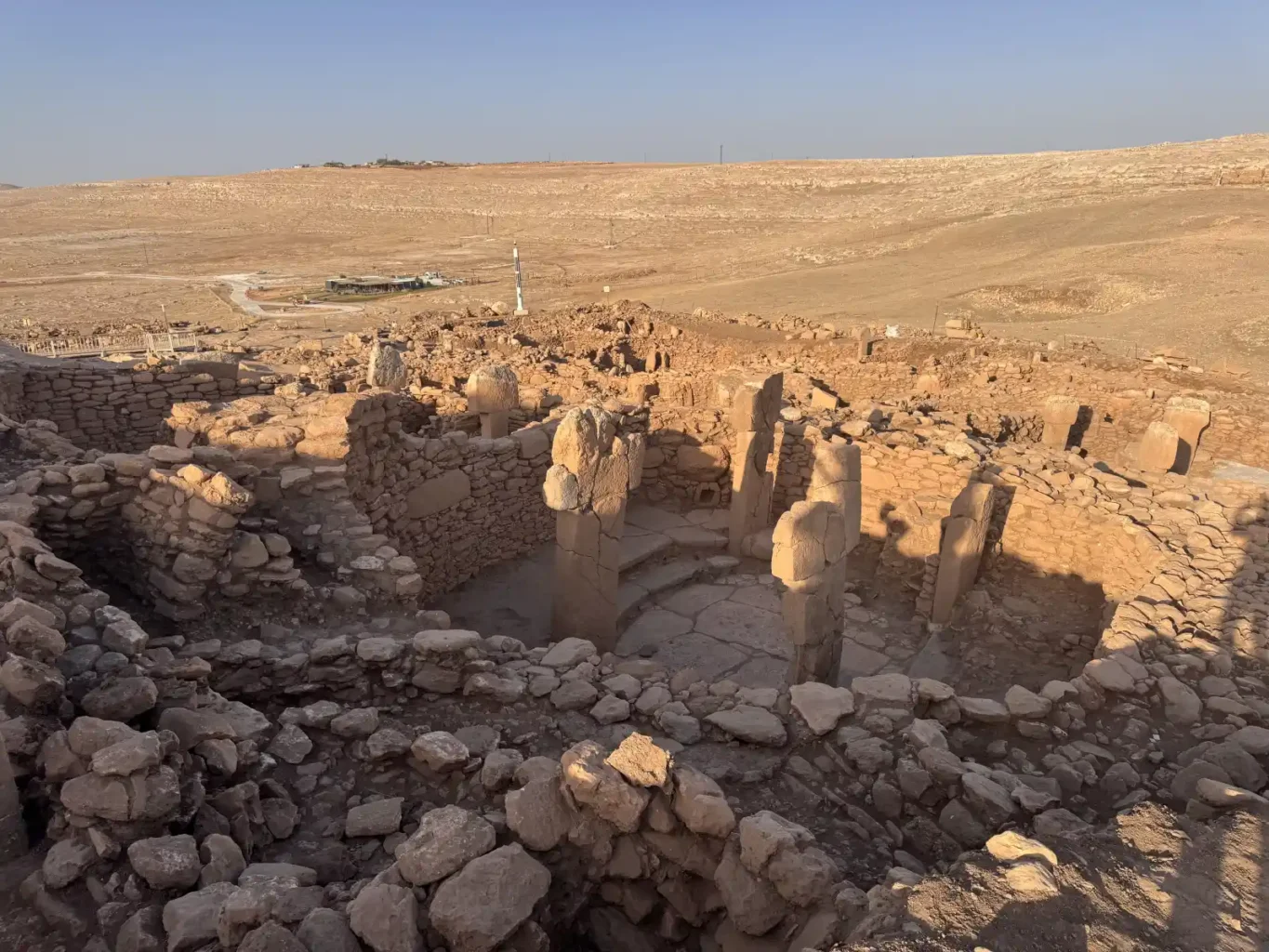
At some point during Karahantepe’s 2026 excavation season, archaeologists will begin lifting a row of heavy stone slabs. Beneath them is a small room that has not yet been entered.
The chamber sits in one corner of a rectangular Neolithic building uncovered during the previous season. Its doorway faces the larger room, but nearly a metre of compacted earth blocks access from the side. The excavation team therefore plans to approach it from above, removing the covering stones individually before working down into the sealed space.
Nobody knows what is waiting below.
There may be tools, vessels, bones, carved objects, or a floor left almost bare. The room may preserve the final activities carried out in the building, or it may show that everything important was removed before the slabs were set in place. Either outcome would matter because sealed archaeological spaces are rare. The position of every object, stain, deposit, and stone can survive as part of the original context rather than becoming mixed by later occupation or collapse.
The more intriguing question begins before anything is found. Why did people living around 12,000 years ago build this room, cover it so carefully, and leave it inaccessible?
The chamber belongs to a remarkable building
The excavation report describes the chamber as part of a special-purpose rectangular building. Its architectural details closely match the structure known to excavators as Building BH, although the latest public announcement did not give the chamber a formal excavation code.
The larger building measures roughly nine by seven metres. Its walls survive to a height of about 3.5 metres, and two levels of stone benches run around parts of the interior. Four broken T-shaped pillars were placed symmetrically inside. Along the northern wall, archaeologists found a substantial stone vessel beside a two-step platform and a channel cut through the building.
Liquid poured into the vessel could once have passed through that channel. Was it water? A prepared drink? Something connected with food? Could the movement of liquid have been part of a ceremony witnessed by people sitting on the benches?
The architecture gives the impression of planned movement. People entered, gathered around a shared interior, used the vessel and channel, and directed their attention toward particular areas of the room. Yet the building does not tell us exactly what happened there. A communal meal, a practical process, an offering, and a public ceremony can leave overlapping traces.
The sealed chamber could narrow those possibilities. If its floor holds vessels or a deliberately arranged deposit, archaeologists may be looking at a room connected with the building’s final use. If it contains tools or food remains, the division between ceremonial and practical activity may become even harder to draw.
Karahantepe was a settlement, not an isolated monument
Karahantepe lies in southeastern Türkiye within the wider Taş Tepeler region, the same early Neolithic landscape as Göbekli Tepe. More than 250 T-shaped pillars were mapped there before large-scale excavation began in 2019. Since then, archaeologists have uncovered communal buildings, domestic rooms, benches, stone vessels, grinding equipment, animal carvings, and human sculpture.
This was a place where people lived and worked close to architecture carrying enormous social weight. The wider world surrounding Göbekli Tepe and Karahantepe is now emerging as a network of settlements rather than a collection of lonely sanctuaries.
That setting changes how we should picture the chamber.
It was not hidden beneath an empty ceremonial hill. People were shaping stone nearby, processing food, repairing buildings, preparing animal carcasses, making tools, and raising children. They knew which rooms could be entered, which spaces belonged to particular gatherings, and which buildings carried memories older than the people using them.
The labels applied today—house, shrine, workshop, meeting hall—may capture only part of that experience. A building could host practical work and still be treated as sacred. A stone vessel could handle an ordinary liquid on one occasion and a carefully prepared substance on another. A room used by a household could later become a place connected with ancestry, burial, or communal memory.
The people of Karahantepe did not leave a written explanation. Their architecture is the argument.
Why cover a room with stone?
Closing important buildings was not unusual in the Taş Tepeler world. At Karahantepe, some structures were deliberately filled after long periods of use. The clearest example is Building AB, a sunken chamber cut partly into the limestone bedrock. Eleven upright pillars surround a human head carved directly from the rock. When the building’s life ended, its interior was packed and covered rather than left open to weather and collapse.
Göbekli Tepe also preserves complicated histories of rebuilding, filling, erosion, and structural damage. The old idea that every monumental enclosure was ceremonially buried in one deliberate act has become more complicated, yet carefully closed spaces remain part of the regional story.
Why would a community do this?
Perhaps a building had reached the end of its accepted life. Perhaps closing it protected a place that was no longer supposed to be entered. The final act might have accompanied the death of an important person, a change in leadership, the movement of a community, or the construction of a new building nearby. Practical rebuilding and inherited belief need not have been separate motives.
The chamber’s seal can help answer that question. Archaeologists will examine whether the slabs were laid together, whether soil accumulated before or after the closure, and whether objects were deposited immediately beneath them. A clean, coordinated sequence would suggest a planned act. A rougher pattern could indicate repair, abandonment, or a room covered while the surrounding building continued to function.
What an empty chamber could reveal
The public imagination naturally goes to treasure, but prehistoric archaeology rarely depends on gold or spectacular objects. Karahantepe predates metalworking in the region. Its most valuable evidence may be a patch of floor, a cluster of animal bone, a fragment of pigment, a broken stone bowl, or microscopic plant remains trapped in sediment.
An empty chamber could be just as revealing.
If the room was swept before closure, that would show intention. If its floor was replastered, archaeologists might identify a final preparation before sealing. If stones were selected and arranged without any deposit below, the closure itself may have been the important action.
The soil can also preserve details invisible during excavation. Chemical residues may show whether organic substances were stored or processed. Pollen, phytoliths, starch grains, charcoal, and animal fats can survive after the original materials disappear. Wear on the floor could reveal repeated movement. Small gaps between stones may hold fragments carried in on feet or dropped during the room’s last use.
This is why opening the chamber slowly matters. The excavation is not simply about reaching the bottom. It is about reading the order in which the room was used, cleared, covered, and forgotten.
The basin and channel may hold the strongest clue
The stone basin and channel in the main room make Building BH stand out. They suggest that liquid moved through the architecture by design.
Water is the obvious possibility, but water itself can serve many purposes. It can clean tools, soak plants, prepare food, wash bodies, cool surfaces, or mark a transition during a gathering. Fermented drinks have been discussed at other early Neolithic sites, although identifying them requires direct residue evidence. Blood and offerings inevitably enter popular speculation, but there is no published evidence tying either to this channel.
The chamber may contain a related installation or a second point in the same system. It may instead be a storage room with no direct connection to the liquid at all. What matters is the relationship between its floor level, doorway, covering slabs, and the channel outside.
Could someone inside the main building see into the chamber before it was closed? Was access restricted to a few people? Did the slabs cover a low storage space from the beginning, or were they added only when the building was abandoned?
Those are architectural questions, but they lead directly into the social world of Karahantepe. Restricting access means deciding who may enter. Building benches means anticipating an audience. Directing liquid through stone means repeating an action often enough to shape a permanent installation around it.
What kind of society built Karahantepe?
Karahantepe dates to the Pre-Pottery Neolithic, when communities across Upper Mesopotamia were changing how they obtained food and how long they remained in one place. They hunted wild animals and gathered plants while cultivation and herding were beginning to reshape the region.
Calling them hunter-gatherers describes an important part of their economy. It does not explain how their society worked.
Quarrying pillars, carving rooms into living rock, feeding work groups, and returning to maintain buildings required knowledge, coordination, and memory. Some people understood stone better than others. Some knew when animals moved through the landscape or when particular plants ripened. Someone organised the work. Someone decided which images belonged on a pillar and when a room should be closed.
The evidence that people lived beside Göbekli Tepe’s monumental buildings adds another layer to this picture. Monumental architecture and domestic life were not two separate stages of human development. They occupied the same settlements and were created by the same communities.
Karahantepe pushes that story further because its domestic and communal buildings appear across a broad, connected site. Its people were experimenting with permanence before the full agricultural village became ordinary. They were already creating places that outlived individuals and required later generations to decide what should be preserved, altered, or sealed.
The moment the slabs are lifted
When excavation reaches the chamber, the first photographs may look less dramatic than people expect. There may be stone, soil, and a narrow room whose significance only becomes clear after months of analysis.
Yet consider what that first opening represents. The last people who saw the interior knew why the chamber existed. They may have watched as the slabs were placed overhead. They may have expected the room to remain closed forever.
Nearly twelve millennia later, archaeologists will reverse that final act one stone at a time.
Whatever survives below will belong to a larger human story already visible at Karahantepe: people living together, gathering in carefully made rooms, controlling access to particular spaces, and giving buildings lives of their own. The chamber may contain an extraordinary object. It may preserve a modest working space. It may appear empty until the soil is examined in a laboratory.
The real discovery will be the sequence. What did the builders do in this room, and what made them decide that no one should enter it again?
Sources and further reading
- Arkeonews: What Lies Beneath Karahantepe?
- Anatolian Archaeology: Archaeologists to Open Stone-Covered Neolithic Chamber at Karahantepe
- Taş Tepeler: A stone-sealed chamber at Karahan Tepe will be opened this season
- Curiosmos: Karahantepe and the World Beyond Göbekli Tepe
- Curiosmos: Remarkable Discovery at Karahan Tepe