How did Bronze Age trade connect distant cities? It worked through a chain of exchanges rather than one giant market controlled from a single capital. Copper and tin moved toward metalworking centres. Textiles, timber, oils, dyes and food travelled in the other direction. Along the route, goods changed hands, were repackaged and acquired new meanings.
The Bronze Age was not one uniform period or one civilisation. It covered different centuries in different regions. Egypt, the Aegean, Anatolia, the Levant, Mesopotamia and the wider Mediterranean developed their own political systems, but their material culture shows that people and objects travelled between them.
Metal made connections necessary
Bronze is an alloy of copper and tin. Copper occurs in many regions, but tin is less common and is often found far from the cities that needed it. A metalworker could work with local copper and imported tin, or receive finished bronze objects through a trading network. The uneven distribution of resources created long-distance connections before modern transport existed.
Keep exploring
Continue with Curiosmos
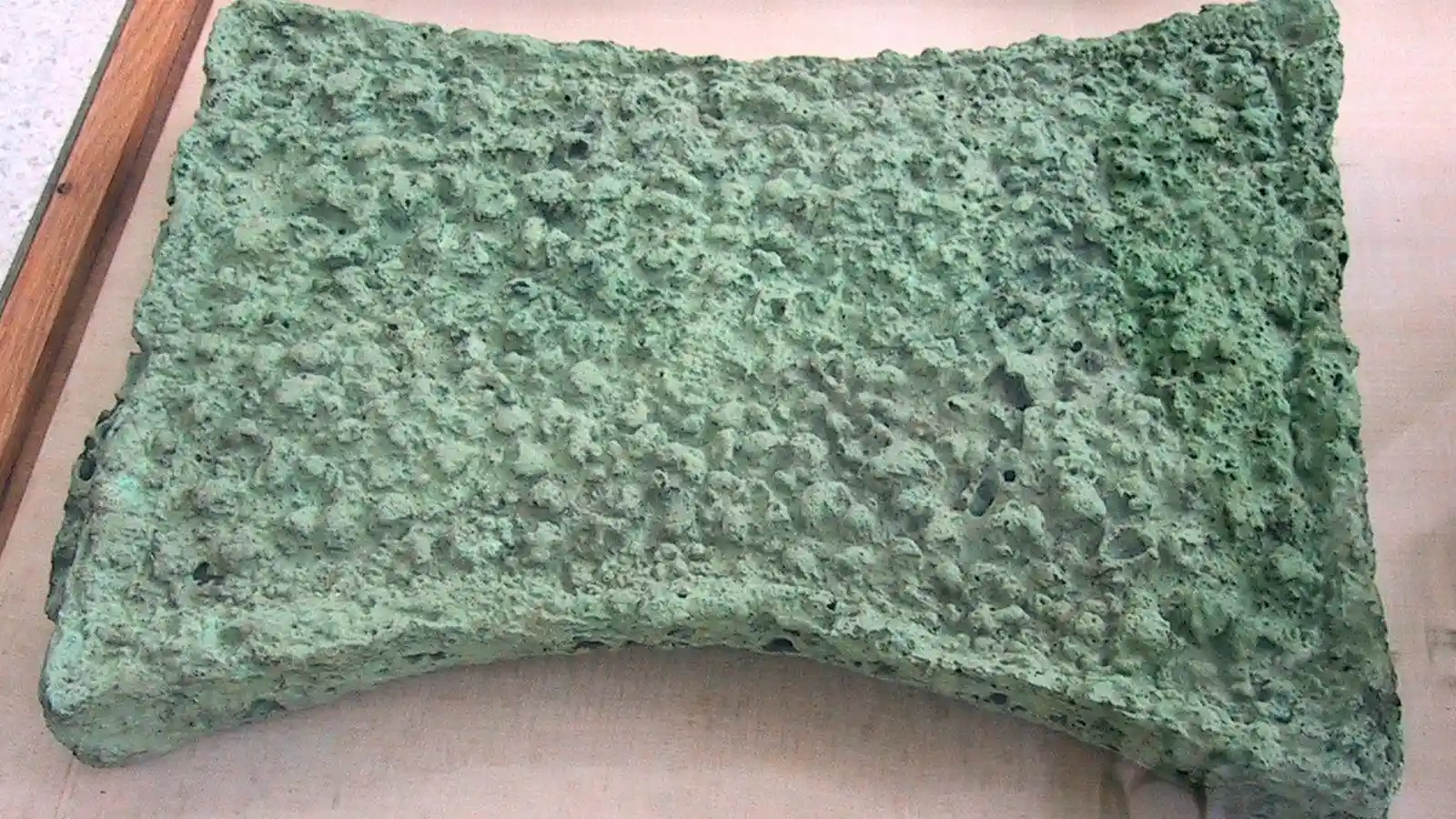
Ingots are especially useful evidence. They could be weighed, divided and remelted, making them practical cargo. Their shapes and chemical signatures can help researchers compare a shipwreck or hoard with possible mining regions. The match is rarely perfect, because metals were mixed and recycled, but the pattern can reveal movement across the sea.
Ships, caravans and river routes
Maritime trade linked ports along the Mediterranean and Aegean coasts. Sailors could follow shorelines, islands and seasonal winds, while small ports supplied water, food and repair materials. River systems connected inland settlements to the coast, although shallow water, rapids and changing channels forced merchants to combine boats, carts and pack animals.
Overland caravans crossed mountain passes and dry regions through a series of wells and stopping places. The route did not have to be a permanent road. A remembered sequence of camps and landmarks could be enough, provided the group knew where to find water and when to travel.
Trade carried ideas as well as goods
Objects can travel without a large migration. A foreign-style vessel in a local tomb may be an imported container, a diplomatic gift or an imitation made by a local workshop. Motifs, tools and writing systems can spread through contact even when the people who copied them never visited the original city.
Trade also carried risks. A crop failure, war or blocked port could interrupt a supply chain. Rulers had an interest in protecting routes, but they could not control every link. Letters and accounting tablets from the ancient Near East show merchants negotiating prices, recording shipments and complaining about delays—ordinary problems in a very old connected world.
Shipwrecks preserve a moment in the network
Underwater sites are valuable because a wreck can trap many goods together. A cargo may include metal, pottery, glass, resin and food products from different regions. The combination does not necessarily reveal a single final destination; ships could have loaded and unloaded at several ports. Even so, the objects provide a snapshot of a route and the relationships that made the voyage possible.
Inland settlements preserve a slower record. A city’s workshop waste, imported ceramics and foreign raw materials show how trade entered daily life. A small piece of tin or a shell bead may tell a wider story than a palace object because it reveals what ordinary production depended on.
Shipwrecks expose the fragile middle of the route
The Uluburun shipwreck, found off the coast of modern Türkiye, carried copper ingots, tin, glass, resin, jewellery and other goods from several parts of the eastern Mediterranean. Its cargo does not represent the entire Bronze Age economy, but it shows how many specialists and ports could be involved before a material reached a workshop. A single wreck can preserve the moment when that chain failed.
Metal sourcing adds another test. Chemical and isotope analyses can compare copper or tin with ore deposits, while administrative tablets record the movement of goods through palaces and merchants. No method is perfect: metals were recycled, cargoes were mixed and written records usually reflect the interests of officials. The strongest reconstructions put the laboratory, archaeological and documentary evidence side by side.
Bronze Age trade was not a modern global economy, but it was more connected than the word “ancient” can suggest. Its routes joined mines to workshops, ports to palaces and distant communities to one another. Archaeology can follow those connections through the materials people left behind.
That connectedness is also visible in the growth of cities. Our look at cities rebuilt over earlier settlements shows how trade, labour and local resources accumulated in the same places for generations.
Sources and further reading: British Museum collections; Metropolitan Museum of Art: The Bronze Age.