What is inside the Great Pyramid of Giza—and how much can researchers actually see? The monument contains a connected system of passages, chambers, shafts and structural spaces. Some are open to visitors; others are known from scans and measurements. The interesting question is not whether the pyramid hides a dramatic secret, but which spaces are confirmed, how they were detected and what their purpose might have been.
That combination of knowledge and uncertainty is the reason the interior continues to attract attention. We know far more than the old image of an empty tomb suggests, but modern archaeology has also shown that Khufu’s pyramid is not fully mapped. The right question is not whether it contains “secrets.” It is what the evidence can tell us about the way the monument was designed and used.
Khufu and the Great Pyramid
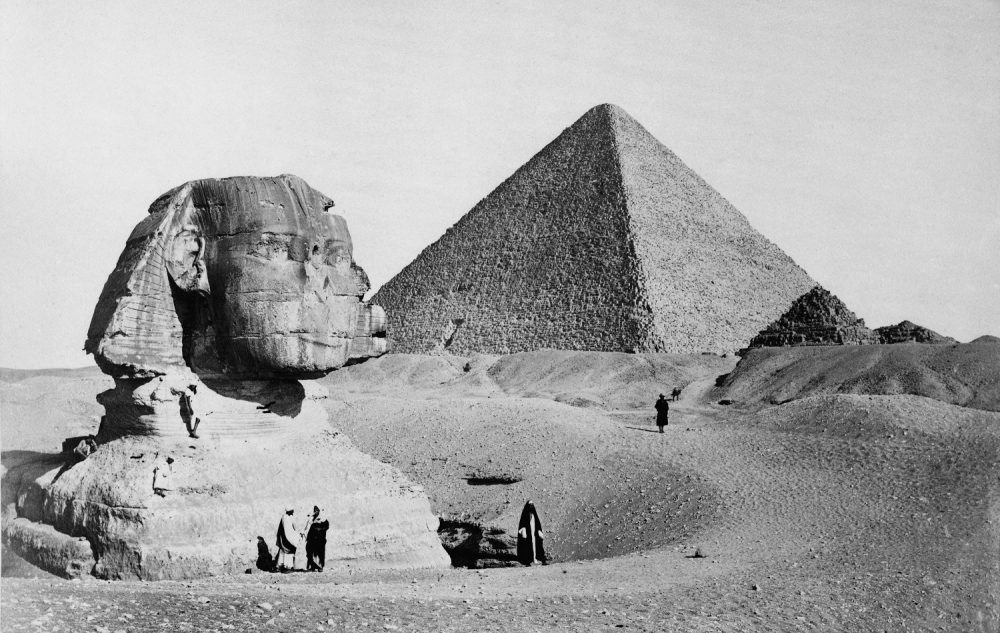
The Great Pyramid was built for Khufu, the Fourth Dynasty king known to Greek writers as Cheops. Egypt’s Ministry of Tourism and Antiquities places his reign around 2589–2566 BCE and gives the pyramid’s original height as about 146.5 metres. It was the tallest human-made structure in the world for more than three millennia.
The pyramid stood at the centre of a funerary complex that included temples, causeways, boat pits and smaller pyramids. Its interior therefore belonged to a larger ritual landscape. The chambers were not designed as a modern building with rooms for ordinary life; they were part of a royal monument intended to protect and commemorate the dead king.
A map of the known interior
The route begins at the original entrance on the north face. From there, a descending passage runs through the masonry and into the bedrock beneath the pyramid. The passage is narrow and steep, and it leads toward the subterranean chamber, a rough-hewn space below the monument’s base.
Farther along the route, an ascending passage rises into the body of the pyramid. It connects with the Grand Gallery, a tall corbelled passage whose layered ceiling is one of the most striking pieces of engineering inside Khufu’s monument. From the gallery, visitors reach the Queen’s Chamber and continue upward toward the King’s Chamber.
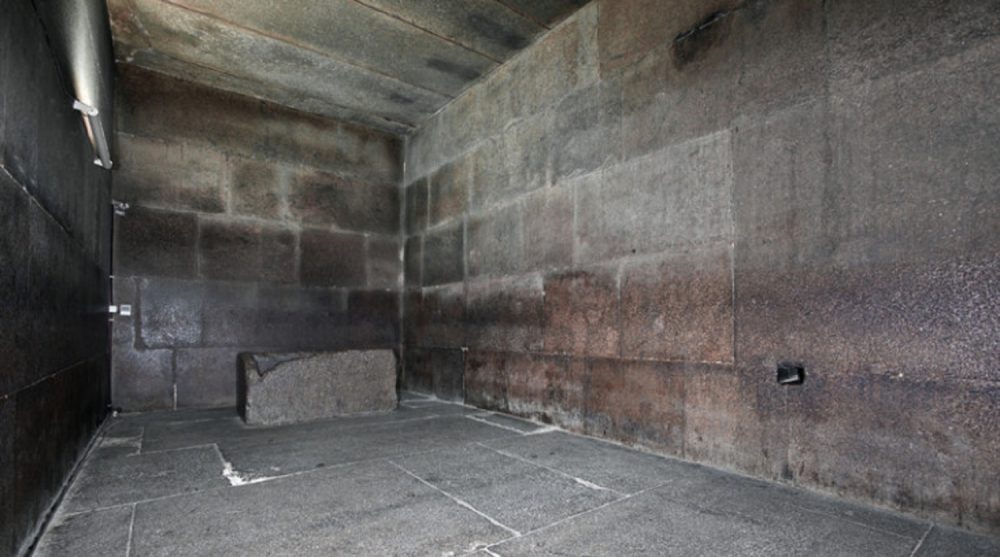
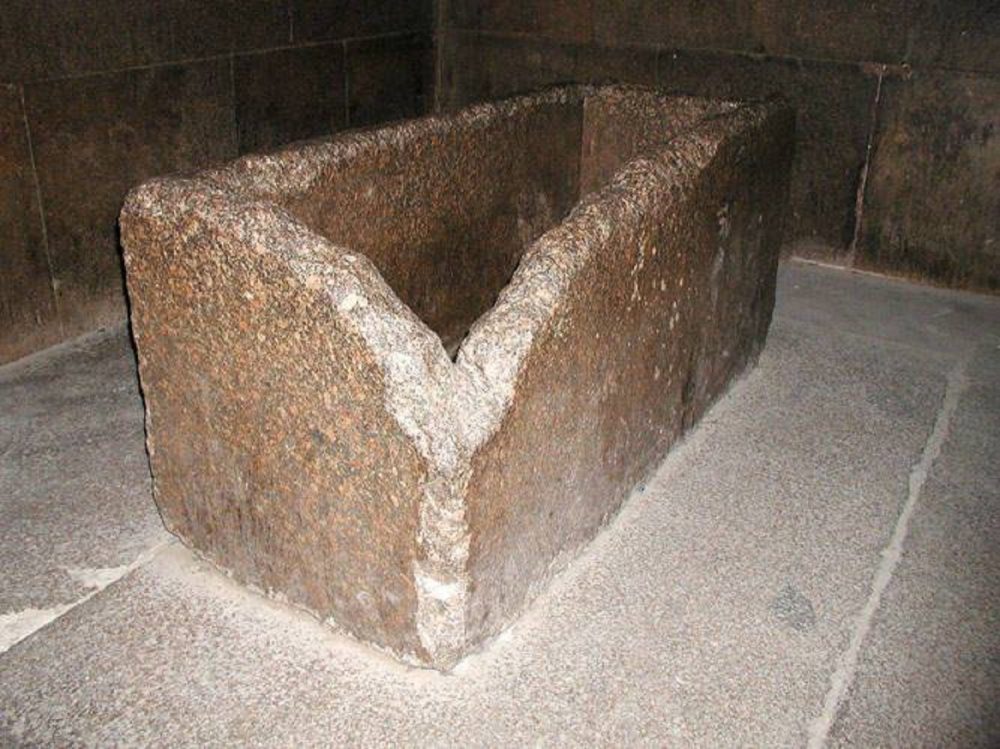
The names “Queen’s Chamber” and “King’s Chamber” are modern labels. They describe the traditional interpretation of the spaces, not inscriptions proving that a queen was buried in one room and Khufu in the other. The King’s Chamber is lined with red granite and contains a stone sarcophagus. No intact royal mummy was found there, but the pyramid had been accessible to looters and later visitors for thousands of years.
Why are the chambers built the way they are?
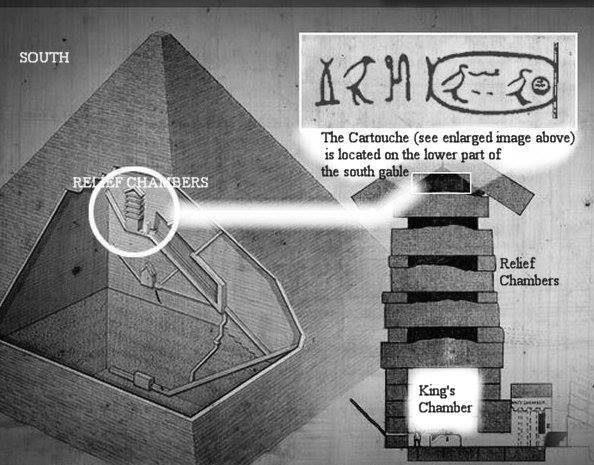
Weight is the central problem. The upper courses of the pyramid press down with enormous force, so the builders had to protect the chambers from collapse while keeping the structure stable. Above the King’s Chamber are a series of relieving spaces and granite beams that distribute part of the load.
The Grand Gallery also has a structural role as well as a ceremonial one. Its corbelled walls narrow as they rise, creating a high passage without requiring a single stone roof to span the entire width. The design shows that the builders were solving several problems at once: moving people and materials, carrying weight and creating a route toward the upper chamber.
What do the shafts do?
Narrow shafts extend from several chambers toward the outside of the pyramid. They have often been called “air shafts,” but that description is not certain. Some may have had symbolic links to the sky and the afterlife; others may have helped workers align or construct parts of the monument. Their exact functions were not written down in a surviving manual.
The shafts also show why the interior should not be reduced to a simple diagram. They change direction, vary in size and are difficult to inspect. A modern camera can reveal a passage without answering why it was built.
The ScanPyramids Big Void
In 2017, an international team reported the discovery of a large void above the Grand Gallery using cosmic-ray muons. Muons pass through rock, and the number reaching detectors can reveal differences in density. The feature became known as the ScanPyramids Big Void.
The discovery was important because no one had opened a door into the space. It was identified through a non-destructive measurement, then confirmed by detectors placed in different positions. Researchers still do not know whether the void is a corridor, a set of chambers, a construction space or a structural feature that was never meant to be entered.
Calling it a hidden chamber is therefore premature. “Void” is the careful word: it describes what the instruments detected without assigning a purpose the evidence has not established.
The corridor behind the north-face chevron
The North Face Corridor lies behind the chevron-shaped blocks above the pyramid’s original entrance. A 2023 muon-imaging study measured it at about nine metres long, with a cross-section roughly two metres wide and two metres high. It is a separate feature from the Big Void above the Grand Gallery.
Researchers also inspected this corridor with an endoscopic camera. As the Technical University of Munich reported in March 2023, the team passed the camera through an opening between the chevron stones and confirmed the space visually. Radar and ultrasound contributed to the investigation. Seeing inside established that the corridor exists; it did not establish what the builders intended it to do.
What visitors can see inside
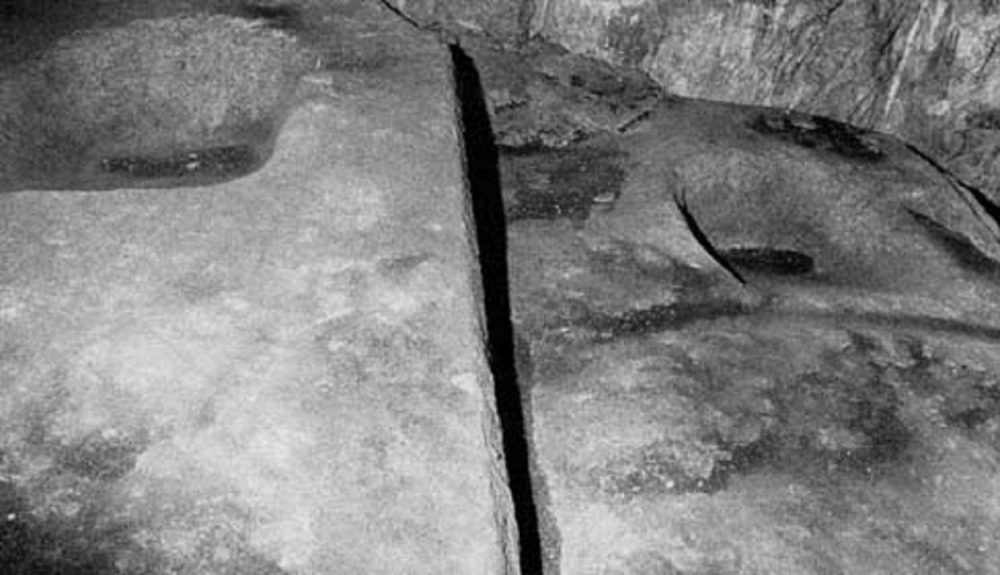
Visitors do not see every space in the monument. Access routes, conservation rules and safety decisions determine which passages are open at a given time. The images below come from the Curiosmos media archive and are kept here because they document the scale, texture and engineering of the interior more clearly than a list of measurements can.


Three videos of the interior
These videos offer different views of the passages and chambers. They are useful visual records, but footage cannot replace measurements or archaeological interpretation. A dramatic angle inside the Grand Gallery does not by itself reveal what a space was built to do.
360-degree footage from inside the Great Pyramid.
Footage of the Giza Plateau and the interior route.
Rare interior footage from the pyramid complex.
Was the Great Pyramid built as a tomb?
Egypt’s official monument record identifies the Great Pyramid as Khufu’s tomb, and that remains the mainstream archaeological interpretation. The sarcophagus, the relationship between the pyramid and its temples, and the role of royal pyramids in Fourth Dynasty Egypt all support that reading.
The missing mummy is not decisive evidence against it. A pyramid could be robbed without leaving a clear account of who entered it or when. The absence of a surviving burial tells us that the contents did not remain in place; it does not prove that the chamber was never intended for a royal burial.
What remains unknown?
The Great Pyramid is one of the best-studied ancient buildings on Earth, but it is not completely understood. The Big Void has not been entered. The original purpose of the North Face Corridor remains uncertain. Some shafts remain difficult to inspect, and the exact construction sequence has to be reconstructed from marks, materials, geometry and comparison with other Egyptian sites.
Those open questions are not a weakness in the archaeological case. They are the reason new measurements matter. The monument can be understood as a product of Fourth Dynasty Egypt while still containing spaces whose purpose and construction history require further work.
Additional interior images
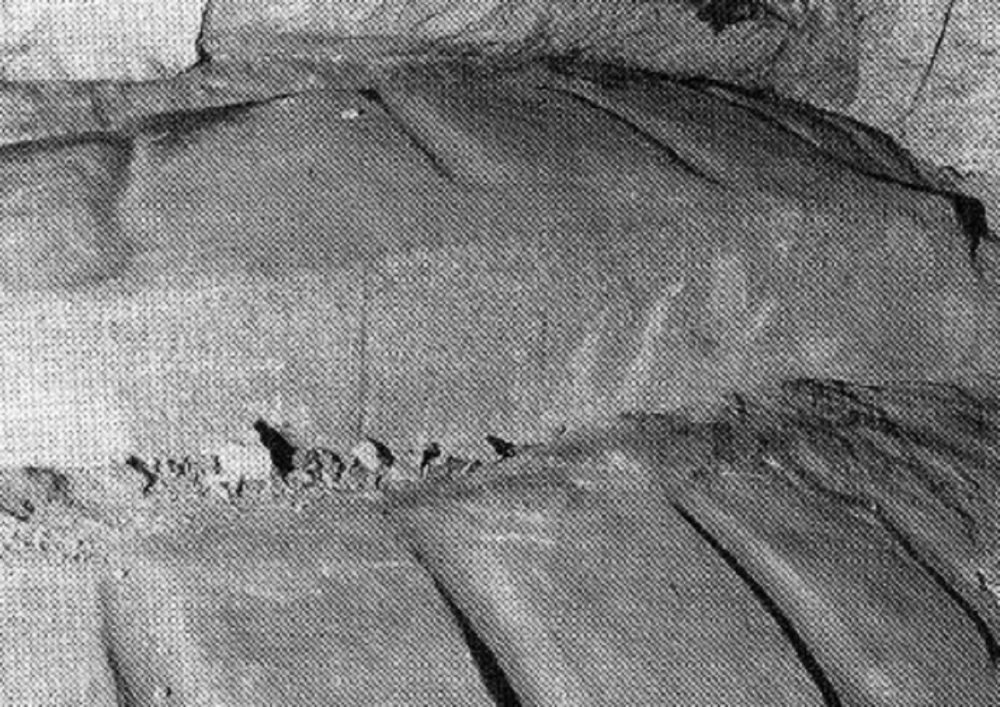
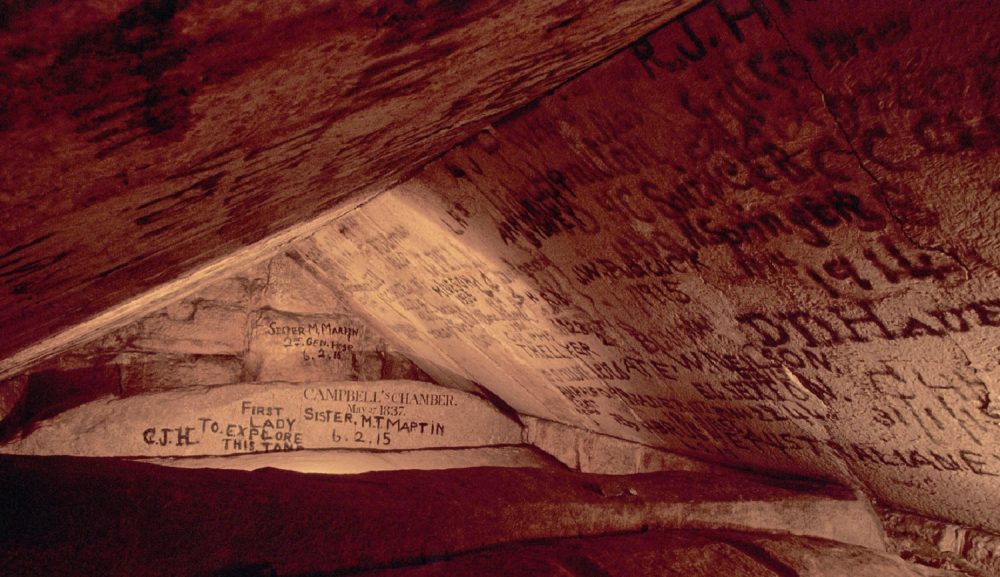
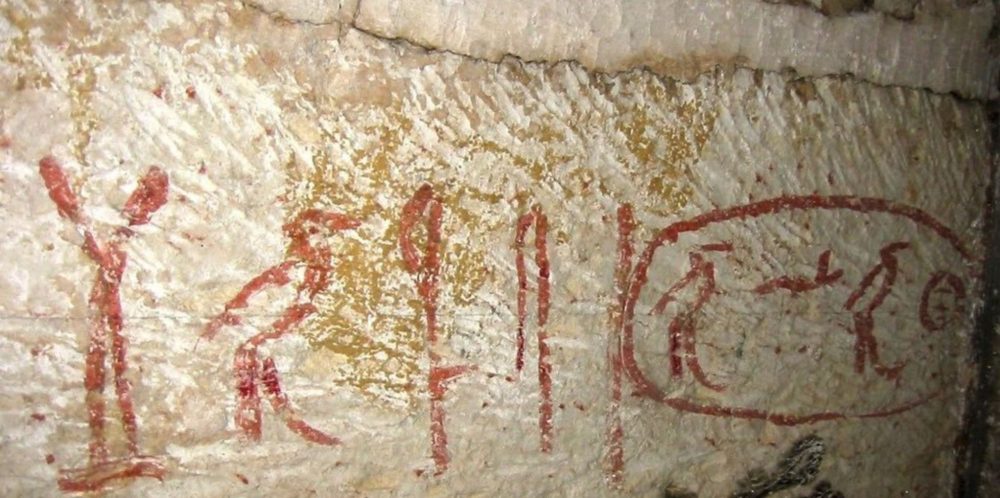
These archival images are preserved here as part of the consolidated interior guide. Their captions identify the available source information.
Sources and further reading
- Egypt’s Ministry of Tourism and Antiquities: The Great Pyramid
- Digital Giza, Harvard University
- Nature: discovery of a big void in Khufu’s Pyramid by cosmic-ray muons
- Nature Communications: corridor-shaped structure behind the north-face chevron
- Smithsonian Institution: the Egyptian pyramid
- Curiosmos: how the Great Pyramid was built
Related Giza research
The interior is only one way to understand Khufu’s monument. Our companion guide explains the Great Pyramid’s dimensions, weight and construction scale, while a separate evidence review examines the subtle concavity that gives its faces an eight-sided profile.