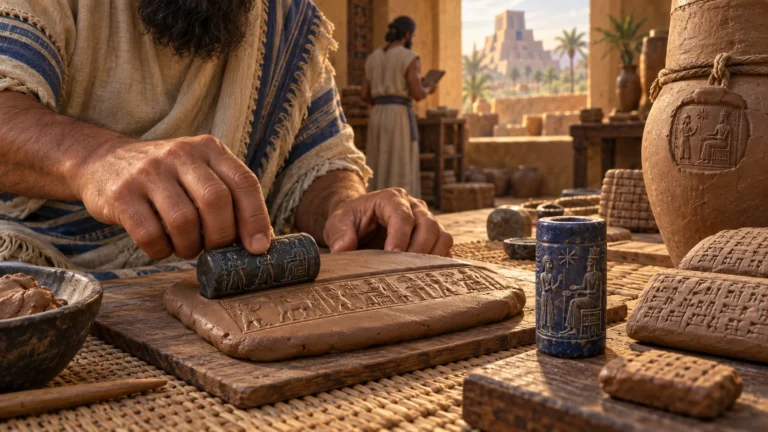
Sumerian Cylinder Seals: Pocket-Sized Tools for Securing Ancient Records
Sumerian cylinder seals combined image, identity and security. Their impressions closed containers, marked records and carried a person’s authority across ancient Mesopotamia.
Independent reporting on space, archaeology and ancient worlds

For the passionately Curious
Browse Curiosmos
Sumerian cylinder seals combined image, identity and security. Their impressions closed containers, marked records and carried a person’s authority across ancient Mesopotamia.
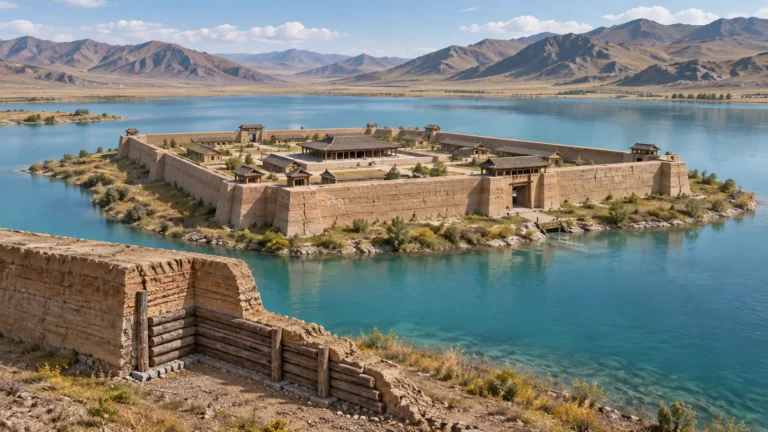
A larch beam from Por-Bazhyn preserves a radiocarbon marker that dates the start of construction to summer 777. The island complex was built under the Uyghur Khaganate, but its intended use remains uncertain.
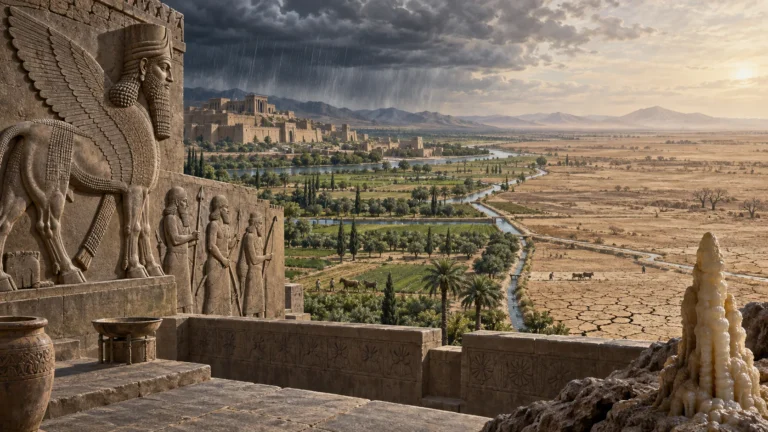
A cave record from northern Iraq suggests that drought narrowed the Neo-Assyrian Empire’s food supply before its capital fell in 612 BC. It adds climate context to a collapse already shaped by war and political conflict.

What counts as writing? Compare Uruk tablets, Egyptian signs and Jiahu marks—and see why the earliest script is hard to name.
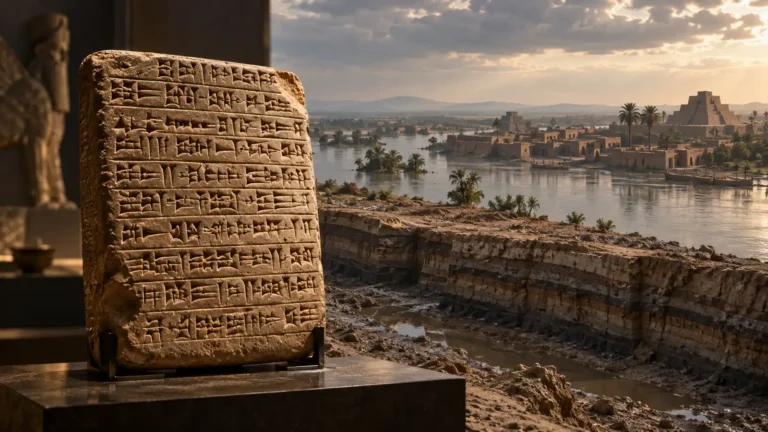
Ancient flood stories are not geological reports. Sediment layers, settlement dates and the Black Sea debate show how researchers test whether memory and geology could meet.
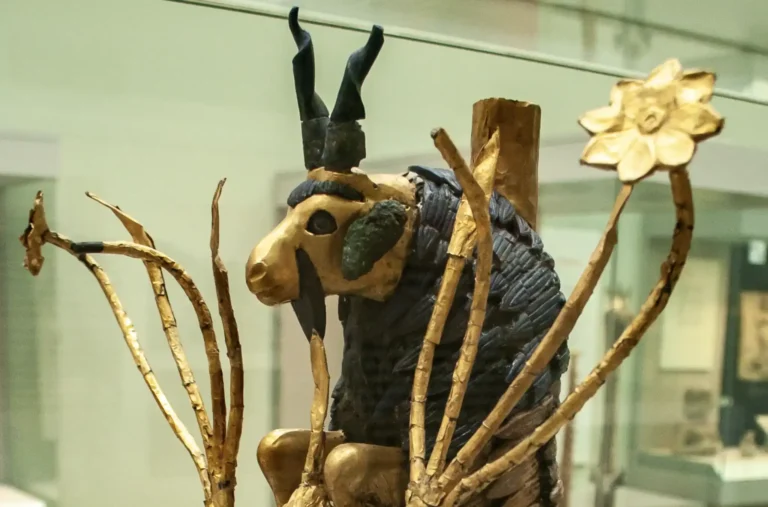
Have you heard about the “Ram in the Thicket”? If not, let me tell you a story. At dawn, in the southern plains of Mesopotamia, the sun rose low across…
For many ancient civilizations, the sky was not a distant backdrop. It was the place from which authority, order, and sacred knowledge first arrived, and that belief shaped how people…
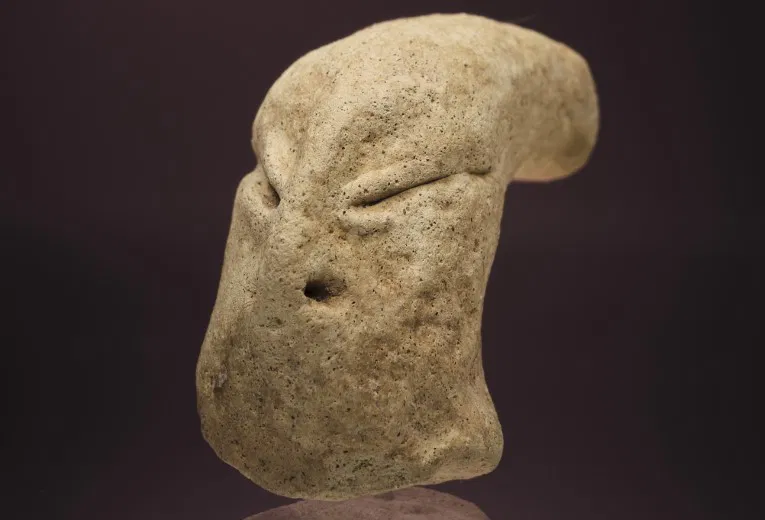
In the Al-Subiyah desert of northern Kuwait, an archaeological team from the Kuwait-Polish Archaeological Mission (KPAM) has uncovered a 7,500-year-old figurine unlike anything found in the region before. This enigmatic…

Ancient art is not a single style or a single story. It includes royal portraits, objects made for the dead, images of gods, records of war, and works whose original…

The ability to create and use tools was a defining mark in the evolution of humans. Over time, many of these tools progressed into more sophisticated instruments, while others became…

“Sumer, the land which came to be known in classical times as Babylonia, consists of the lower half of Mesopotamia, roughly identical with modern Iraq from north of Baghdad to…

Thousands of years ago, cultures around the globe worshipped the sun. This is no surprise since the sun is the brightest object in the sky, rising and setting each day…

What did Mesopotamians invent? Imagine a city trying to keep track of grain, workers and trade without writing. At Uruk, surviving clay records show why cuneiform mattered: administrators could count…
What is the oldest city in the world? Jericho is often given that title, but an archaeological settlement can be older than the city that later grew on the same…

The idea that cave symbols form a global language isn’t just speculative anymore. Ancient cave symbols found across Ice Age Europe may be more than primitive art—they could represent the…

What if one of the most iconic vessels in human history wasn’t shaped like a boat at all? An ancient clay tablet reveals the ark was round—closer to a giant…