Camazotz is associated with the death bats in the Popol Vuh, the K’iche’ Maya narrative that includes the journey of the Hero Twins through Xibalba. The familiar “Maya Batman” label is a modern comparison, not a description of a crime-fighting figure from that text.
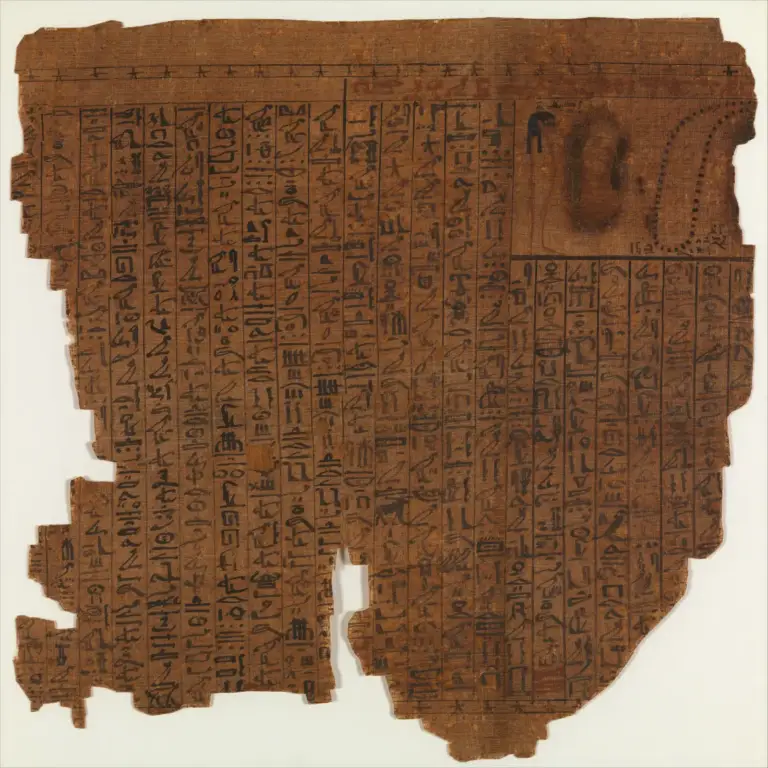
The Newberry Library’s surviving Popol Vuh manuscript was transcribed by Francisco Ximénez between 1700 and 1715 in Chichicastenango, Guatemala. The manuscript preserves stories and traditions older than that copy; its date is not the date those traditions began.

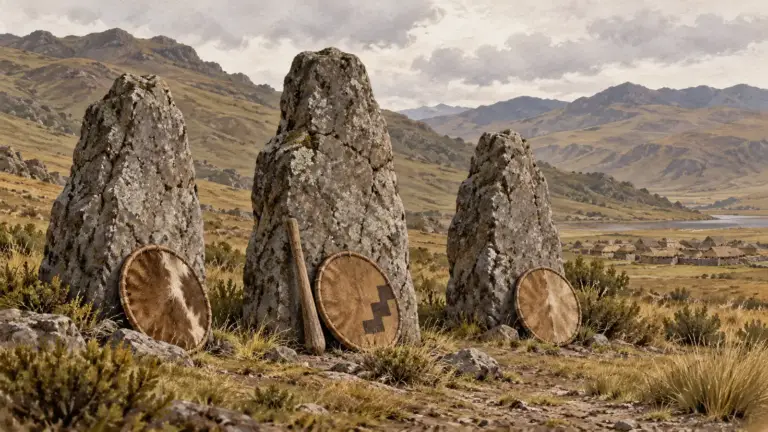
In Allen Christenson’s translation, Hunahpu and Xbalanque enter a house filled with death bats and hide inside their blowguns. When Hunahpu looks out to check for dawn, a bat cuts off his head. His head is taken to the ballcourt, and Xbalanque later helps restore it.
The scene is one part of a much wider history of bat imagery. In their study of bats and Camazotz, archaeologists James Brady and Jeremy Coltman challenge the habit of identifying virtually every Maya bat image with the death bat of the Popol Vuh. They distinguish several roles, including group emblems, messengers, fertility associations and supernatural beings linked with disease. Their argument cautions against turning different figures and traditions into one uniform bat-god cult.
In modern age
The death-bat episode in the Popol Vuh has also supplied a name and imagery for modern fiction. For example, in Stephen King’s “The Dark Tower” series, Camazotz is portrayed as one of the beam guardians who takes the form of a bat.
In the Silverwing books series, Camazotz appears as the underworld god who takes on a bat-like form.
And in honor of the 75th anniversary of Batman, Warner Home Entertainment from Mexico created a stunning promotion. Working with the Mexican Museum of Design, Warner Home invited many artists tasked with reworking the Dark Knight how they saw fit.

One of the artists had an evident love for history and knew pretty well one of the ancient civilizations that eventually gave rise to the country of Mexico: the ancient Maya. So he created a historic portray of Batman. Basing his design of the god Camazotz, the artists created a stunning representation of an ancient creature, a half-human half-bat.
Essentially, this is what the modern Batman is, a weird mixture of a human and the traits of a bat.
For another Curiosmos introduction to Camazotz, see our earlier article. The fictional superhero and the death bats in the K’iche’ narrative belong to different storytelling traditions.
The resemblance has offered modern artists a starting point for combining a familiar superhero silhouette with Mesoamerican-inspired design.
The intricate design of Camazotz, fused with the image of the modern Batman, was made by Christian Pacheco, owner of a design agency in Yucatan. It was his examples that stood out the most.
The design is a modern interpretation, rather than an archaeological depiction of a single universally recognized Maya deity.
NOTE; as written above, the featured image is a modern recreation of a mixture between Camazotz and Batman.