Independent reporting on space, archaeology and ancient worlds
For the passionately Curious
Browse Curiosmos
Ivan Petricevic
Ivan Petricevic is an investigative journalist and researcher with more than a decade of experience covering ancient history, UAP phenomena, space, and science. He writes about space, science, and history for Večernji list and has appeared as an expert on Discovery Channel and History Channel. He founded Curiosmos, where he reports from primary sources, archaeological research, and field investigations.
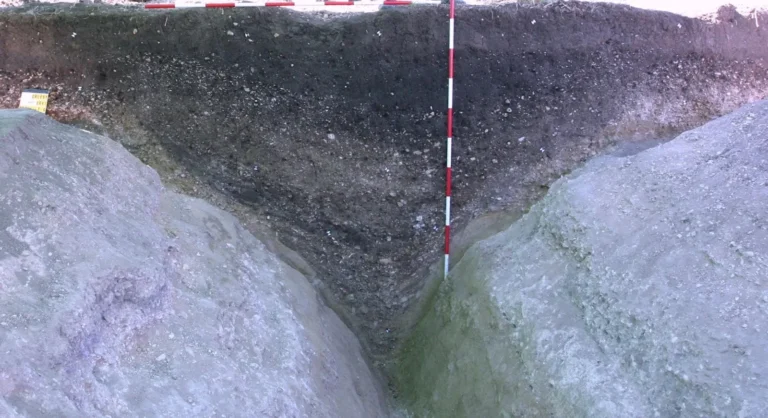
Archaeologists have developed a relatively inexpensive imaging system that can reveal differences hidden inside an excavation trench. Instead of lighting soil with ordinary white light, the prototype photographs it at…
A handful of small teeth found in a Queensland rock shelter have turned out to be something far more unusual than animal remains. Archaeologists identified twelve wallaby incisors coated with…
Astronomers have directly measured an extremely faint radio signal from neutral hydrogen billions of light-years away. The detection, made with South Africa’s MeerKAT array, gives researchers a new way to…
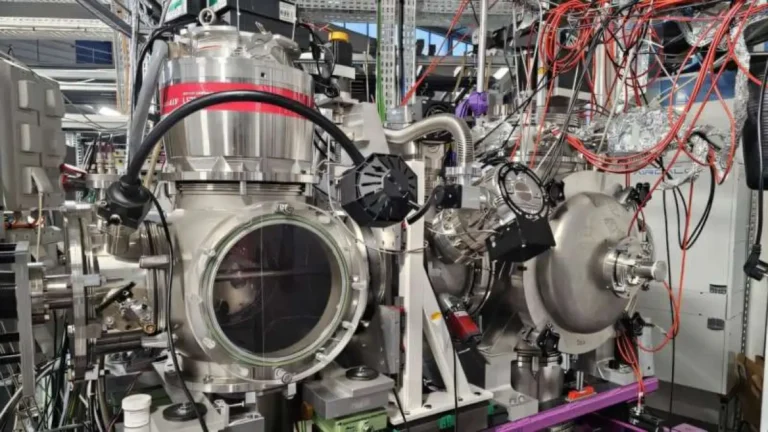
Einstein’s theory of general relativity has survived another demanding test. Researchers used clouds of ultracold atoms aboard China’s space station to compare how two forms of rubidium respond to gravity,…
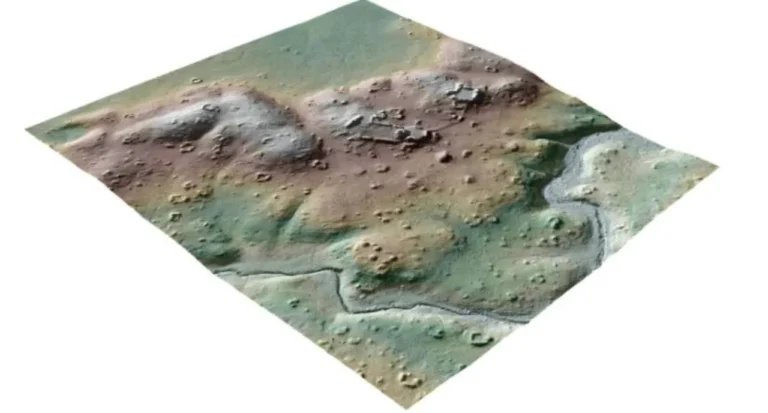
Some of the forests in Belize may still carry the ecological imprint of ancient Maya land use. A new study combines airborne LiDAR scans with archaeological remains and finds that…
When people imagine archaeology, they often picture a spectacular object being lifted from the ground: a gold ornament, a carved stone or a decorated pot. For archaeologists, the object is…
The universe is forming stars at less than half the rate it did roughly 4.5 billion years ago. A new survey now shows that this decline cannot be explained simply…
A supermassive black hole in the galaxy NGC 1275 produced a powerful X-ray flare, and its radio emission brightened 296 days later. The long delay gives astronomers a rare way…
A telescope is often described as a device that makes distant objects look closer. That is true, but it leaves out the part that matters most to astronomers. The main…
For nearly two decades, astronomers have not been sure which galaxy produced the short gamma-ray burst GRB 061201. New observations from the James Webb Space Telescope point to a faint…
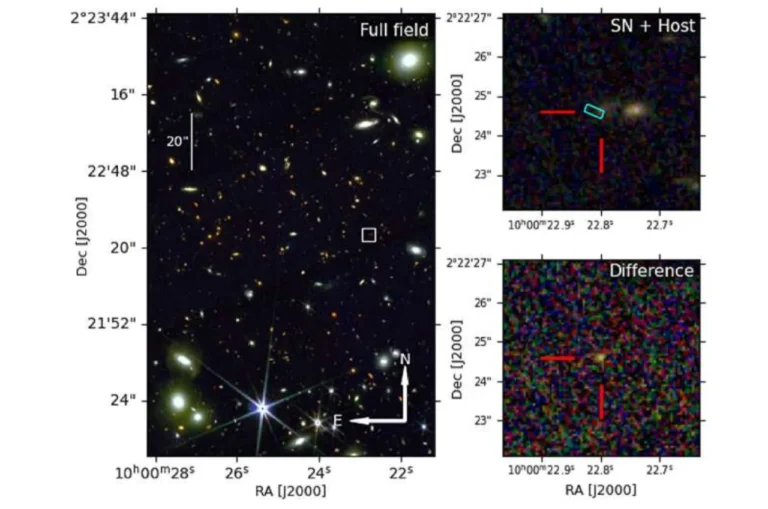
Astronomers using the James Webb Space Telescope have identified a likely Type II supernova that exploded when the universe was only about two billion years old. The event, called SN…
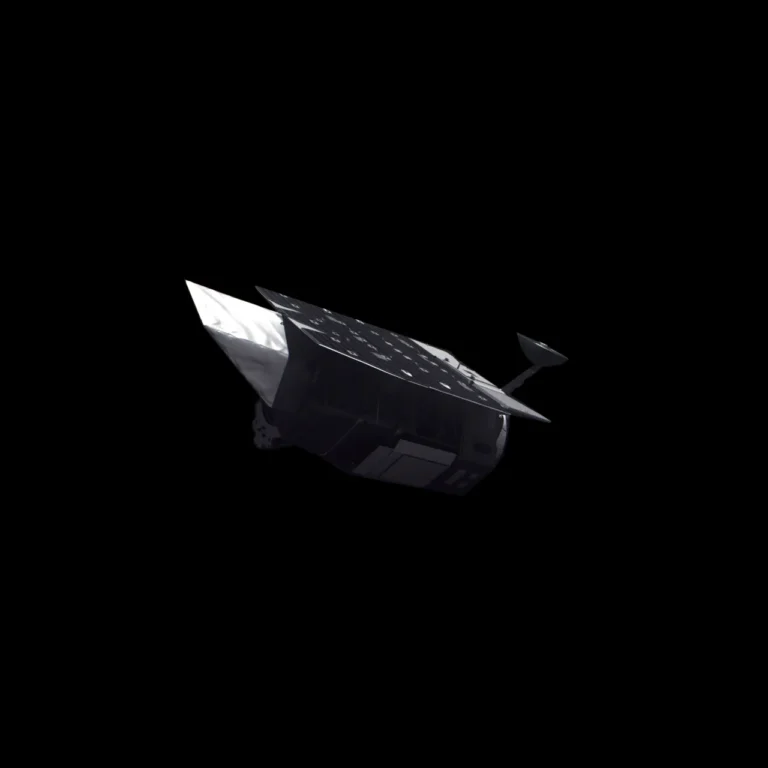
NASA’s Nancy Grace Roman Space Telescope has successfully deployed its high-gain antenna and its visor-like sunshade, completing two of the observatory’s first major tests in space. The work is part…
The Moon has no wind, rain or active plate tectonics to erase its surface history. That makes its soil a possible archive of events that happened far beyond Earth. A…
Large carbon-based molecules are common in space, turning up around dying stars, inside interstellar clouds, and in material returned from carbon-rich asteroids. The problem has been explaining how they form…
Researchers have completed one of the largest computer simulations of cosmic history yet assembled. Called ASTRID, it follows the growth of galaxies and black holes from the universe’s early days…
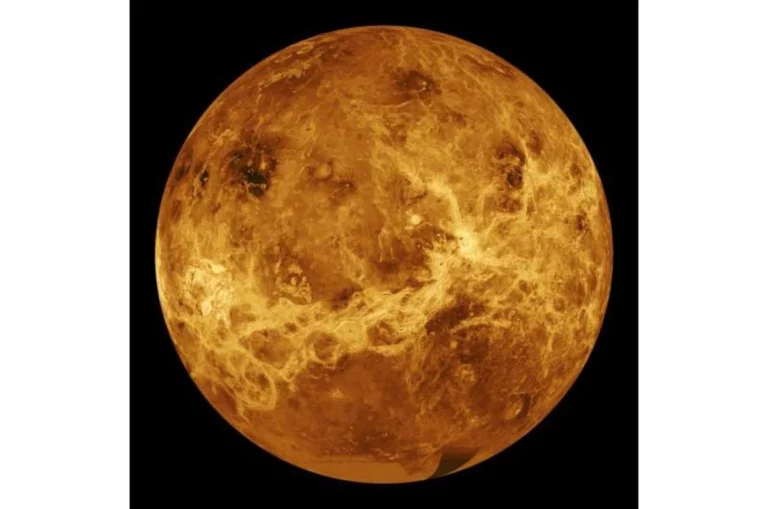
Venus looks pale yellow in ordinary photographs, but ultraviolet images reveal dark and bright bands moving through its upper clouds. Scientists have known about those markings for about a century.…
Astronomers often treat the thin streams of stars around the Milky Way as sensitive tracers of dark matter. A new University of Washington simulation shows why that evidence needs to…
Two stars once considered promising Dyson sphere candidates have now been removed from the list. Follow-up observations with NASA’s James Webb Space Telescope showed that the infrared glow did not…
A light-year sounds as if it should measure time. It does not. A light-year is a unit of distance: the distance light travels through empty space in one year. Astronomers…
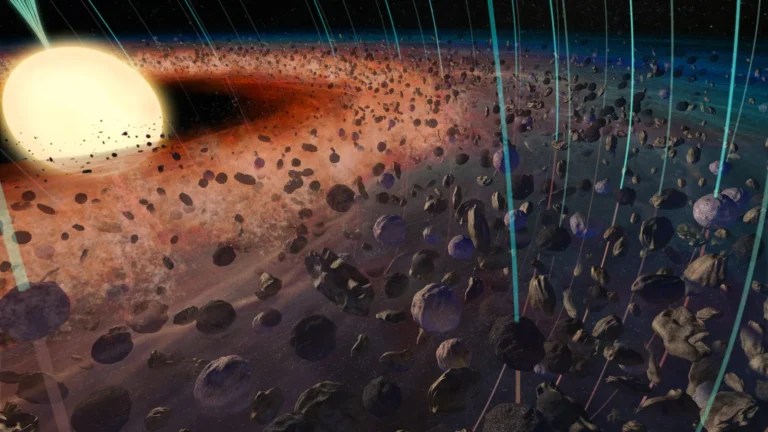
A fragment of meteorite has preserved a magnetic snapshot from the first days of the Solar System. By studying microscopic dust inside the meteorite, researchers estimate that the disk around…
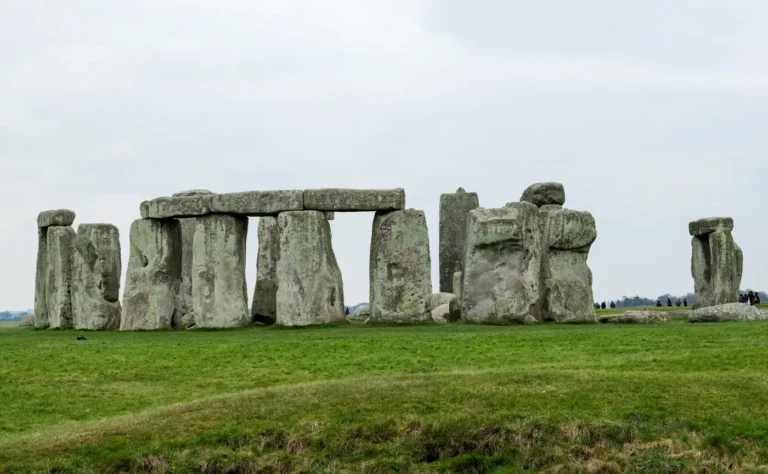
What is a megalith? The word comes from Greek roots meaning “large stone,” and archaeologists use it for monuments built with large stones or substantial stone settings. That definition is…
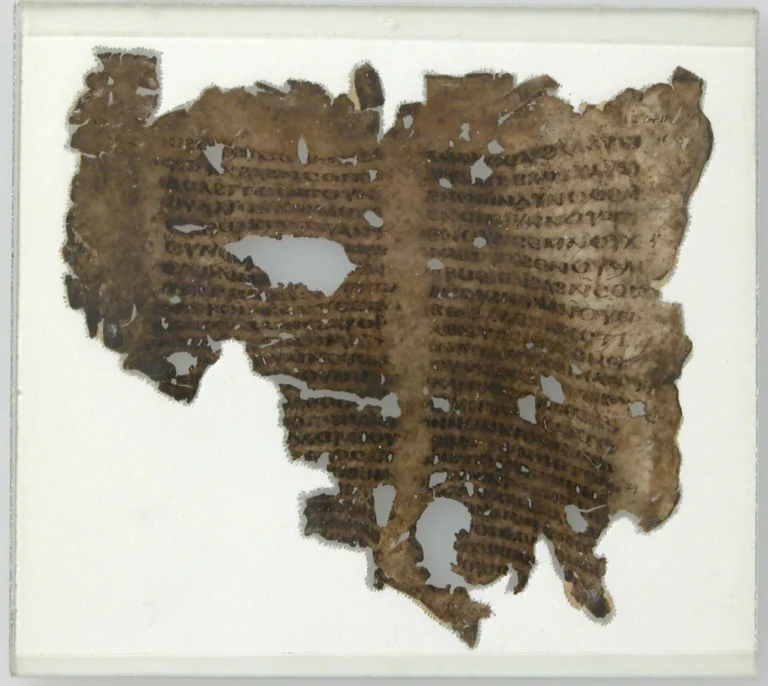
Seventeen pieces of medieval writing have been found hidden inside early modern records from Guernsey. The scraps were reused as covers and bindings for notebooks and administrative volumes, but they…
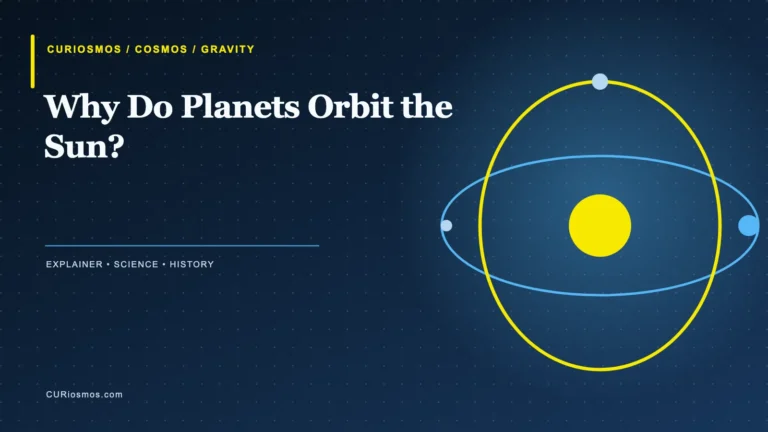
Why do planets orbit the Sun instead of falling into it? The short answer is that gravity pulls the planets inward while their sideways motion carries them forward. The combination…