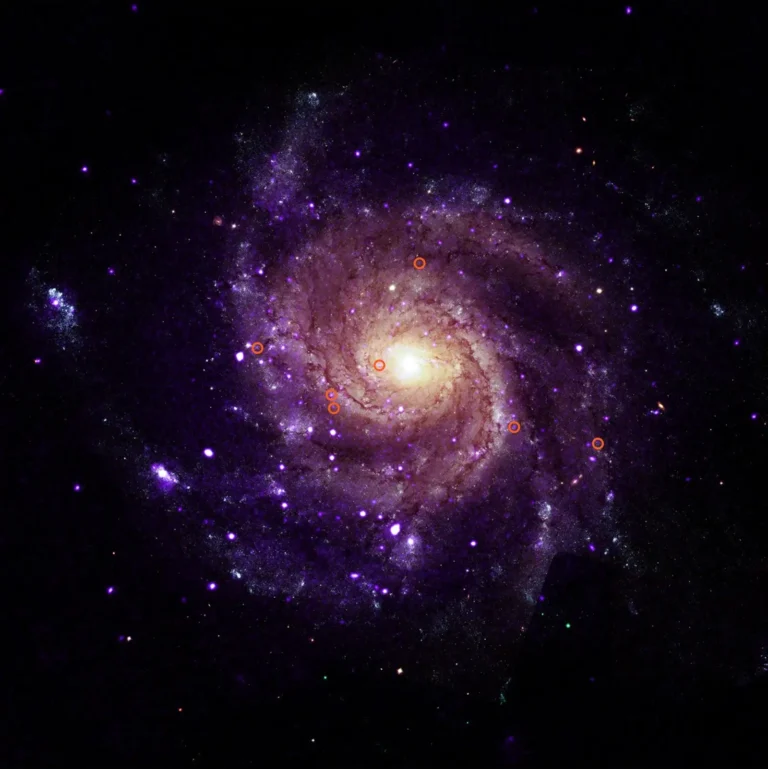
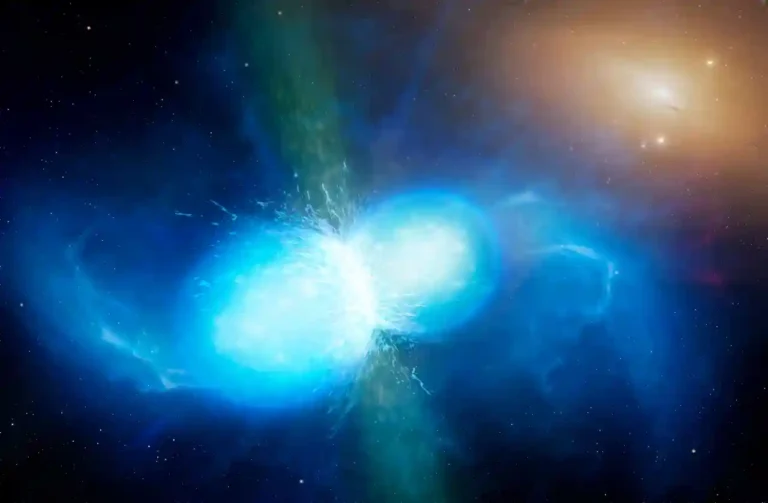
The objects are unusually soft in X-rays but bright in extreme ultraviolet light—exactly the combination that makes them difficult to find and potentially important to the history of stars and…
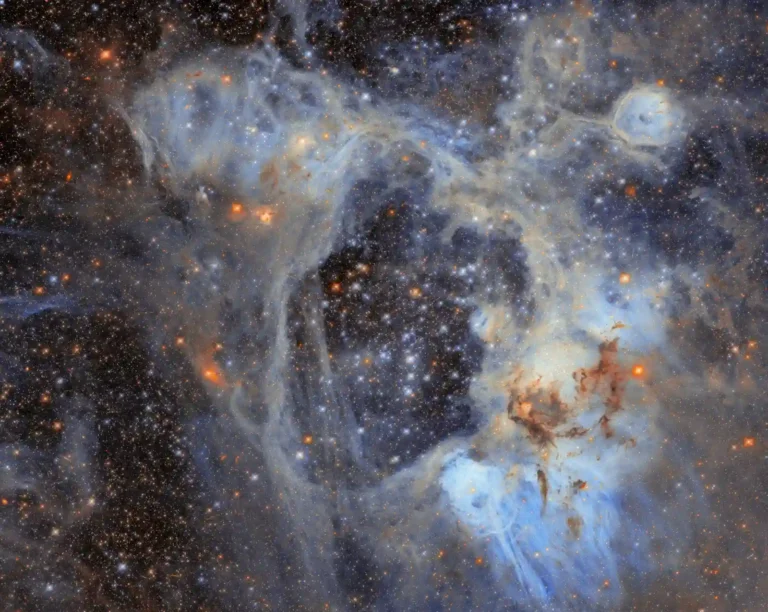
Look into the middle of N44 and the most striking feature is what seems to be missing. A vast opening interrupts the glowing gas, while stars crowd the surrounding scene.…
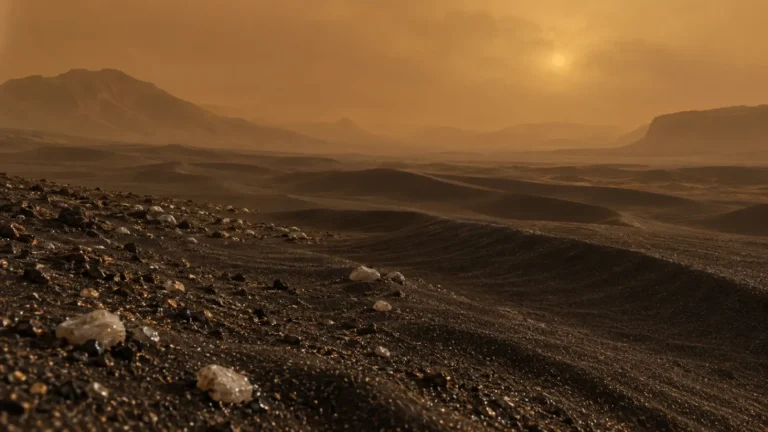
What might happen when the ingredients of life have an entire landscape in which to react? On Titan, NASA hopes to investigate that question by flying from one patch of…
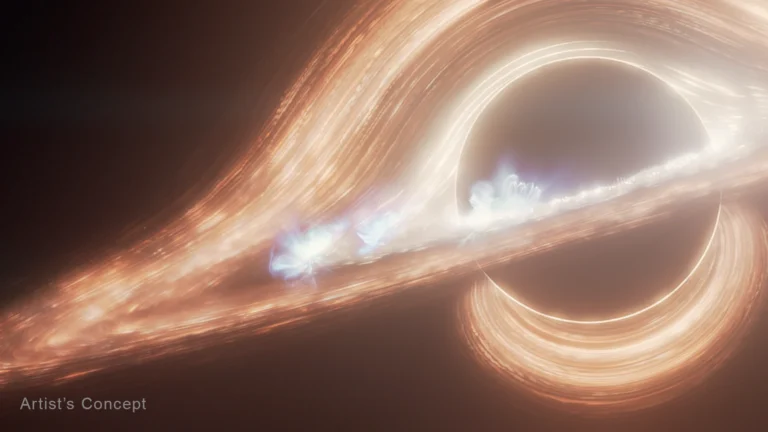
A brilliant X-ray source is not automatically a black hole. Matter falling toward a neutron star can also become intensely luminous, and some neutron stars have surprised astronomers by producing…
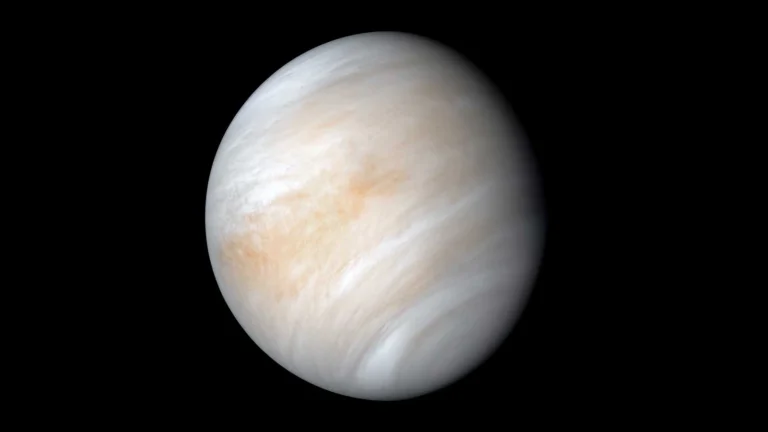
Venus can reach its greatest brilliance while a telescope shows only a crescent. A nearly full Venus exposes more of its sunlit hemisphere, yet that does not necessarily deliver more…
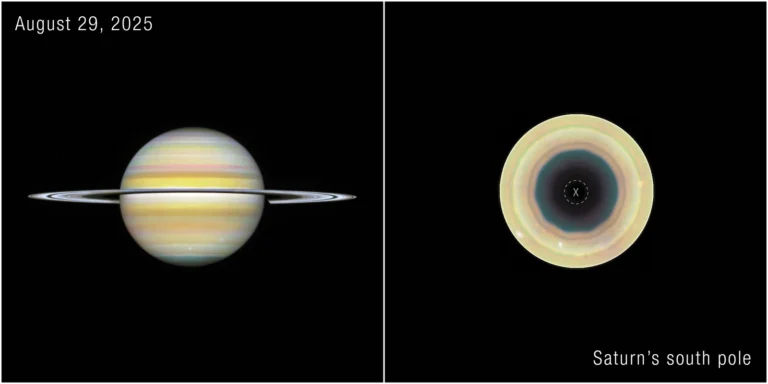
Saturn’s south pole has a ten-sided atmospheric wave, giving astronomers a new counterpart to the planet’s famous northern hexagon. The southern pattern appears to be evolving, raising a question that…
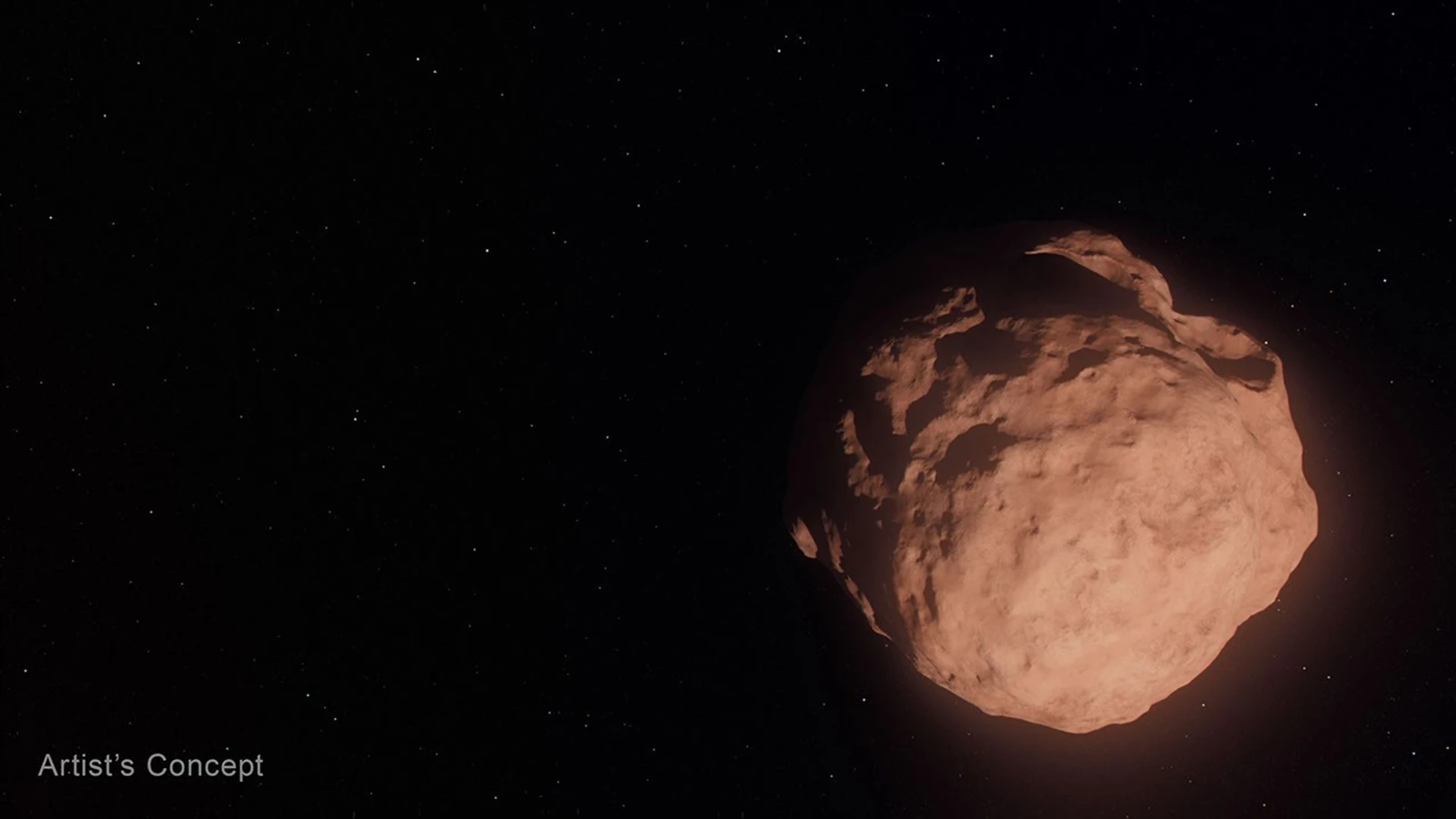
Twenty-seven faint objects beyond Neptune have emerged from a deep James Webb Space Telescope survey, extending the search for the solar system’s building blocks to worlds only kilometres across. Hubble…
Dark energy is one of the least satisfying names in astronomy because it sounds more specific than it is. Scientists did not discover a glowing substance called dark energy. They…
In empty space, light travels at exactly 299,792,458 meters per second. That is about 300,000 kilometers per second, or 186,282 miles per second. It is the fastest speed at which…
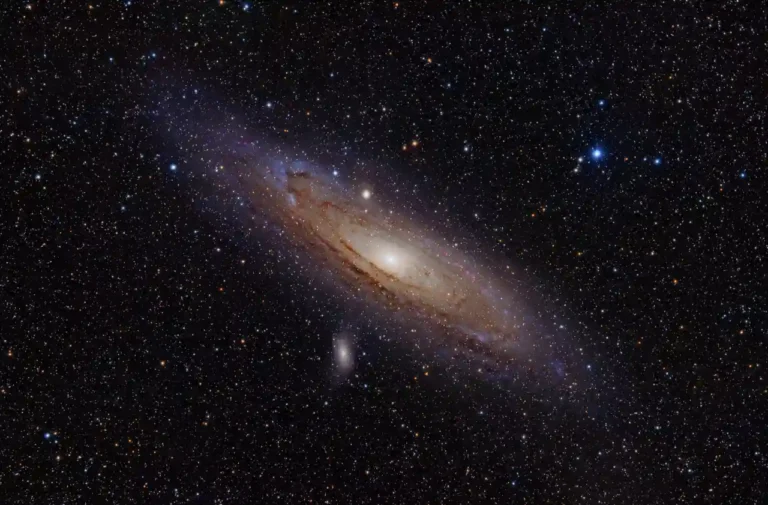
When people picture a galaxy, they often imagine a bright spiral like the Milky Way or Andromeda. The shape is memorable, but it is only the visible part of the…
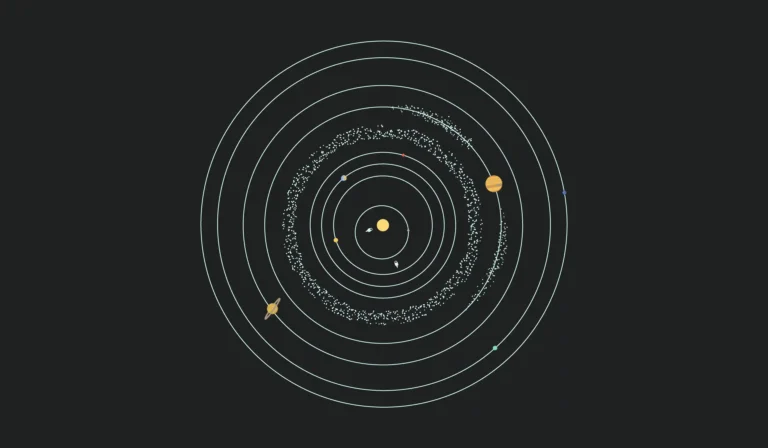
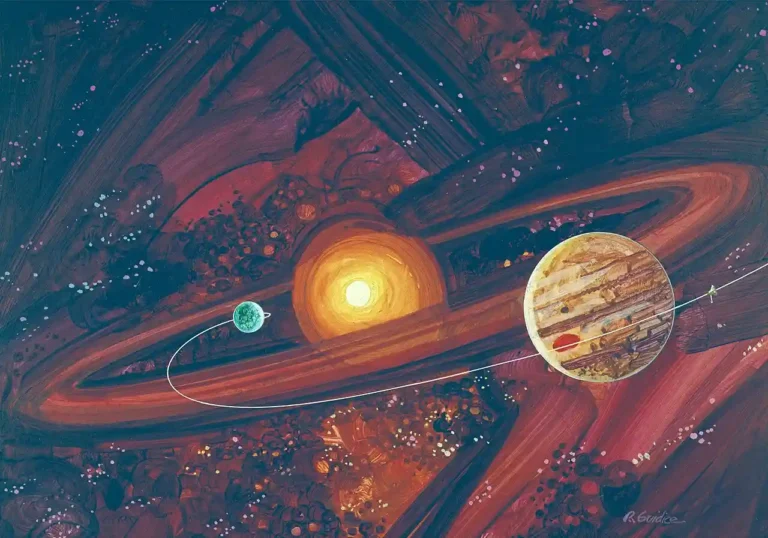
Popular images of the asteroid belt usually show a spacecraft weaving through a crowded field of tumbling rocks. The real region between Mars and Jupiter is far less dramatic—and more…
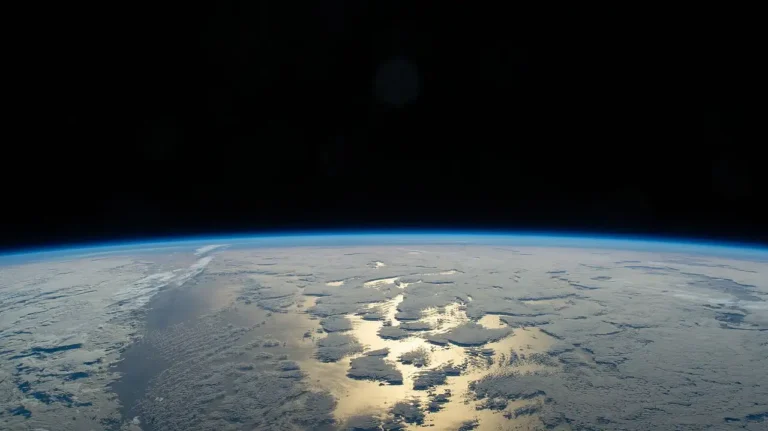
From the ground, the daytime sky seems to be a blue dome wrapped around Earth. Astronauts looking through a spacecraft window see something very different: a thin blue line at…
Space is often described as freezing, while the Sun is described as a furnace. Both descriptions can be true at the same time, but not in the simple way they…
Astronomers have catalogued more than 120 molecular species in a cloud near the centre of the Milky Way. The finding matters because the cloud contains several compounds associated with the…
Astronomers have directly measured an extremely faint radio signal from neutral hydrogen billions of light-years away. The detection, made with South Africa’s MeerKAT array, gives researchers a new way to…
Einstein’s theory of general relativity has survived another demanding test. Researchers used clouds of ultracold atoms aboard China’s space station to compare how two forms of rubidium respond to gravity,…
The universe is forming stars at less than half the rate it did roughly 4.5 billion years ago. A new survey now shows that this decline cannot be explained simply…
A telescope is often described as a device that makes distant objects look closer. That is true, but it leaves out the part that matters most to astronomers. The main…
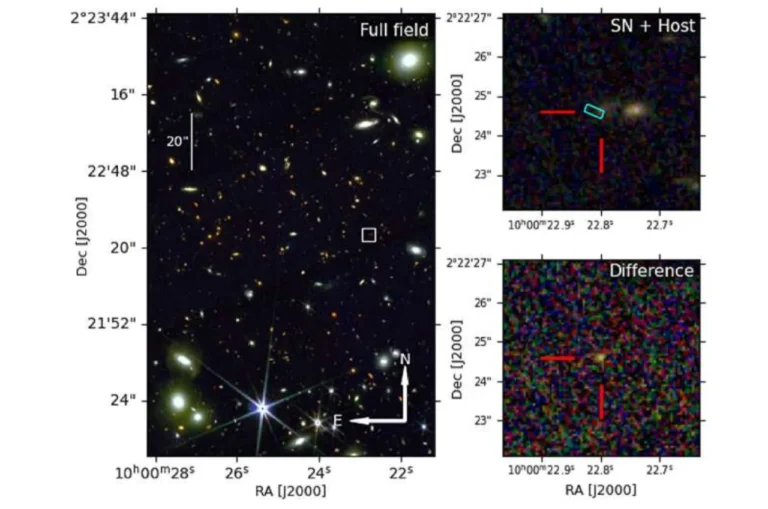
Astronomers using the James Webb Space Telescope have identified a likely Type II supernova that exploded when the universe was only about two billion years old. The event, called SN…
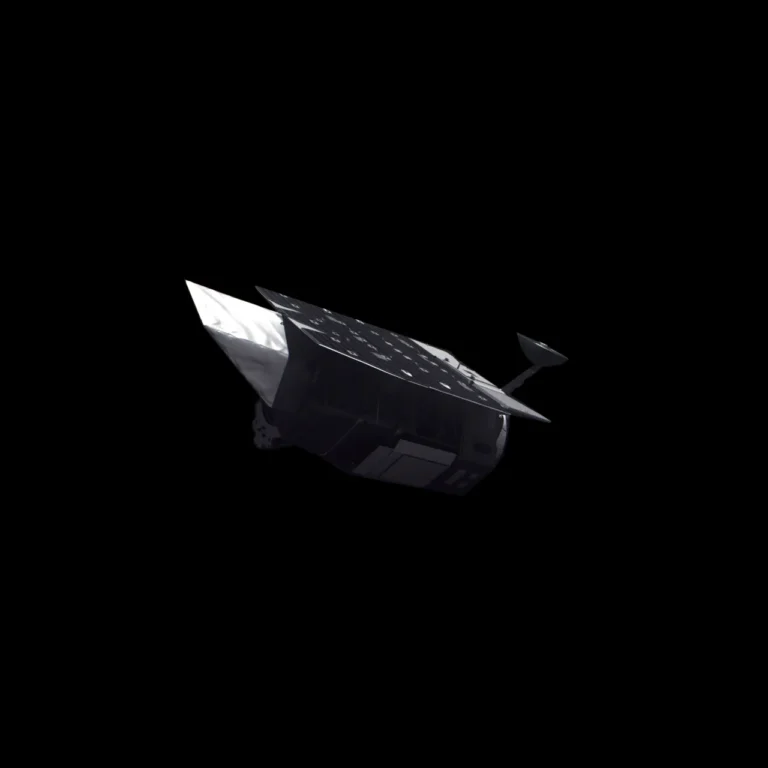
NASA’s Nancy Grace Roman Space Telescope has successfully deployed its high-gain antenna and its visor-like sunshade, completing two of the observatory’s first major tests in space. The work is part…