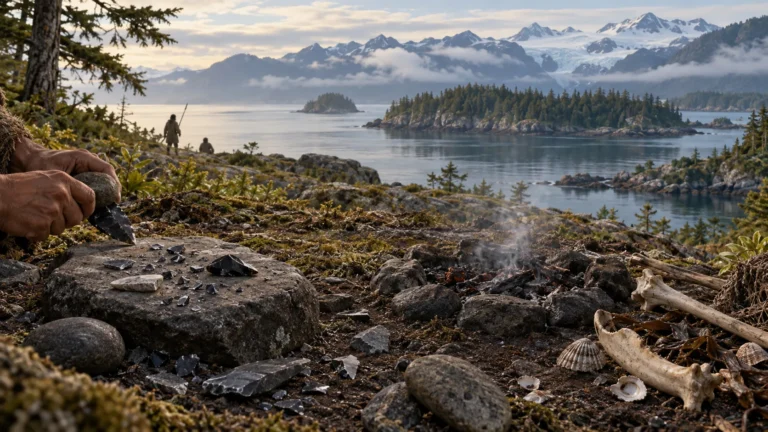
Triquet Island’s 14,000-Year Record of Coastal Life
Radiocarbon-dated charcoal places activity at Triquet Island as early as 14,000 years ago. The site preserves generations of coastal life, trade and adaptation in Haíɫzaqv territory.
Independent reporting on space, archaeology and ancient worlds

For the passionately Curious
Browse Curiosmos
Radiocarbon-dated charcoal places activity at Triquet Island as early as 14,000 years ago. The site preserves generations of coastal life, trade and adaptation in Haíɫzaqv territory.
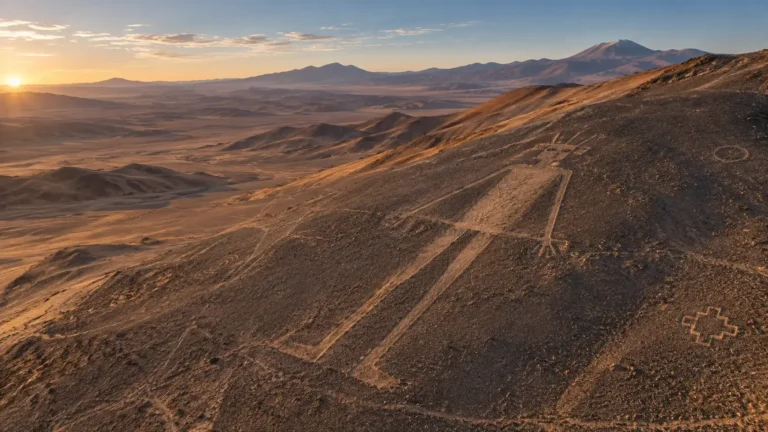
The Atacama Giant was made by scraping and arranging the desert surface. Its position near old caravan routes gives researchers context, although its exact identity is unknown.
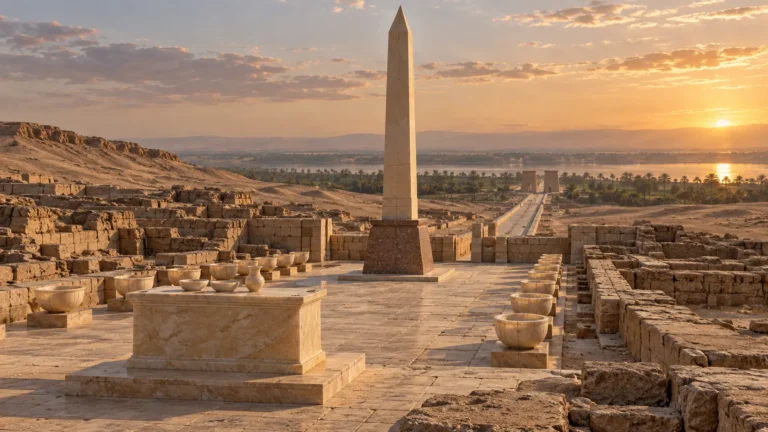
Abu Ghurab was a Fifth Dynasty sun temple with an open court, carved basins and a newly excavated valley temple. Its layout points to solar worship and royal ceremony, not a portal.
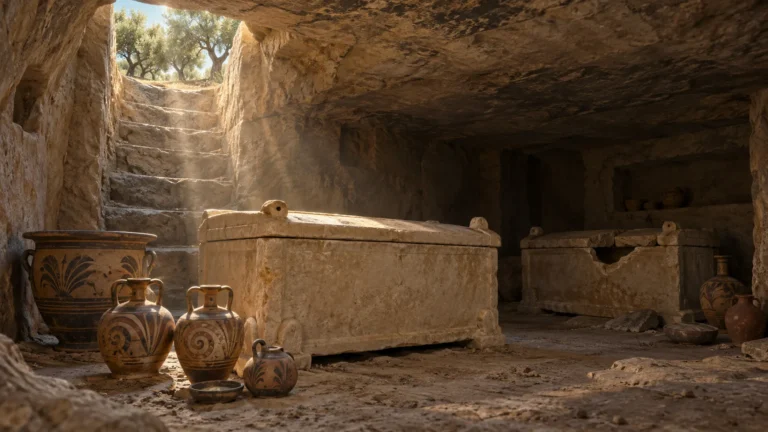
A sealed tomb near Ierapetra contained two adult burials, two larnakes and more than 20 vessels. Pottery dates the chamber to Late Minoan III, while the occupants remain unknown.
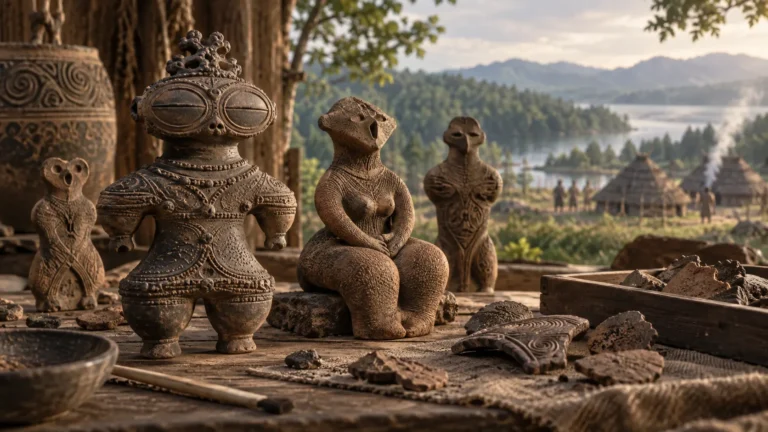
Dogū figurines from Jōmon Japan have been linked to fertility, prayer and healing. Museum records show a varied tradition whose exact rituals remain unknown.
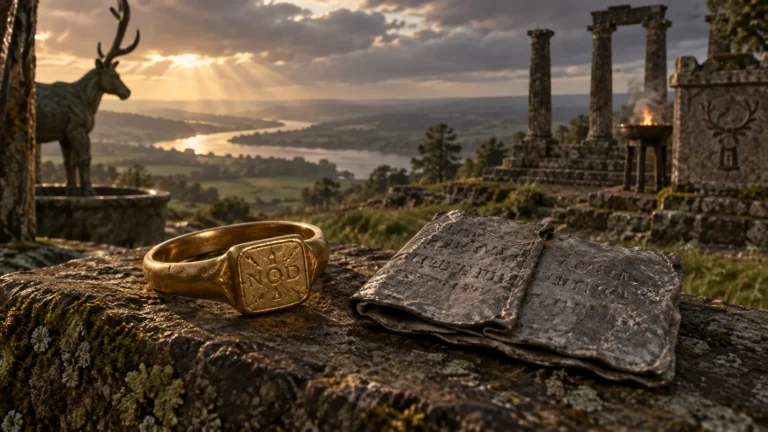
The Ring of Senicianus and a Roman curse tablet from Lydney may concern the same stolen object. Tolkien knew the site, but the ring’s influence on his fiction remains unproven.
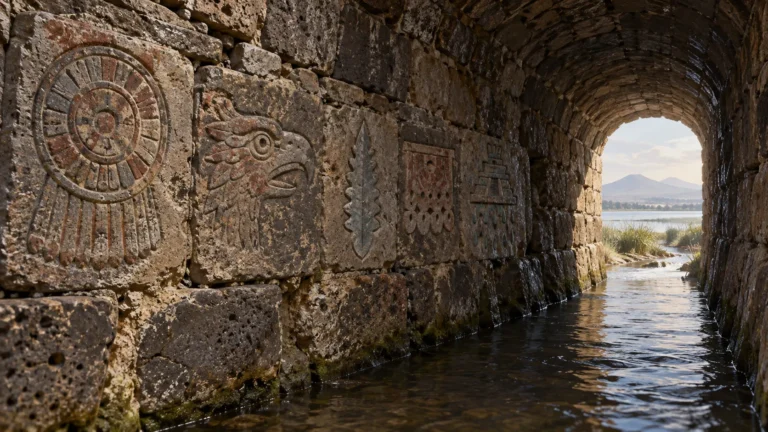
Archaeologists documented eleven pre-Hispanic carvings in a colonial-era tunnel at Ecatepec. The stones preserve an older visual world inside a water system rebuilt over centuries.
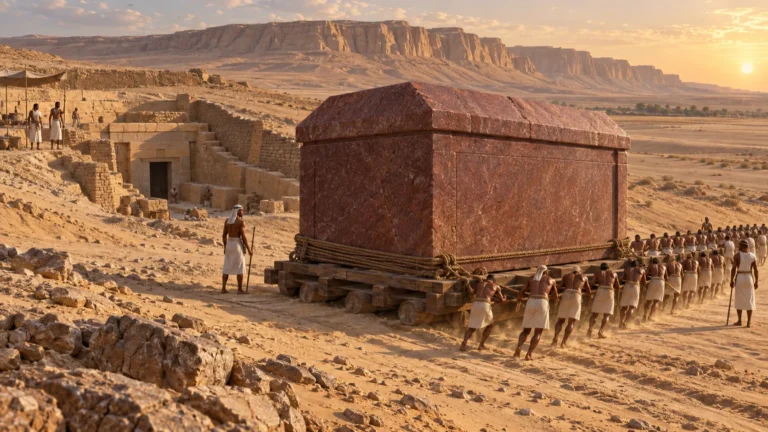
The red-quartzite sarcophagus at South Abydos weighed about 60 tons and had been moved from its original tomb. Its reuse helped archaeologists connect the burials of two lesser-known Egyptian kings.
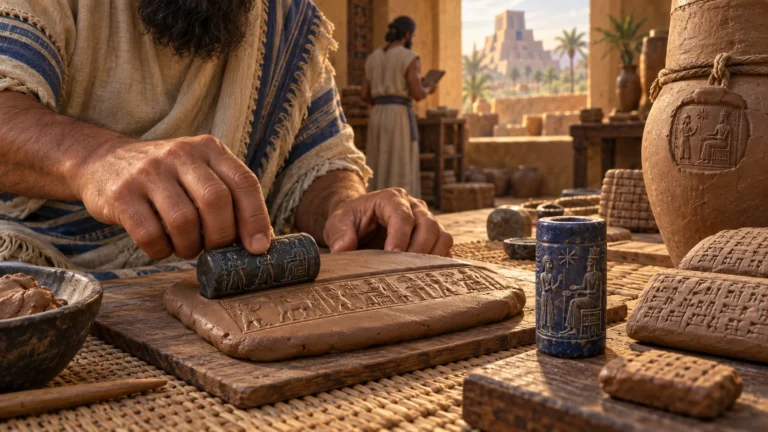
Sumerian cylinder seals combined image, identity and security. Their impressions closed containers, marked records and carried a person’s authority across ancient Mesopotamia.

The Ars Notoria promised medieval readers help with memory and learning through prayer and diagrams. Surviving manuscripts show how its ritual instructions developed.
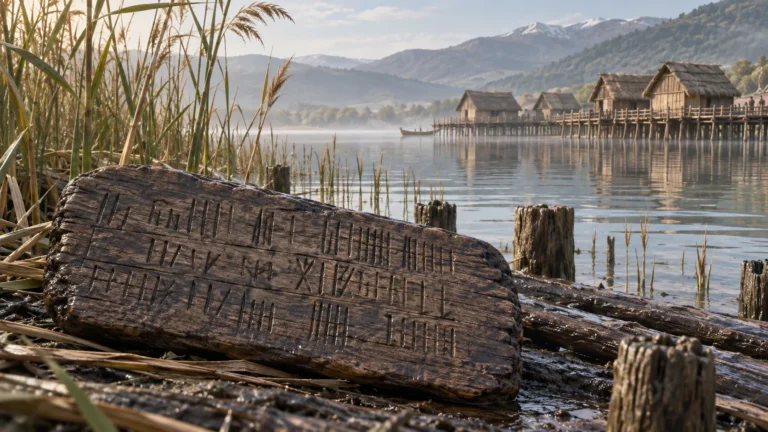
A wooden tablet from the Neolithic settlement of Dispilio dates to about 5260 BC. Its rows of deliberate marks have not been shown to record a language.
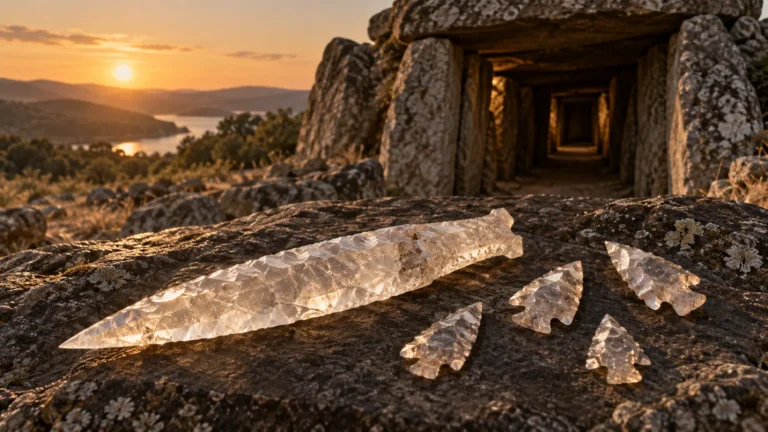
Rock-crystal weapons from Copper Age tombs at Valencina reveal skilled stoneworking and the social value of rare materials in southern Iberia.
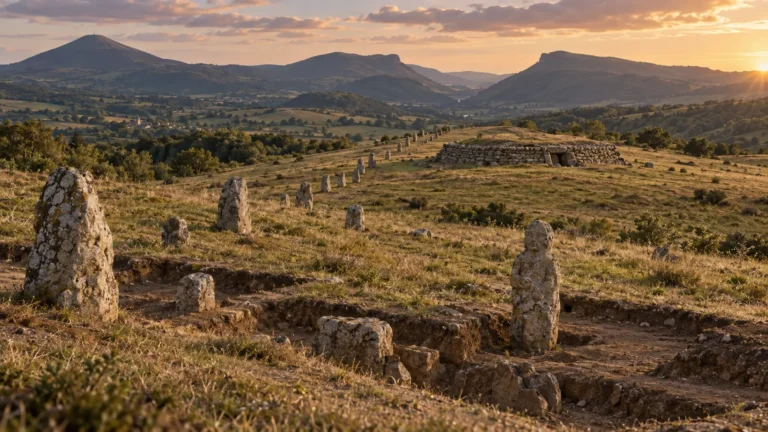
Excavations at Veyre-Monton revealed about 30 menhirs, a carved human figure and a large cairn. Many of the stones were later toppled and buried.
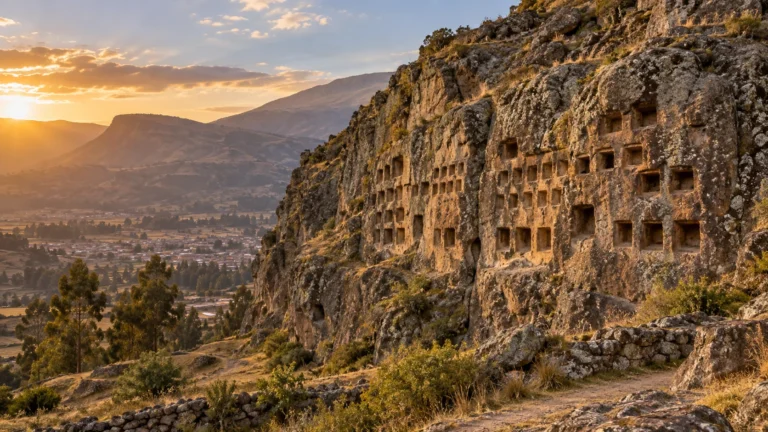
Ventanillas de Otuzco was a Cajamarca mortuary site cut into volcanic stone. Official surveys describe varied burial chambers and a modern rockfall hazard that threatens the remains.
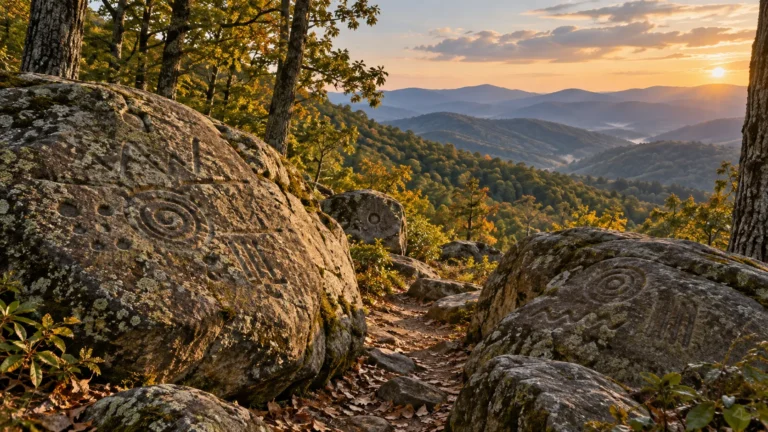
Track Rock Gap’s petroglyphs are documented as Native American. Comparisons with European rock art have raised contact claims, but dating, context and a clear chain of evidence remain essential.
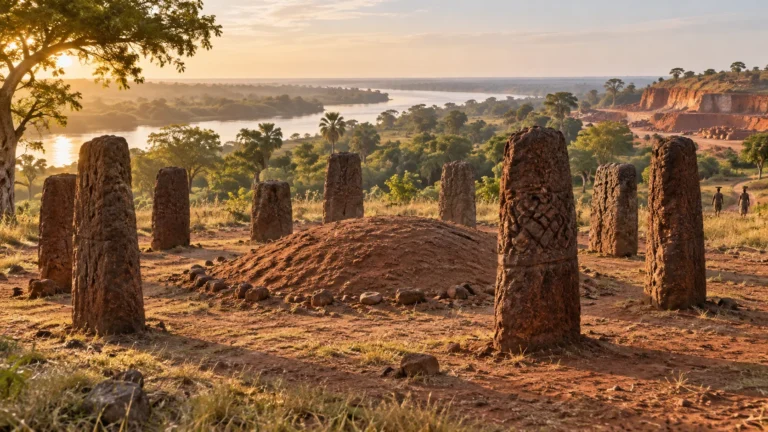
More than 1,000 stone circles and burial mounds stretch across Senegal and The Gambia. Excavations reveal a long funerary tradition, skilled quarrying and local communities whose identities remain uncertain.
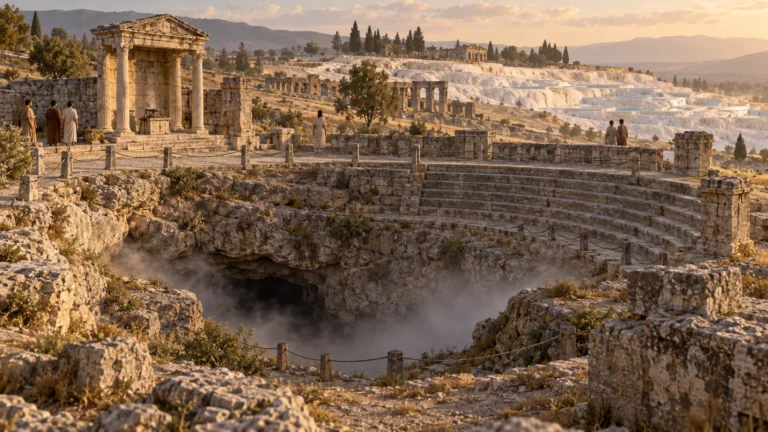
Carbon dioxide pooled around the Ploutonion at Hierapolis, where ancient visitors saw a passage to the underworld. Archaeology and modern gas measurements show how geology and ritual met at the site.
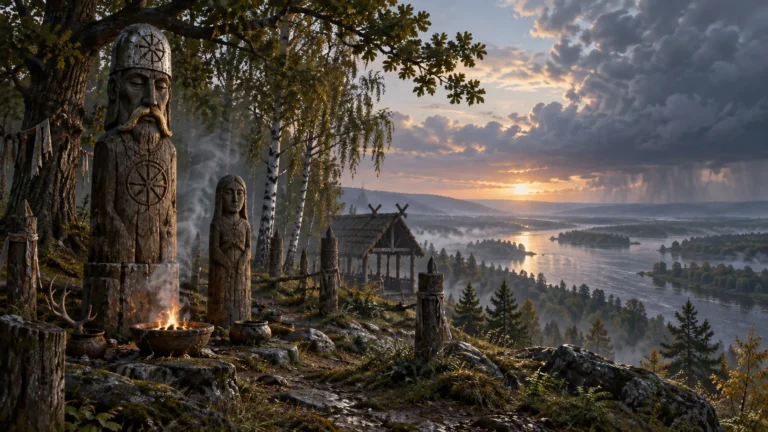
The surviving record of the old Slavic gods comes from brief passages in Byzantine and medieval Christian texts. Those sources reveal regional beliefs, not one complete pantheon.
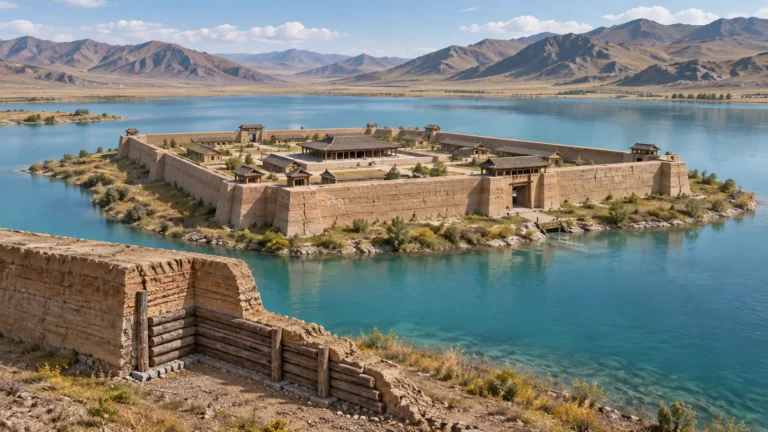
A larch beam from Por-Bazhyn preserves a radiocarbon marker that dates the start of construction to summer 777. The island complex was built under the Uyghur Khaganate, but its intended use remains uncertain.
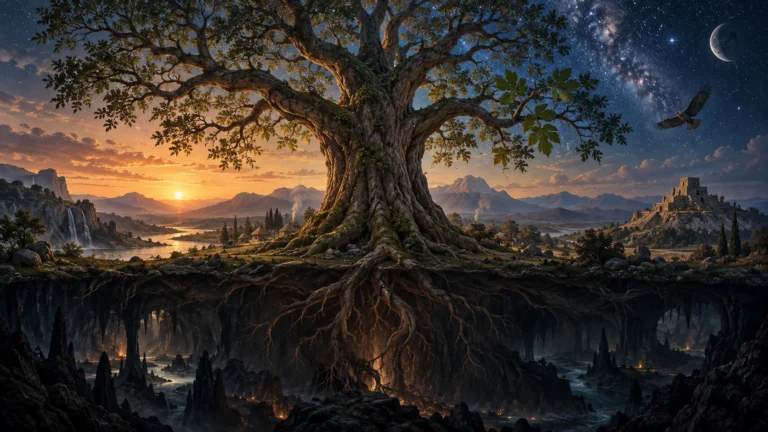
The Norse Yggdrasil, the Gita’s upside-down ashvattha, Maya world-tree imagery and Egyptian sycamores share a shape. Their meanings differ with the stories and settings around them.
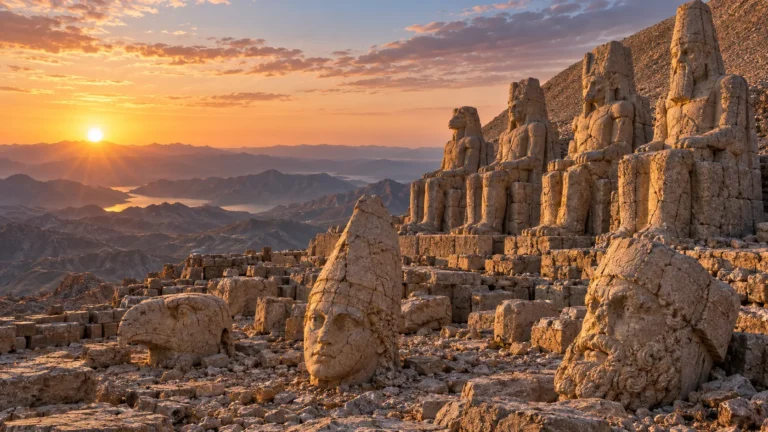
The fallen heads of Mount Nemrut belonged to a sanctuary built by Commagene’s King Antiochus I. Its statues and inscriptions joined Greek and Iranian traditions and made the king’s ancestry part of the monument.
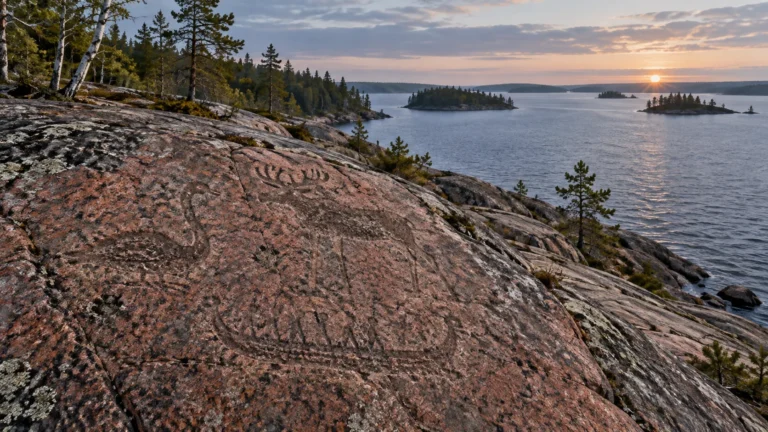
Swans, elk, boats and geometric signs cover Lake Onega’s Neolithic shores. Archaeologists read the carvings alongside settlements, shorelines and nearby rock-art sites.
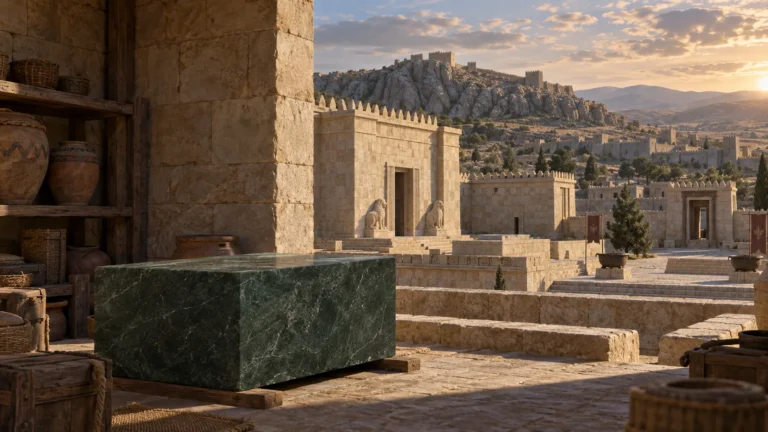
Hattusa’s polished green stone stands in the Great Temple area, but no text identifies it. Its mineral composition and original purpose still need firm evidence.
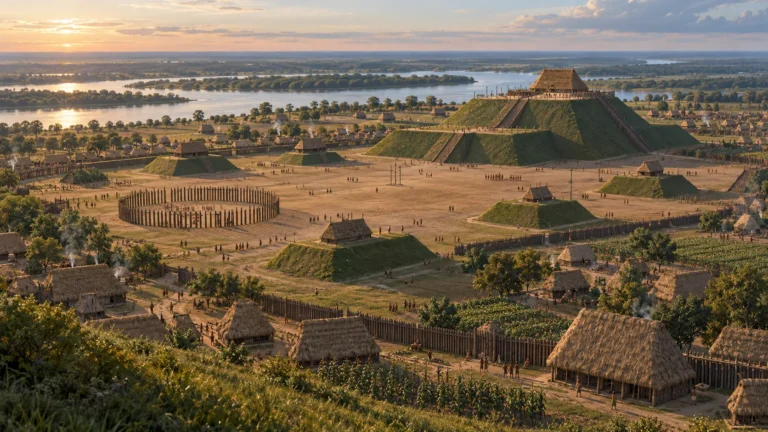
Cahokia grew into a major Mississippian centre through earthwork construction, regional exchange and careful planning. Its ruins reveal the city’s scale, while leaving its ceremonies and final transformation open to investigation.